Aeronautical Engineering Colleges in Nagpur
Posted on : 27 January, 2026 6:30 pm
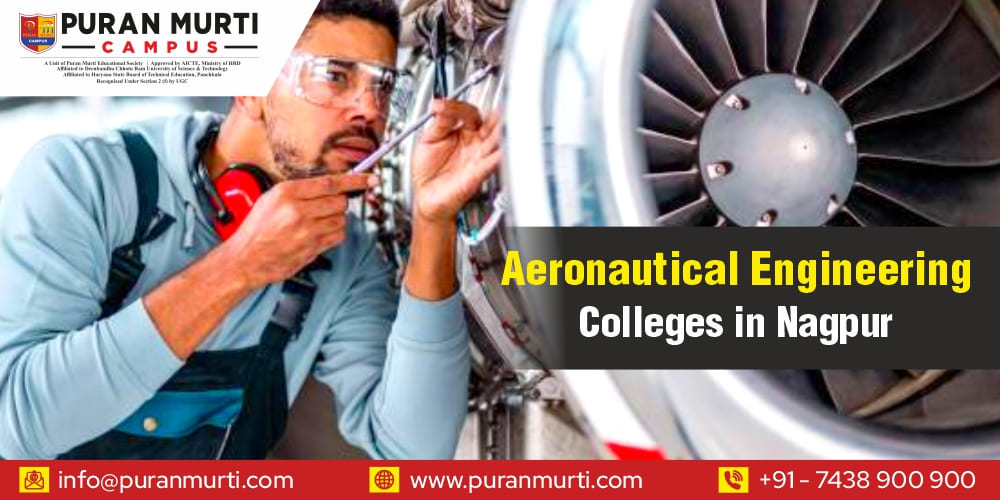
The most prestigious and advanced engineering discipline exists in Aeronautical Engineering. Students who want to design aircraft while learning about flight mechanics and their role in the expanding aviation and aerospace industry choose this field of study. The traditional dominance of metropolitan areas in this field has shifted because Nagpur now serves as an emerging educational center for aeronautical engineering. Here is the Aeronautical Engineering Colleges in Nagpur
The blog offers A complete guide to all Aeronautical Engineering colleges in Nagpur which uses Puran Murti Vidyapeeth as a measuring stick to define the essential components of an ideal aeronautical engineering institution. The document provides detailed coverage of all crucial aspects from infrastructure and curriculum to student placement results and professional development opportunities. Apply Now
Understanding Aeronautical Engineering
Aeronautical Engineering is an engineering discipline that focuses on creating and testing and flying and maintaining aircraft which operate in the Earth atmosphere. The field combines five disciplines to produce aircraft that fly safely and efficiently: physics, mathematics, material science, electronics, and mechanical engineering. Apply Now
Core Subjects in Aeronautical Engineering Apply Now
Semester first:
- ENGLISH LANGUAGE SKILL
- MATHEMATICS – I
- PHYSICS
- BASIC ELECTRICAL ENGINEERING
- ENGINEERING GRAPHICS & DESIGN
PRACTICAL
- ENGLISH LANGUAGE LAB
- PHYSICS LAB
- BASIC ELECTRICAL ENGINEERING LAB
- INDUCTION PROGRAM
Second Semester
- MATHEMATICS-II
- CHEMISTRY
- PROGRAMMING FOR PROBLEM SOLVING
- WORKSHOP/ MANUFACTURING PRACTICES
PRACTICAL
- CHEMISTRYLAB
- PROGRAMMING FOR PROBLEM SOLVING LAB
- IN-HOUSE PRACTICALTRAINING
Third Semester
- Engineering Economics
- Mathematics – III (PDE, Probability & Statistics)
- BIOLOGY FOR ENGINEERS
- Basic Electronics Engineering
- Elements of Aerodynamics
- THERMODYNAMICS
- Constitution of India
PRACTICAL
- Elements of Aerodynamics Lab
Fourth Semester
- Aircraft Material & Processes
- Aircraft Performance
- Aircraft System & Instrumentation
- Aircraft Propulsion
- Aircraft structure
- Environmental Studies
PRACTICAL
- Aircraft Propulsion lab
- Aircraft Structure Lab
Fifth Semester
- Aero Engine Design
- Aircraft Structure Analysis & Design
- Aircraft Stability & Control
- Compressible & Finite Wing Aerodynamics
- Theory of Machines
PRACTICAL
- Aircraft Structure Analysis & Design Lab
- Compressible & Finite Wing Aerodynamics Lab
- Professional Training (Level II)
Sixth Semester
- Vibration & Aero Elasticity
- Computational fluid Dynamics
- (PROFESSIONAL ELECTIVE)
- Space Dynamics
- Helicopter Dynamics
- Wind Turbines
- Experimental Aerodynamics
- Robotics and Automation
- (OPEN-ELECTIVE)
- Professional Communication for Engineers
- Soft Skills and Inter-personal Communication
- Human Resource Management
- Values, Ethics and IPR
- Introduction to German Language
- Introduction to French language
PRACTICAL
- Computational fluid Dynamics Lab
- In-house Project
Seven Semester
- Airplane Design
- Avionics
- (PROFESSIONAL ELECTIVE)
- Viscous Flow Theory
- Wind Tunnel Techniques
- Missile Technology
- Gas Dynamics
- Advanced Aerodynamics
- (OPEN-ELECTIVE)
- Computer Network
- Cyber Security
- Industrial Safety
- Disaster Management
- Consumer Electronics
PRACTICAL
- Avionics Lab
- Professional Training (Level III)
- Minor Project
Eight Semester
- (Professional Elective-III)
- Aircraft Quality control, Quality Assurance and Certification
- Maintenance of airframe and systems
- Aircraft Maintenance and Air worthiness
- (Professional Elective -IV)
- Ergonomics in Aerospace
- Introduction to Automatic Flight Control
- Air Transportation and Operations
- Aircraft Modeling and Simulation
- (Professional Elective – V)
- Fuels and Propellant Technology
- Maintenance of Power plant and systems
- Rocket Propulsion
- (Open Elective-III)
- Artificial Intelligence & Expert Systems
- Electrical and Hybrid Vehicles
- Entrepreneurship
- Fundamentals of Sustainable Manufacturing
- Nano Science and Nano-Technology
- Smart Grid
PRACTICAL
- Major Project OR Internship
- General Fitness for the Profession Apply Now
The field supports three major sectors which include commercial aviation and defense aviation and space research and unmanned aerial vehicle (UAV) technology development. Apply Now
Why Aeronautical Engineering Is a High-Demand Career
The aviation and aerospace sector is witnessing rapid growth in India and globally. The aviation industry needs more aeronautical engineers because commercial airlines expand and regional airports build and the defense forces modernize and space missions start. Apply Now
Key Growth Drivers:
- Increase in air passenger traffic
- Growth of low-cost airlines
- Government initiatives like Make in India
- Expansion of defense and space research
- Rise of drone and UAV technologies
Aeronautical engineers now work across various sectors including airlines and research organizations and manufacturing companies and maintenance organizations and defense agencies. Apply Now
Puran Murti Vidyapeeth: A Benchmark for Aeronautical Education
The Puran Murti Vidyapeeth functions as a Delhi-NCR located educational facility which students and education experts frequently cite because it provides practical training and advanced aviation facilities. The college serves as an ideal model for aeronautical engineering programs to follow. Apply Now
Academic Excellence at Puran Murti Vidyapeeth
Industry-Relevant Curriculum Apply Now
The Puran Murti Vidyapeeth curriculum develops academic programs which match present-day aviation and aerospace industry standards. The course outlines require students to develop both theoretical and practical skills which will prepare them for their future professions.
Experienced Faculty
The faculty members include: Apply Now
- Academics with advanced research abilities
- Experts who have actual experience in aviation work
- Mentors who support students through their projects and internships and professional development.
The combination of academic study and practical experience will provide students with a complete understanding of the field.
World-Class Infrastructure & Laboratories
The campus of Puran Murti provides its best advantage through its practical training facilities, which serve as a vital resource for students who study aeronautical engineering. Apply Now
Key Facilities Include:
- Aircraft structures laboratories
- Aerodynamics and propulsion labs
- CAD/CAM and design software labs
- Engine models and component testing units
- Workshops for fabrication and maintenance
- Simulation and training facilities
The facilities enable students to see and study actual aircraft systems while they practice their work without using textbooks.
Practical Learning & Skill Development
Puran Murti Vidyapeeth uses experiential learning as its main educational method because this method proves essential for teaching students about aviation. Apply Now
Practical Exposure Includes:
- Mandatory industrial training
- Live workshops and seminars
- Industry visits
- Technical projects and case studies
- Skill-based certification programs
The students gain practical knowledge through their studies while developing abilities to solve problems and work in teams and communicate effectively and maintain professional conduct. Apply Now
Industry Tie-Ups & Placements
The Puran Murti model depends on its industry links as its most powerful advantage.
Placement Support Includes:
-
Tie-ups with aviation companies, airlines, and MROs
-
Internship opportunities during the course
-
Dedicated placement and career guidance cell
-
Resume building and interview preparation
Graduates are guided toward roles in airlines, aerospace manufacturing companies, defense organizations, and aviation service providers.
What Nagpur Colleges Can Learn from Puran Murti Vidyapeeth
Nagpur aeronautical engineering colleges can achieve major development through implementation of essential components present in the Puran Murti Vidyapeeth model. Apply Now
- Strong practical training focus
- Industry-aligned curriculum
- Modern laboratories and equipment
- Regular internships and industrial exposure
- Career-oriented placement support
Nagpur students need to choose their colleges based on these specific criteria instead of simply checking which courses the colleges provide.
Admission Process for Aeronautical Engineering
Eligibility Criteria
-
10+2 with Physics, Chemistry, and Mathematics (PCM)
-
Minimum percentage as per college or university norms
Entrance Exams
- The state-level tests include MHT-CET
- The national-level exams include JEE Main
- The entrance tests are specific to each institute.
Important Tips for Students
-
Strengthen basics of physics and mathematics
-
Research college infrastructure and placement records
-
Visit campuses if possible
-
Speak to alumni or current students Apply Now
Career Opportunities After Aeronautical Engineering
Graduates can pursue careers in: Apply Now
- Aircraft Design & Development
- Aircraft Maintenance & Quality Control
- Airlines & Aviation Companies
- Defense & Space Research Organizations
- UAV & Drone Technology Firms
- Aerospace Manufacturing
- Higher Studies & Research
With experience, professionals can also work internationally in global aviation companies. Apply Now
Final Conclusion
Nagpur is steadily gaining recognition as an emerging destination for aeronautical engineering education. While the number of colleges offering this specialization is limited, institutions like Priyadarshini College of Engineering are laying the foundation for future growth.
By using Puran Murti Vidyapeeth as a reference model, students can clearly understand what defines a high-quality aeronautical engineering college — strong infrastructure, industry exposure, skilled faculty, and career-focused training.
For students passionate about aviation and aerospace, choosing the right college is the first step toward a career that truly lets them dream big and fly higher. Apply Now