Polytechnic in Delhi 2026 | Diploma Courses, Fees, Admission
Posted on : 7 February, 2026 11:01 pm
Education in India isn’t just about degrees — it’s about building practical skills, employability, and real-world expertise. For many students who wish to enter the technical world early, polytechnic diploma courses offer a valuable alternative to traditional academic routes. Especially in and around Delhi — a major educational hub — polytechnic education opens doors to careers in engineering, technology, and applied sciences.
What Is Polytechnic Education?
At its core, polytechnic education refers to diploma-level programs focused on technical and vocational subjects. Unlike traditional academic degrees that often emphasize theory, polytechnic courses offer hands-on, practical training in fields like mechanical, civil, electrical, computer science, automobile, electronics, and more. Apply Now
Typically:
- Duration: 2–3 years (depending on the course and specialization).
- Eligibility: Usually after class 10, though some programs allow entry after class 12 or ITI.
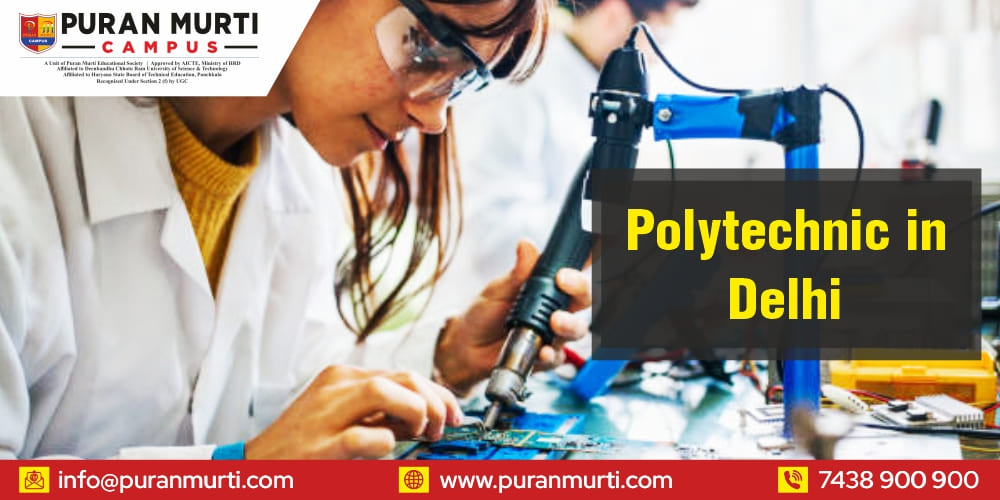
- Focus: Applied skills, workshop practice, real projects, and industry exposure.
Diploma holders are trained to be workforce-ready, meaning the emphasis is on practical application, tools, machinery, and technologies relevant to industry needs.
Key Insights on Polytechnic In Delhi
Polytechnic education has emerged as one of the most practical and career-oriented pathways for students after completing Class 10 or Class 12. It focuses on technical skills, industry exposure, and hands-on training, making students job-ready at an early stage. Below are the key insights that explain why polytechnic courses are gaining popularity among students across India, especially in regions like Delhi and Delhi NCR.
1. Skill-Based and Practical Learning
One of the biggest strengths of polytechnic education is its emphasis on practical knowledge rather than just theory. Students spend a significant amount of time in laboratories, workshops, and project work. This hands-on approach helps them understand real-world applications of engineering concepts, making them confident and industry-ready.
2. Early Career Entry
Polytechnic courses allow students to start their technical careers early. Since most diploma programs can be pursued after Class 10, students save time compared to traditional degree routes. By the age when others are still studying theory, polytechnic students often gain work experience or continue higher studies through lateral entry.
3. Wide Range of Diploma Specializations
Polytechnic education offers diverse branches such as Mechanical Engineering, Civil Engineering, Electrical Engineering, Computer Science Engineering, Electronics & Communication, Automobile Engineering, and emerging fields like Artificial Intelligence and Machine Learning. This variety helps students choose a specialization based on their interests and career goals.
4. Affordable Education Option
Compared to undergraduate engineering degrees, polytechnic courses are more affordable. Government institutes offer low-cost education, while private colleges provide modern infrastructure and industry exposure at reasonable fees. This makes polytechnic education accessible to students from different economic backgrounds.
5. Strong Employment Opportunities
Diploma holders are in demand across multiple industries, including construction, manufacturing, IT services, electronics, automotive, aviation, and healthcare. Graduates can work as technicians, junior engineers, supervisors, machine operators, and technical assistants in both private and government sectors.
6. Pathway to Higher Education
Polytechnic education does not limit academic growth. Students can opt for lateral entry into B.Tech programs, usually in the second year, allowing them to earn an engineering degree in a shorter time. This flexible pathway helps students upgrade their qualifications while building on practical knowledge.
7. Industry Exposure and Internships
Most polytechnic colleges emphasize industrial visits, internships, and training programs. Interaction with industry professionals helps students understand workplace expectations, current technologies, and career trends, giving them an edge during placements.
8. Growing Importance in India’s Skill Economy
With the government’s focus on “Skill India” and industrial development, diploma engineers play a vital role in nation-building. Polytechnic graduates support infrastructure growth, manufacturing expansion, and technological advancement, making them an essential part of the workforce.
9. Suitable for Practical-Minded Students
Polytechnic education is ideal for students who prefer practical work over purely academic learning. It encourages problem-solving, technical creativity, and applied skills, helping students build confidence and independence early in their careers.
10. Foundation for Long-Term Career Growth
Whether students choose employment, higher studies, or entrepreneurship, polytechnic education provides a strong technical foundation. With experience and additional qualifications, diploma holders can progress into senior technical and managerial roles.
Why Choose Polytechnic in Delhi?
Delhi — the national capital — has many educational advantages:
1. Proximity to Industry & Opportunities
Being close to industrial corridors, IT firms, aviation hubs, construction sites, and government establishments means students are better placed for internships and practical exposure.
2. Wide Range of Specializations
Whether it’s mechanical, electrical, computer science, aeronautics, or emerging disciplines like AI and machine learning — Delhi institutions (including campuses in Delhi NCR like Sonipat) offer diverse diploma streams.
3. Better Placement Possibilities
Many polytechnic colleges in the region have established links with companies and industries that help students find jobs right after diploma completion.
4. Lateral Entry to B.Tech
After finishing a diploma, students can often join B.Tech programs in the second year (lateral entry), saving time and resources while advancing their careers.
Polytechnic Colleges in and Around Delhi
Delhi hosts several government and private polytechnic institutes. Some offer traditional branches like civil and mechanical, while others include specialized programs like aeronautical or automobile engineering.
- Government Polytechnic Colleges: Established, subsidized, and competitively selected institutions.
- Private Polytechnic Colleges: Often part of larger educational campuses and include modern infrastructure and industry tie-ups.
One of the notable private campuses in the Delhi NCR belt is Puran Murti Vidyapeeth.
Admission Process & Eligibility Criteria
Polytechnic admissions usually follow this structure:
1. Eligibility
- Minimum Qualification: Passing class 10 (sometimes class 12 for certain courses).
- Compulsory Subjects: Mathematics and Science are often required for engineering and technology diplomas.
- Some institutions also have entrance tests or merit-based selections. In certain cases, lateral entry into diploma second year is offered to students with ITI or 12th qualifications.
2. Selection & Documentation
Typical requirements:
- 10th/12th mark sheet
- Passport-size photos
- ID proof
- Application forms (online or offline) Apply Now
Counselors often support new applicants.
What Students Learn in Polytechnic
Unlike traditional syllabi, polytechnic courses emphasize real-world skills:
1. Hands-on Laboratory Training
Students spend significant time in workshops and labs learning:
- Machines and tools handling
- Software simulations
- Prototype building
- CAD/CAM techniques
2. Project Work
From small scale mechanical projects to electrical circuits and coding assignments, projects reinforce learning.
3. Industrial Visits & Exposure
Visiting factories, construction sites, IT parks, and other workplaces gives students insight into how real companies operate.
4. Technology Integration
Some courses now integrate modern technologies such as:
- AI & Machine Learning
- IoT (Internet of Things)
- Automation systems
Career Pathways After Polytechnic In Delhi
Completing a polytechnic opens several opportunities:
1. Immediate Employment
Diploma holders can work as:
- Junior Engineers
- Technicians
- Site Supervisors
- CAD Designers
- IT supporters
Industries like automotive, construction, IT services, telecom, electronics, and manufacturing recruit polytechnic graduates.
2. Higher Education
With good academics, diploma students can:
- Enter B.Tech through lateral entry
- Take up specialized certifications
- Pursue advanced diplomas or degrees
3. Government & PSU Jobs
Many public sector organizations recruit diploma engineers in areas like railways, defence, electricity boards, and infrastructure departments.
4. Entrepreneurship
Some graduates start small enterprises in repair services, fabrication units, or software services building on their hands-on expertise.
Polytechnic Course Fees in Delhi
Fees vary significantly based on:
- Government vs Private colleges
- Stream and facilities
For example:
- Government institutes: ₹10,000 – ₹25,000 per year (approx).
- Private colleges: ₹1.25 L – ₹1.9 L total (for full diploma program at some campuses).
Fees often reflect infrastructure, labs, training resources, and industry partnerships.
Challenges Students May Face
Even with its benefits, diploma education can bring challenges:
1. Competition for Seats
Seats in good government polytechnics are competitive due to limited intake.
2. Balancing Practical & Academic Work
Students may find it challenging to manage project deadlines, labs, and exams simultaneously.
3. Choice of the Right College
Researching infrastructure, faculty strength, placement support, and alumni outcomes is critical before enrolling.
Success Tips for Polytechnic Students
To make the most of polytechnic education:
✔ Develop strong basics in Mathematics & Science
✔ Participate actively in labs and projects
✔ Seek internships early
✔ Attend industrial workshops
✔ Build soft skills alongside technical knowledge
✔ Network with seniors and alumni
Puran Murti Vidyapeeth (Delhi NCR)
One prominent option for students around Delhi seeking polytechnic diplomas is Puran Murti Vidyapeeth, located in Sonipat, Haryana — which is part of the Delhi NCR educational ecosystem. Apply Now
1. Overview
Puran Murti Vidyapeeth is a well-established educational institution under the Puran Murti Educational Society, offering polytechnic diplomas along with many UG and PG programs in engineering, management, technology, law, and pharmacy. The campus is recognized for blending practical training with career-focused education.
2. Polytechnic Programs Offered
Puran Murti Vidyapeeth offers a variety of diploma courses in fields such as:
- Aeronautical Engineering
- Aircraft Maintenance Engineering
- Mechanical Engineering
- Electrical Engineering
- Computer Science & Engineering
- Electronics & Communication Engineering
- Automobile Engineering
- Civil Engineering
- AI & Machine Learning (Applied to CSE)
- Fire & Safety Engineering
- Medical Lab Technician (MLT)
These updates demonstrate the range and relevance of modern polytechnic streams.
For More Details : click here
3. Infrastructure & Facilities
The campus spans around 35–36+ acres and boasts:
- Smart classrooms
- Modern labs for engineering and technology
- Workshops for hands-on training
- Hostels & transport services
- Sports & extracurricular facilities
- Libraries and IT resources
Such resources are crucial for comprehensive technical training.
4. Practical Training & Industrial Exposure
Puran Murti emphasizes industry readiness through:
- Practical labs and projects
- Industrial visits
- Internship support
- Workshops with industry experts
This prepares students not just academically but professionally for the workplace.
5. Placement Opportunities
The campus highlights strong placement support with partnerships and campus recruitments from reputed companies across IT, manufacturing, aviation, automotive, and services sectors. Many students find job offers due to this outreach.
6. Fees Structure & Scholarships
Fees for polytechnic programs at Puran Murti Vidyapeeth vary depending on specialization and duration:
-
Typical diploma courses: ₹1.25 L – ₹1.9 L (total).
Scholarships and fee concessions may be available based on merit or categories, supporting inclusivity.
7. Why Consider Puran Murti Vidyapeeth?
Here’s what makes it a notable choice in the Delhi NCR:
- Diploma programs aligned with industry needs
- Hands-on training and workshops
- Pathways to higher education (lateral entry)
- Career support and placements
- Broad course portfolio
- Even though the campus is technically in Haryana, it serves students from Delhi and nearby regions, making it a popular destination for polytechnic aspirants.
Stories of Polytechnic Success
Across India, many polytechnic graduates have:
- Started successful engineering careers
- Entered B.Tech programs without spending extra years
- Stepped into entrepreneurship
- Built technical expertise that helped them secure promising roles
Student testimonials often highlight how practical learning made them workplace-ready and built confidence early in their careers.
Conclusion
Choosing polytechnic education in Delhi — or a nearby campus like Puran Murti Vidyapeeth — can be a strategic step toward a technical career that’s both practical and rewarding. With industry-focused training, hands-on experience, and diverse options across engineering and technology fields, students are well-positioned for employment, advancement, and further education.
Whether your interests lie in mechanical systems, electrical setups, software applications, or aviation technologies, polytechnic education equips you with practical skills that the modern workforce seeks.
Take time to explore course details, campus facilities, placement records, and your own passions before deciding — your future career journey begins with the right choice!