Diploma in X-Ray Technology
Posted on : 18 February, 2026 6:19 pm
Why Choose a Diploma in X-Ray Technology
A Diploma in X‑Ray Technology trains students to operate diagnostic imaging equipment, perform radiographic procedures, maintain radiation safety, and assist clinical teams in hospitals and diagnostic centres. Designed as a practical, career‑focused pathway after class 10, the program emphasizes hands‑on learning—positioning, ALARA safety, and image optimization—through lab work and supervised clinical rotations. Delhi NCR’s concentration of hospitals and diagnostic centres provides varied clinical exposure and internship opportunities, helping students gain competence quickly and transition into roles in hospitals, diagnostic centres, trauma bays, or mobile units. With experience and additional training, graduates can progress to CT, MRI, quality assurance, or supervisory positions, making the diploma a structured, efficient route into allied healthcare. Apply now
Why choose a Diploma in X‑Ray Technology
Strong clinical exposure. Delhi NCR hosts a dense network of hospitals, diagnostic chains, and specialty clinics. Students benefit from proximity to varied clinical settings where they can observe and practice imaging procedures across patient populations. Apply now
Industry‑aligned training. Many institutes in the region design curricula to emphasise practical skills, clinical internships, and familiarity with contemporary imaging workflows such as digital radiography and picture archiving systems.
Faster route to employment. A diploma typically takes three years and focuses on job‑ready competencies, enabling graduates to enter the workforce sooner than many degree programs.
Diverse workplace options. Graduates can work in government and private hospitals, diagnostic centres, mobile imaging units, and outpatient clinics, making the qualification versatile across urban and semi‑urban healthcare settings. Apply now
Course essentials: duration, eligibility, admission
Duration
- Standard duration: 3 years (commonly structured as six semesters). Some institutes may offer shorter or modular variants; check the specific college prospectus for exact details.
Eligibility
- Minimum academic requirement: 10th pass from a recognised board.
- Some colleges prefer or recommend a science background (Physics, Chemistry, Biology) but many accept general 10th pass candidates.
- Lateral entry options into the second year may be available for candidates with 10+2 (science) or relevant ITI qualifications; policies vary by institute. Apply now
Why Puran Murti Vidyapeeth for This Diploma

Puran Murti focuses on practice; consequently, employability improves. Specifically, labs meet clinical standards with CR and DR systems. Additionally, faculty mentoring highlights empathy, shielding, and workflow discipline. As a matter of fact, the timetable blends theory and rotations wisely. Besides, seminars, peer reviews, and mock audits build maturity. Equally important, hospital partnerships enable internships and placements. To that end, I receive guidance for CT, mammography, and digital upgrades. In essence, I am prepared to add value from day one. Apply now
Program Highlights
- Three-year diploma with modular, progressive milestones
- Radiography lab featuring analog and digital systems
- Structured clinical postings across partner hospitals
- Rigorous radiation safety with QA and dosimetry
- Soft skills for patient communication and teamwork
- Placement assistance through strong industry tie-ups
Eligibility Criteria
Candidates should have
- Minimum academic requirement: 10th pass from a recognised board.
- Lateral entry options into the 2nd year available for candidates with 10+2 (Physics, Chemistry, and Biology or Mathematics) or relevant ITI qualifications; policies vary by institute.
Additionally, minimum marks vary by merit. Age limit starts at 17 years often. No entrance for most seats. Puran Murti reserves 30% for merit. Quotas cover SC/ST, girls, and EWS. Apply via merit or management. Apply now
Notably, vocational or paramedical backgrounds may receive consideration. At Puran Murti, transparent counseling clarifies course fit and growth. Consequently, applicants understand requirements, timelines, and progression clearly. Apply now
Admission Process
- Application: Submit online or on‑campus application form with accurate details.
- Document submission: Provide 10th marksheet, ID proof, passport‑size photographs, and transfer/migration certificate if applicable. Upload scanned documents for quick verification.
- Selection: Many colleges admit on merit (10th marks); a few conduct entrance tests or interviews.
- Counselling: Attend counseling or interview if called. Shortlisted candidates only.
- Enrollment: Confirm the allotted seat, complete document verification, and pay fees to confirm admission.
- Medical fitness: Complete medical fitness and onboarding. It is commonly required because clinical rotations involve patient contact and hospital duties.
Apply early; as a result, preferred slots and hostels remain available. Meanwhile, the admission cell supports checklists, fees, and reminders. Apply now
Course Curriculum and Syllabus
The syllabus deepens technical skill while strengthening safety and ethics. Furthermore, modules may shift with regulatory updates. Nevertheless, the sample plan below explains the flow. Apply now
Core theoretical subjects
- Human Anatomy & Physiology — foundational knowledge for imaging.
- Radiographic Physics — principles of X‑ray generation and image formation.
- Radiation Protection & Safety — ALARA principles, shielding, dose monitoring.
- Imaging Techniques — positioning, exposure parameters, and image quality.
- Medical Ethics & Patient Care — communication, consent, and professional conduct.
- Pathology Basics — common conditions encountered in imaging.
Modular and advanced topics
- CT and MRI fundamentals — workflow awareness and safety considerations.
- Ultrasound assistance — patient preparation and basic scanning support.
- Image processing and PACS — digital workflows and archiving.
- Equipment maintenance — routine checks and basic troubleshooting.
Practical training
- Emphasis on lab work, simulation units, and supervised clinical rotations.
- Structured internships in diagnostic departments are essential for competence in patient positioning, exposure selection, and radiation safety.
- Assessment typically includes practical exams, viva voce, and clinical logbooks.
Subjects Covered (indicative)
- Human Anatomy and Physiology for Imaging
- Basics of Radiographic Physics
- Radiation Biology and Protection
- Patient Care, Ethics, and Communication
- Medical Terminology and Documentation
- General Radiography: Equipment and Darkroom Techniques
- Positioning: Upper and Lower Extremities, Chest, Abdomen
- Computer Fundamentals and PACS Basics
- First Aid and Biomedical Waste Management
- Practical: Positioning Labs and Image Quality Checks
- Advanced Radiographic Techniques
- Special Procedures: Contrast Studies and Fluoroscopy
- Digital Radiography, CR and DR Systems
- Quality Assurance and Equipment Maintenance
- Cross-sectional Imaging Overview: CT and MRI Fundamentals
- Mammography and Dental Radiography Basics
- Trauma and Emergency Radiography
- Professional Practice, Records, and Audit
- Clinical Internship and Case Logs
- Project and Viva Voce
Skills You Will Develop
- Precise positioning and exposure selection under varied conditions
- Strict ALARA compliance and safe radiation practices
- Artifact troubleshooting and image optimization
- Assistance during contrast studies with sterile technique
- Empathetic patient interaction and confidentiality
- Workflow coordination with ER, OT, ICU, and OPD
- Accurate records, PACS entry, and reporting assistance
Top colleges and institutes (indicative)
| S.no | College / Institute | Location | Key focus |
| 1 | Puran Murti Vidyapeeth | Sonipat, Delhi NCR | Diploma in X‑Ray Technology with practical radiography and hospital training |
| 2 | Trishna College of Paramedical and Polytechnic | Dilshad Garden, Delhi | Diploma in X‑Ray Technology; clinical internships and infrastructure |
| 3 | Institute of Public Health Hygiene | Mahipalpur Ext., New Delhi | Paramedical diplomas including X‑ray and ECG technology |
| 4 | Santosh Institute of Allied Health Sciences | Ghaziabad (near Delhi NCR) | Recognised allied health programs with imaging courses |
| 5 | GD Goenka Healthcare Academy | Delhi | Allied health diplomas including diagnostic imaging streams |
| 6 | SAI College of Nursing and Paramedical Sciences | Delhi | Paramedical diplomas with radiography options |
Note: This list is representative. Program duration, affiliation, and exact course titles vary by institute. Always confirm current program details, accreditation, and clinical tie‑ups directly with the college.
Career Opportunities Roles and Salary Trends
Common roles
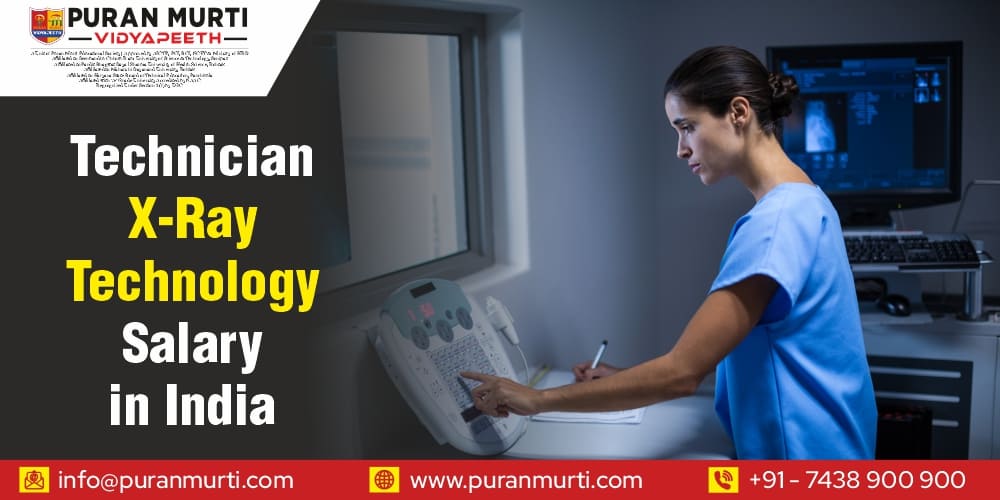
- X‑Ray Technician / Radiographer — Operates radiographic equipment and produces diagnostic images.
- CT Scan Technician — Prepares patients and runs CT protocols under radiologist supervision.
- MRI Assistant — Supports MRI workflows, patient screening, and basic image checks.
- Diagnostic Lab Technician — Assists in imaging‑related lab processes and sample handling.
- Hospital Radiography Assistant / PACS Coordinator — Manages image archiving, retrieval, and departmental logistics. Apply now
Employment settings
- Hospitals — Government and private radiology departments and emergency units.
- Diagnostic centres and imaging chains — High‑volume outpatient imaging services.
- Trauma and emergency units — Rapid imaging support for acute care.
- Mobile diagnostic services and community health camps — Field imaging and outreach programs. Apply now
Salary guidance (indicative)
- Entry level: Varies by city and employer; freshers typically start with modest packages that rise with experience and location.
- Mid career (3–5 years): Noticeable growth after gaining modality skills and certifications.
- Senior/specialised roles: Supervisory posts, specialised modality operators, and positions in premium private centres command higher compensation and allowances for on‑call duties.
Career progression
- Skill‑based growth: Additional certifications (MRI, CT, mammography), vendor training, and PACS expertise increase technical value.
- Academic advancement: Degrees such as B.Sc. in Radiology or B.Voc in Medical Imaging open supervisory and clinical educator tracks.
- Technical leadership: Experienced technicians move into QA, equipment calibration, protocol development, and department management.
Practical outlook Graduates support timely, safe diagnosis across clinical settings; steady demand for skilled, safety‑conscious imaging staff makes this a stable career path with clear upskilling routes and predictable salary progression. Apply now
Skills employers expect
Technical skills
- Competence in operating imaging equipment and understanding exposure parameters.
- Familiarity with digital imaging workflows, PACS, and basic image processing.
- Knowledge of radiation protection standards and safe handling of contrast media where applicable.
Soft skills
- Clear communication and patient‑care sensitivity.
- Attention to detail for image quality and record keeping.
- Teamwork and the ability to work under pressure in emergency settings.
Professional habits
- Strict adherence to safety protocols, punctuality for shifts, and ethical conduct in patient interactions. Apply now
How to choose the best college for you
Checklist before applying
- Accreditation & affiliation: Confirm the program’s recognition by relevant state boards or national bodies.
- Clinical partnerships: Verify hospital tie‑ups and the number of clinical hours included.
- Faculty credentials: Look for experienced instructors with clinical backgrounds.
- Lab equipment: Inspect the availability of digital X‑ray units, simulation tools, and anatomy labs.
- Placement support: Ask for recent placement statistics and sample employer lists; treat claims of guaranteed placements with caution and request documented evidence.
- Fees & scholarships: Compare fee structures and available financial aid or scholarships.
- Student feedback: Speak with current students or alumni about training quality and campus life.
Visit the campus where possible, review the prospectus, and request a detailed syllabus and internship schedule before finalising your choice. Apply now
Facilities and Learning Environment
- CR/DR systems with calibrated QA tools
- Simulation spaces for positioning and contrast practice
- Digital classrooms using case-based learning
- Library with journals, e-resources, and exam banks
- Hostel, sports, and student counseling services
Campus culture values integrity, punctuality, and patient dignity. Similarly, clubs and mentorship circles sustain motivation. Consequently, internships build judgment and confidence. Apply now
Internship and Clinical Training
Hands-on practice shapes competence; therefore, rotations remain central. I cover radiography rooms, fluoroscopy suites, OT imaging, ER, and mobile X-ray. Meanwhile, mentors assess positioning accuracy, shielding, and communication. Thereupon, I record cases, reflect, and improve week by week. As a result, readiness for workplace demands increases. Apply now
Accreditation and Compliance
Compliance safeguards patients and staff; accordingly, standards are followed. Equipment QA, dosimetry, signage, and controlled access stay enforced. Additionally, the college runs regular audits and safety drills. Hence, a responsible culture becomes routine.
How This Diploma Compares
Compared to broader paramedical options, this path is focused. Consequently, first employment often arrives sooner. Although B.Sc. routes offer deeper theory, this diploma suits quick starters. To that end, bridge courses and credit transfers support future studies. In short, I can specialize now and expand later. Apply now
Pathways After Graduation
- Immediate roles in hospitals or diagnostics
- Certificates in CT, MRI, or mammography
- Advanced diplomas in imaging or QA
- Preparation for competitive recruitments
- Entrepreneurship through community imaging services
Higher education and upskilling options
After completing the diploma, consider:
- B.Sc. in Radiology / Medical Imaging — for broader clinical and academic opportunities.
- B.Voc in Medical Imaging — vocational degree with industry focus.
- PG diplomas and short certifications in MRI, CT, mammography, or interventional radiography.
- Vendor training and PACS certifications — useful for digital imaging roles.
Continuous professional development keeps skills current as imaging technology evolves. Apply now
How to Prepare for Success
- Strengthen basics in physics and anatomy
- Practice positioning until muscle memory builds
- Revise ALARA rules and dose limits regularly
- Improve bedside communication and empathy
- Maintain an organized case log with self-review
- Attend workshops, webinars, and guest lectures
Take the Next Step
- Apply now: Secure your clinical rotation slot; consequently, onboarding stays smooth.
- Book counseling: Check eligibility and fees; in addition, receive a call within 24 hours.
- Download brochure: Get syllabus and fee breakup; moreover, compare modules easily.
- Schedule a campus tour: See CR/DR labs; meanwhile, meet faculty and mentors.
- Talk to admissions: Clarify scholarships and timelines; therefore, plan confidently.
- Join the webinar: Explore careers in imaging; afterwards, ask live questions.
Frequently Asked Questions
What is the duration of the diploma
Three years with integrated clinical training; therefore, practice stays continuous.
Which subjects are essential in Class 12
Physics, Chemistry, and Biology or Mathematics; accordingly, eligibility stays clear.
Is there scope for higher studies after this diploma
Yes; in fact, advanced certificates, diplomas, or degrees remain open.
What kind of jobs can I get
X-Ray Technician, Radiology Technologist, Imaging Assistant, or PACS Coordinator; consequently, options stay flexible.
Does Puran Murti Vidyapeeth provide placement support
Yes; moreover, internships, interviews, and job leads receive guidance.
How important is radiation safety
Central to training; as a result, ALARA protocols protect patients and staff.
Conclusion
- Prioritise hands‑on training. The quality and quantity of clinical exposure determine job readiness more than promotional claims.
- Verify facts directly. Confirm accreditation, internship partners, and placement statistics with the college’s admissions office and official documents.
- Plan for continuous learning. Imaging technology changes rapidly; plan for additional certifications and higher studies to stay competitive.
- Balance cost and outcomes. Consider fee structure, scholarship options, and realistic placement prospects when choosing an institute.
The Diploma in X‑Ray Technology is a practical, in‑demand qualification that blends technology and patient care and enables early entry into the workforce; training in Delhi NCR offers varied clinical environments and internship opportunities, and choosing an accredited institute with strong clinical partnerships, disciplined safety practices, and committed mentorship maximizes learning and employability—preparing graduates to enter healthcare with confidence, clarity, and purpose. Apply now