
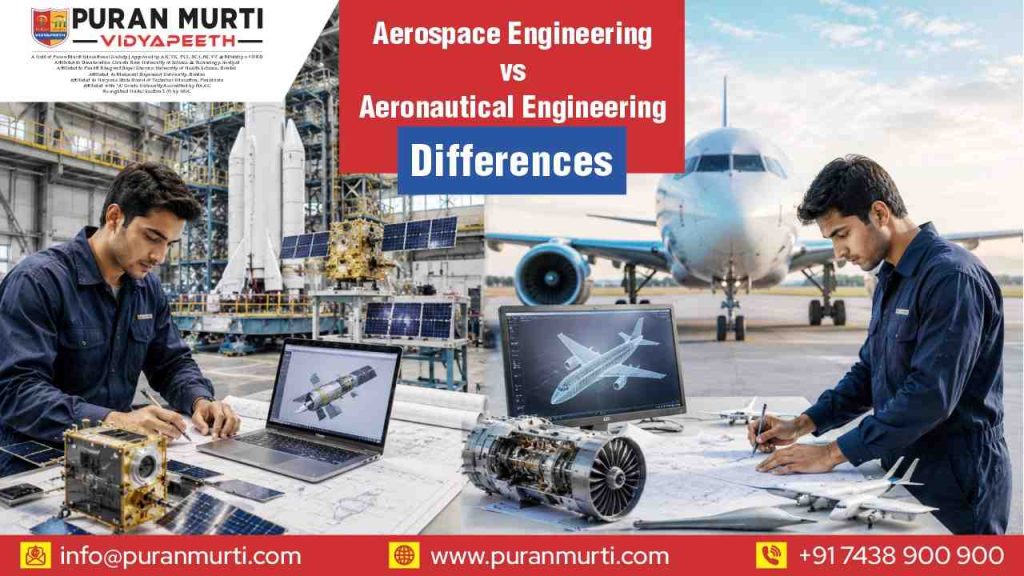
Aerospace Engineering VS Aeronautical Engineering Differences
Posted on : 12 June, 2026 12:38 pm
Aerospace Engineering vs Aeronautical Engineering Differences is one of the most common topics searched by students who want to build a career in aviation and space technology. Since both disciplines are closely related to aircraft design and flight systems, many students often assume that they are the same. However, there are several important distinctions that every aspiring engineer should understand before choosing a course.
Although both branches share common engineering principles, their scope, curriculum, career opportunities, and industry applications differ considerably. Therefore, understanding Aerospace Engineering vs Aeronautical Engineering Differences can help students make a more informed academic and professional decision.
Furthermore, the right choice can influence your future job opportunities, salary growth, higher education options, and long-term career development. In this detailed guide, we will explore Aerospace Engineering vs Aeronautical Engineering Differences based on eligibility, curriculum, skills, placements, salary, recruiters, future scope, and career prospects.
Aerospace Engineering is a broad engineering discipline that focuses on the design, development, testing, manufacturing, and maintenance of aircraft, spacecraft, satellites, missiles, and defense systems. Apply Now
Unlike many specialized engineering branches, Aerospace Engineering covers both atmospheric and space-based vehicles. As a result, students gain knowledge of aviation technology as well as space exploration systems.
Major Areas of Aerospace Engineering
- Aerodynamics
- Flight Mechanics
- Aircraft Design
- Spacecraft Engineering
- Rocket Propulsion
- Avionics
- Satellite Technology
- Space Mission Systems
Because of its wide scope, Aerospace Engineering offers opportunities across multiple advanced technology sectors.
What is Aeronautical Engineering?
Aeronautical Engineering is a specialized branch of engineering that focuses exclusively on aircraft operating within Earth’s atmosphere.
Aeronautical engineers work on airplanes, helicopters, drones, and other aviation systems. Their primary objective is to improve aircraft performance, efficiency, safety, and reliability.

Major Areas of Aeronautical Engineering
- Aircraft Structures
- Aircraft Design
- Aerodynamics
- Propulsion Systems
- Flight Testing
- Aircraft Maintenance
- Aviation Safety
- Aircraft Manufacturing
Therefore, Aeronautical Engineering is more focused on aviation technology rather than space-related systems.
Aerospace Engineering vs Aeronautical Engineering Differences: Quick Comparison
| Parameter | Aerospace Engineering | Aeronautical Engineering |
|---|---|---|
| Scope | Aircraft and Spacecraft | Aircraft Only |
| Industry Coverage | Aviation + Space Technology | Aviation Technology |
| Specialization | Broad | Specialized |
| Space Exploration | Included | Not Included |
| Satellite Technology | Included | Limited |
| Aircraft Design | Included | Included |
| Career Opportunities | Wider | Aviation-Focused |
| Research Scope | Extensive | Moderate |
| Global Demand | Very High | High |
| Future Growth | Excellent | Excellent |
The table clearly shows that Aerospace Engineering covers a wider technological spectrum, whereas Aeronautical Engineering focuses specifically on aviation systems.
Eligibility Criteria
Aerospace Engineering Eligibility
Students generally require:
- 10+2 with Physics, Chemistry, and Mathematics
- Minimum qualifying marks as specified by institutions
- Entrance examination scores
Aeronautical Engineering Eligibility
Students generally require:
- 10+2 with Physics, Chemistry, and Mathematics
- Required academic performance
- Entrance examination qualification
Although the eligibility requirements are almost identical, the course outcomes differ significantly.
Course Curriculum Comparison
Aerospace Engineering Subjects
- Aerodynamics
- Aircraft Structures
- Flight Mechanics
- Rocket Propulsion
- Space Technology
- Satellite Systems
- Avionics
- Computational Fluid Dynamics
Aeronautical Engineering Subjects
- Aircraft Design
- Aircraft Structures
- Aerodynamics
- Propulsion Systems
- Flight Mechanics
- Aviation Safety
- Aircraft Maintenance
- Aircraft Manufacturing
Consequently, Aerospace Engineering introduces students to both aviation and space technologies, while Aeronautical Engineering remains focused on aircraft systems.
Skills Required
Aerospace Engineering
- Analytical Thinking
- Mathematical Modeling
- Research Skills
- Design and Development
- Simulation Expertise
- Problem Solving
- Technical Communication
Aeronautical Engineering
- Aircraft Systems Knowledge
- Technical Analysis
- Design Skills
- Maintenance Understanding
- Flight Performance Analysis
- Safety Awareness
- Team Collaboration
Therefore, students interested in space technologies may find Aerospace Engineering more appealing, whereas students passionate about aircraft operations may prefer Aeronautical Engineering.
Placement Opportunities
Aerospace Engineering Placements
Graduates can work in:
- Aerospace Manufacturing Companies
- Space Research Organizations
- Defense Agencies
- Satellite Technology Firms
- Aircraft Design Companies
- Research Institutions
Popular job roles include:
- Aerospace Engineer
- Aircraft Design Engineer
- Avionics Engineer
- Flight Test Engineer
- Research Scientist
- Space Systems Engineer
Aeronautical Engineering Placements
Graduates can work in:
- Airlines
- Aircraft Manufacturing Companies
- Aviation Maintenance Organizations
- Aircraft Testing Facilities
- Airport Technical Operations
- Defense Aviation Units
Popular job roles include:
- Aeronautical Engineer
- Aircraft Design Engineer
- Flight Test Engineer
- Maintenance Engineer
- Aviation Safety Officer
- Aircraft Systems Engineer
As a result, Aerospace Engineering generally provides access to a broader range of industries.

Top Recruiters
Aerospace Engineering Recruiters
- Boeing
- Airbus
- HAL
- ISRO
- DRDO
- Collins Aerospace
- Safran
- GE Aerospace
- Lockheed Martin
- Tata Advanced Systems
Aeronautical Engineering Recruiters
- Boeing
- Airbus
- Air India
- IndiGo
- SpiceJet
- HAL
- DRDO
- Safran
- Tata Advanced Systems
- Air Works
These organizations regularly recruit skilled professionals to support aviation and aerospace innovation.
Salary Comparison
Aerospace Engineering Salary
| Experience Level | Average Salary |
|---|---|
| Freshers | ₹5–10 LPA |
| Mid-Level | ₹8–15 LPA |
| Experienced | ₹15–30+ LPA |
| Senior Professionals | ₹30–50+ LPA |
Aeronautical Engineering Salary
| Experience Level | Average Salary |
|---|---|
| Freshers | ₹4–8 LPA |
| Mid-Level | ₹7–12 LPA |
| Experienced | ₹12–22+ LPA |
| Senior Professionals | ₹25–40+ LPA |
Salary Analysis
Generally, Aerospace Engineering offers slightly higher earning potential because professionals can work in both aviation and space-related industries. Moreover, opportunities in defense, satellite technology, and spacecraft development often provide premium compensation.
However, Aeronautical Engineering professionals can also achieve impressive salary growth, particularly in aircraft manufacturing and aviation operations.
Higher Education Opportunities
Aerospace Engineering
Students can pursue:
- M.Tech Aerospace Engineering
- Space Technology Programs
- Avionics Specialization
- MBA
- PhD Programs
Aeronautical Engineering
Students can pursue:
- M.Tech Aeronautical Engineering
- Aircraft Design Programs
- Aviation Management
- MBA
- Doctoral Research Programs
Therefore, both branches offer strong opportunities for advanced studies and specialization.
Work Environment
Aerospace Engineers
Typically work in:
- Research Laboratories
- Aerospace Manufacturing Facilities
- Space Research Centers
- Defense Organizations
- Design and Development Centers
Aeronautical Engineers
Typically work in:
- Aircraft Manufacturing Plants
- Airlines
- Maintenance Facilities
- Airports
- Aircraft Testing Centers
Consequently, the working environment differs according to the nature of the industry and job role.
Future Scope
Future Scope of Aerospace Engineering
Demand continues to grow because of:
- Commercial Aviation Expansion
- Satellite Technology Development
- Space Exploration Programs
- Defense Modernization
- Private Space Ventures
- Drone Technology Growth
Future Scope of Aeronautical Engineering
Career opportunities continue to expand because of:
- Rising Air Passenger Traffic
- Aircraft Fleet Expansion
- Airport Infrastructure Development
- Aviation Safety Requirements
- Aircraft Modernization Projects
Therefore, both fields have strong future prospects, although Aerospace Engineering benefits from opportunities in both aviation and space sectors.
Advantages of Aerospace Engineering
- Broader Career Scope
- Opportunities in Space Technology
- Strong Research Potential
- Higher Salary Prospects
- International Career Opportunities
- Exposure to Advanced Technologies
Advantages of Aeronautical Engineering
- Specialized Aviation Knowledge
- Strong Airline Industry Demand
- Aircraft-Centric Career Path
- Excellent Practical Applications
- Stable Industry Growth
- Aviation-Focused Expertise
Aerospace Engineering vs Aeronautical Engineering Differences: Which Is Better?
The answer depends entirely on your interests and career aspirations.
Choose Aerospace Engineering If:
- You are interested in both aircraft and spacecraft.
- You want broader career opportunities.
- You enjoy research and technological innovation.
- You are fascinated by satellites and space missions.
Choose Aeronautical Engineering If:
- You are passionate about aircraft.
- You prefer a specialized aviation career.
- You want to focus exclusively on flight systems.
- You enjoy aviation operations and aircraft technologies.
Ultimately, both fields offer rewarding careers and excellent long-term growth opportunities.
Conclusion
Understanding Aerospace Engineering vs Aeronautical Engineering Differences is essential for students planning a career in aviation or aerospace technology. While Aeronautical Engineering focuses specifically on aircraft operating within Earth’s atmosphere, Aerospace Engineering encompasses both aviation and space technologies.
Furthermore, Aerospace Engineering offers broader career opportunities because it includes spacecraft, satellites, and defense systems in addition to aircraft. Meanwhile, Aeronautical Engineering provides specialized expertise in aviation technology and aircraft operations.
Therefore, the best choice depends on your interests, strengths, and long-term professional goals. By selecting a field that aligns with your passion, you can build a successful and fulfilling engineering career.
Frequently Asked Questions
Is better than Aeronautical Engineering?
Neither field is universally better. Aerospace Engineering offers broader opportunities, whereas Aeronautical Engineering provides specialized aviation expertise.
What is the biggest difference between Aerospace and Aeronautical Engineering?
The biggest difference is that Aerospace Engineering includes both aircraft and spacecraft technologies, while Aeronautical Engineering focuses only on aircraft.
Which course offers a higher salary?
Generally, Aerospace Engineering offers slightly higher salary potential because of opportunities in space, defense, and satellite sectors.
Can Aeronautical Engineers work in aerospace companies?
Yes. Aeronautical Engineers can work in aerospace organizations, especially in aircraft-related divisions and aviation projects.
Which field has better future scope in 2026?
Both fields have strong prospects. However, Aerospace Engineering offers wider opportunities because of growing investments in aviation, defense, and space exploration.