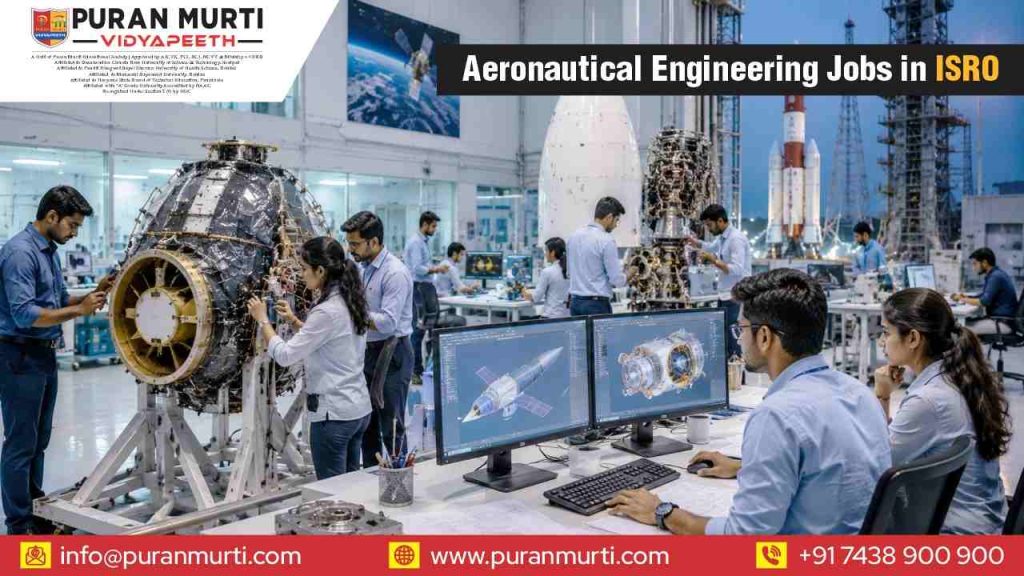
Aeronautical Engineering Jobs in ISRO
Posted on : 15 June, 2026 2:22 pm
The Indian rocket and satellite launch industry is flourishing, and ISRO is motivating thousands of engineering students each year. ISRO has many new job openings for engineers who want to work on satellite development, rocket launch systems, and missions such as Chandrayaan and Gaganyaan. ISRO has numerous vacancies for aeronautical engineers as there are numerous projects related to the aircraft system and rocket propulsion, structural design, and aerospace research require assistance from aeronautical engineers.
If you want to develop rockets, spacecraft, satellites, or new types of aerospace technology, then aeronautical engineering may be an excellent option for your education. Institutions like Puran Murti Vidyapeeth provide students with the theoretical and practical experience needed to enter into successful careers in the aerospace and space industries. Apply Now
Why do Aeronautical Engineering dream of working for ISRO?
ISRO, or the Indian Space Research Organization, is not just another government agency but the premier space agency of India that is responsible for designing, developing, and operating space–related technology. The engineers who work at ISRO contribute directly to national programs that affect communication, weather forecasting, navigation, defense, and science.
Here are some of the benefits of working at ISRO:
- Prestige of a career in aerospace engineering
- A stable government job
- Exposure to cutting-edge technology
- Research and innovation projects
- Attractive salary and benefits
- Chance to contribute to the national aerospace program
ISRO advertises positions for a large number of aerospace engineers on a centralized foundation. Apply Now
What Does an Aeronautical Engineer Do in ISRO?
Many students believe that ISRO only hires aerospace engineers but in reality, a large number of aeronautics engineers support several departments As aeronautical engineers support airplane & spacecraft design, or do aerodynamic analysis or perform structural designs & test, develop rocket propulsion systems, perform flight dynamics and control systems, perform computational fluid dynamics (CFD), perform thermal analysis for launch vehicles or develop satellite components supporting missions planned for and evaluated after flight.
Aeronautical engineers contribute to support both research and operational projects. Therefore, aeronautical engineers are an important part of the work force in ISRO.
How Aeronautical Engineering Connects with ISRO
Aeronautical Engineering focuses on:
| Core Subject | Relevance in ISRO |
|---|---|
| Aerodynamics | Required to design launch vehicles. |
| Propulsion Systems | Required for designing rocket engines and spacecraft. |
| Flight Mechanics | Required to plan mission trajectories. |
| Structures | Required for designing satellites and rockets. |
| Avionics | Required for developing guidance and navigation systems. |
| CFD Analysis | Required to optimize performance. |
| Aircraft Design | Required to conduct research on aerospace projects. |
The skills that you learn in Aeronautical Engineering directly apply to the work that ISRO performs on various projects. Apply Now
Educational Qualification Required
To obtain a science/engineering job at ISRO as an aeronautical engineer, you must possess the following qualifications:
| Qualification | Requirement |
| Undergraduate Degree | B.Tech/B.E. in Aeronautical Engineering |
| Alternative Degrees | Aerospace Engineering, Mechanical Engineering |
| Minimum Marks | Usually 65% or above |
| Additional Qualification | M.Tech can improve opportunities |
| Entrance Requirement | ISRO Recruitment Exam or GATE-based recruitment |
ISRO frequently recruits Scientist/Engineer positions for engineering graduates through the ISRO Centralized Recruitment Board (ICRB). Apply Now

Best Path After Completing Class 12
Complete your Class 12 education and take the following subjects: Apply Now
Step 1: Complete Class 12
Subjects Required:
- Physics
- Chemistry
- Mathematics
Step 2: Pursue B.Tech in Aeronautical Engineering
Choose a reputed institution such as Puran Murti Vidyapeeth that provides:
- Modern laboratories
- Industry-oriented curriculum
- Research exposure
- Practical aerospace projects
- Internship opportunities
Step 3: Prepare for Competitive Exams
Focus on:
- GATE
- ISRO Recruitment Examination
- Technical interviews
Step 4: Apply for ISRO Recruitment
Monitor ISRO career notifications regularly. Recruitment opportunities are announced through the official ISRO careers portal. Apply Now
Popular ISRO Job Roles for Aeronautical Engineers
Scientist/Engineer ‘SC’
Scientist/Engineer ‘SC’ This is the Entry Level Technical Role
Tasks include:
- Design and development
- Testing and validation
- Research and innovation
- Project execution
Propulsion Engineer Works on:
Works on:
- Rocket engines
- Fuel systems
- Combustion analysis
- Performance optimization
Flight Dynamics Engineer
Handles:
- Trajectory calculations
- Orbital mechanics
- Navigation systems
Structural Design Engineer
Responsible for:
- Spacecraft structures
- Launch vehicle frames
- Material testing
Research Scientist Concentrates on
Focuses on:
- Advanced aerospace technologies
- Future mission concepts
- Experimental studies
ISRO Recruitment Process
The recruitment process generally involves:
| Stage | Description |
| Online Application | Registration in the ISRO portal |
| Screening | Evaluation of academics |
| Written Test | Technical evaluation |
| Interview | Subject Matter Evaluation |
| Final Selection | Merit Based Selection |
ISRO generally has written tests followed by interviews for all engineering positions.
Skills Required to Get an ISRO Job
Technical skills: Apply Now
- Aerodynamics
- Propulsion Systems
- Flight Mechanics
- CFD Software
- CAD Tools
- MATLAB
- Programming Basics
Soft skills:
- Problem-solving
- Analytical thinking
- Teamwork
- Communication skills
- Research aptitude
ISRO Salary for Aeronautical Engineers
The salary package at ISRO is considered attractive, especially for fresh graduates.
| Position | Approximate Monthly Salary |
| Scientist/Engineer SC | ₹60,000 – ₹85,000 |
| Scientist/Engineer SD | ₹80,000 – ₹1,10,000 |
| Senior Scientist | ₹1,20,000+ |
| Project Director | ₹1,50,000+ |
In addition to the basic salary, employees receive:
- Housing Allowance
- Medical facilities
- Transportation Allowance
- Pension benefits
- Leave travel concessions
Salary varies according to experience, grade, and location. Apply Now
ISRO vs Private Aerospace Companies
| Factor | ISRO | Private Aerospace Sector |
| Job Security | Excellent | Moderate |
| Salary Growth | Stable | Faster |
| Research Opportunities | High | Moderate |
| National Projects | Yes | Limited |
| Work-Life Balance | Good | Depends on company |
| Prestige | Extremely High | High |
Future Opportunities for Aeronautical Engineers at ISRO
ISRO is experiencing rapid growth in the complex field of space technology. ISRO has several upcoming programs including:
- Human spaceflight missions
- Advanced launch vehicles
- Satellite constellations
- Deep space exploration
- Space station development
In addition, ISRO continues to develop new and more advanced aerospace technologies which will contribute to the growth and long-term job potential for engineers. Apply Now
How Puran Murti Vidyapeeth Prepares Students for Careers at ISRO
For students aspiring to work in ISRO, selecting the right college is the first step.
Puran Murti Vidyapeeth provides students with:
- Aeronautical Engineering programs focused on industry needs
- Experienced faculty members
- Practical laboratory training
- Technical workshops
- Aerospace project exposure
- Career guidance and placement support
The institution emphasizes both theoretical knowledge and hands-on learning, helping students build a strong foundation for careers in aerospace and space research. Apply Now

Tips to Crack ISRO Recruitment
Build Strong Fundamentals
Focus on: Apply Now
- Engineering Mechanics
- Thermodynamics
- Fluid Mechanics
- Aerodynamics
Practice Previous Papers
Understand:
- Question patterns
- Technical concepts
- Time management
Develop Technical Projects
Projects demonstrate: Apply Now
- Practical skills
- Problem-solving ability
- Research interest
Improve Interview Preparation
Be ready to discuss:
- Final-year projects
- Core subjects
- Aerospace technologies
Advantages of Working in ISRO
- Contribution to national development
- Exposure to advanced technology
- Continuous learning opportunities
- Research-oriented environment
- Professional growth
- Prestigious career profile
Challenges Faced by Aeronautical Engineers in ISRO
Like any technical career, challenges exist:
- High competition
- Rigorous selection process
- Continuous skill development
- Complex project requirements
However, these challenges also help engineers grow professionally. Apply Now
Is Aeronautical Engineering a Good Choice for ISRO Aspirants?
Absolutely.
Aeronautical Engineering provides direct exposure to the principles used in spacecraft, launch vehicles, propulsion systems, and flight technologies. Students with strong technical skills, dedication, and a passion for aerospace innovation can build a rewarding career in ISRO.
With quality education from institutions like Puran Murti Vidyapeeth, proper exam preparation, and a strong engineering foundation, aspiring engineers can move closer to their dream of working for India’s prestigious space organization. Apply Now
Conclusion
Aeronautical Engineering and ISRO form an excellent combination for students passionate about aerospace technology and space exploration. ISRO offers prestigious job opportunities, attractive salaries, long-term career growth, and the chance to contribute to some of India’s most important scientific missions. By choosing the right educational path, developing strong technical skills, and staying committed to continuous learning, students can successfully secure Aeronautical Engineering jobs in ISRO and become part of India’s exciting space journey. Apply Now
Frequently Asked Questions (FAQs)
1. Can an Aeronautical Engineer get a job in ISRO?
Yes, Aeronautical Engineers are eligible for various technical positions in ISRO, including Scientist/Engineer roles. Their expertise in aerodynamics, propulsion systems, flight mechanics, and aerospace structures is highly valuable for space missions and launch vehicle development. Apply Now
2. What qualification is required for ISRO after Aeronautical Engineering?
Candidates generally need a B.Tech/B.E. in Aeronautical Engineering from a recognized university with a good academic record. Some positions may also prefer candidates with an M.Tech degree or a valid GATE score.
3. What is the salary of an Aeronautical Engineer in ISRO?
A fresh Scientist/Engineer ‘SC’ at ISRO can earn approximately ₹60,000 to ₹85,000 per month, including allowances. The salary increases significantly with experience, promotions, and additional responsibilities. Apply Now
4. Is GATE mandatory for ISRO recruitment?
Not always. ISRO recruits engineers through different recruitment methods. Some positions require a GATE score, while others have separate written examinations and interviews.
5. Which subjects should I focus on to crack the ISRO exam?
Students should focus on Aerodynamics, Fluid Mechanics, Thermodynamics, Propulsion Systems, Aircraft Structures, Flight Mechanics, Engineering Mathematics, and basic Electronics and Programming concepts.