Aerospace Engineering After 12th
Posted on : 5 September, 2026 8:36 pm
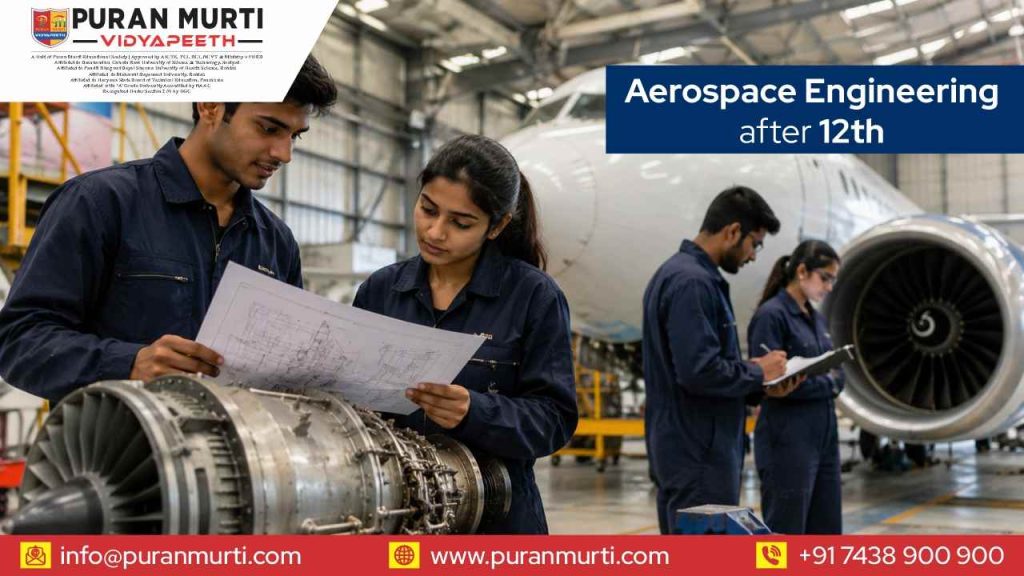
If you are fascinated by airplanes, rockets, satellites, spacecraft, and modern aviation technology, Aerospace Engineering after 12th can be an exciting career option. This field combines engineering, science, innovation, and technology to design, develop, test, and maintain systems related to aircraft and space vehicles. Many students complete Class 12 and wonder how they can build a career in aviation or the space sector. Aerospace Engineering After 12th offers opportunities to work in areas such as aircraft design, propulsion systems, satellite technology, defence, drones, and space research.
For students looking for professional and career-focused technical education, Puran Murti Vidyapeeth, Sonipat, can be considered as an institution offering engineering and aviation-related education in the Delhi NCR region. Apply Now
What is Aerospace Engineering?
Aerospace Engineering is a branch of engineering that focuses on the design, development, testing, and maintenance of aircraft, spacecraft, satellites, missiles, drones, and other flying systems.
The field is generally connected with two major areas:
Aeronautical Engineering
Aeronautical Engineering mainly deals with aircraft that operate within the Earth’s atmosphere. It includes: Apply Now
- Airplanes
- Helicopters
- Drones
- Fighter aircraft
- Aircraft engines
- Aviation systems
Astronautical Engineering
Astronautical Engineering focuses on vehicles and technologies used beyond the Earth’s atmosphere. It includes:
- Rockets
- Satellites
- Spacecraft
- Space missions
- Launch vehicles
- Space exploration technology
Aerospace Engineering Courses After 12th
| Course | Duration | Suitable For |
|---|---|---|
| B.Tech in Aerospace Engineering | 4 Years | Students interested in aircraft and space technology |
| B.Tech in Aeronautical Engineering | 4 Years | Students interested mainly in aircraft and aviation |
| Diploma in Aeronautical Engineering | 3 Years | Students looking for technical education after 10th or 12th |
| Aircraft Maintenance Engineering (AME) | 4 Years | Students interested in aircraft maintenance and aviation |
| M.Tech in Aerospace Engineering | 2 Years | Students pursuing higher education after graduation |
Among these options, a B.Tech in Aerospace Engineering is one of the most popular choices for students who want to build a professional engineering career. Apply Now
Aerospace Engineering Eligibility After 12th
The eligibility requirements may vary depending on the college or university.
- Must have completed Class 12 from a recognized board.
- Physics and Mathematics are generally required subjects.
- Chemistry or another accepted technical subject may be required according to the admission rules of the institution.
- Students should meet the minimum marks required by the college or university.
- Admission may be based on entrance examinations, merit, or institutional admission procedures.
Before applying, students should always check the latest eligibility requirements of their chosen institution.
https://blog.puranmurti.com/ba-llb-salary-in-india-2027/
How to Get Admission in Aerospace Engineering After 12th?
The admission process may differ from one college to another. Generally, students can follow these steps: Apply Now
Step 1: Complete Class 12
- Students should complete their 12th education with the required subjects, especially Physics and Mathematics.
Step 2: Research the Course and College
- Before applying, understand the difference between Aerospace Engineering, Aeronautical Engineering, and Aircraft Maintenance Engineering.
III Step: Check Eligibility
- Check the academic requirements, minimum marks, entrance examination requirements, and admission process.
Step 4: Apply for Admission
- Students may need to fill out an application form for an entrance examination, counselling process, or direct institutional admission.
Step 5: Document Verification and Admission
- After selection, students generally complete document verification, fee submission, and other admission formalities.

Aerospace Engineering Subjects
A technical course that includes concepts from mathematics, physics, mechanical engineering, and aviation technology.
- Engineering Mathematics
- Engineering Physics
- Engineering Mechanics
- Fluid Mechanics
- Aerodynamics
- Thermodynamics
- Aircraft Structures
- Aircraft Propulsion
- Flight Mechanics
- Avionics
- Spacecraft Technology
- Rocket Propulsion
- Satellite Systems
- Computer-Aided Design
- Aircraft Design
Aerospace Engineering Fees in India
| Type of College | Approximate Total Course Fee |
|---|---|
| Government Colleges | ₹3 lakh – ₹10 lakh |
| Private Colleges | ₹4 lakh – ₹16 lakh+ |
| Premium Private Universities | ₹8 lakh – ₹16 lakh+ |
| Puran Murti Vidyapeeth | ₹6.45 lakh |
Students should check the latest official fee structure before taking admission. Apply Now
Aerospace Engineering Fees at Puran Murti Vidyapeeth
For students considering B.Tech Aerospace Engineering at Puran Murti Vidyapeeth, the published fee structure is:
| Fee Component | Amount |
|---|---|
| Registration Fee | ₹1,000 |
| Admission Fee | ₹15,000 |
| Alumni Fee | ₹1,500 |
| Library Fee | ₹8,000 |
| Book Bank Fee | ₹10,000 |
| Uniform Fee | ₹10,000 |
| Annual Tuition Fee | ₹1,50,000 |
| Total Payable Fee | ₹6,45,500 |
The published structure also lists hostel charges separately: ₹1,33,000 per year for a non-AC room and ₹1,10,000 per year for an AC room, including the listed hostel admission and kit charges. Apply Now
Why Choose Aerospace Engineering After 12th?
Aerospace Engineering can be a suitable career choice for students who enjoy technology, machines, aviation, and scientific innovation. Apply Now
Exciting Technology
Students learn about aircraft, spacecraft, satellites, rockets, and other advanced technologies.
Growing Aviation Industry
The aviation industry requires skilled professionals in different technical and engineering roles.
Opportunities in Space Technology
India’s growing interest in space research and satellite technology has increased awareness about careers connected with the space sector.
Innovation and Research
Aerospace Engineering offers opportunities for students interested in research, product development, and technological innovation.
International Career Opportunities
Aerospace and aviation technology are global industries. With the right qualifications, skills, and experience, professionals may explore opportunities in different countries. Apply Now
Aerospace Engineering Career Opportunities
Possible job roles include:
- Aerospace Engineer
- Aeronautical Engineer
- Aircraft Design Engineer
- Flight Test Engineer
- Propulsion Engineer
- Avionics Engineer
- Structural Engineer
- Satellite Engineer
- Research Engineer
- Maintenance and Technical Specialist
- CAD Design Engineer
- Quality Control Engineer
The actual job role depends on the student’s qualification, skills, specialization, experience, and employer requirements.
Top Employment Areas for Aerospace Engineers
Aerospace Engineering graduates may explore opportunities in areas such as: Apply Now
- Aviation companies
- Aircraft manufacturing
- Space technology
- Satellite companies
- Defence organizations
- Research and development
- Drone technology
- Aviation design
- Engineering consulting
- Government and private research organizations
Aerospace Engineering Salary in India
| Experience Level | Approximate Salary Range |
|---|---|
| Fresher / 0–2 Years | ₹3 lakh – ₹8 lakh per year |
| 2–5 Years | ₹6 lakh – ₹12 lakh per year |
| 5–10 Years | ₹10 lakh – ₹20 lakh per year |
| 10+ Years | ₹15 lakh – ₹30 lakh+ per year |
Salary for Different Aerospace Engineering Roles
| Job Role | Approximate Salary Range |
|---|---|
| Junior Aerospace Engineer | ₹2.5 lakh – ₹5 lakh/year |
| Aerospace Design Engineer | ₹4 lakh – ₹10 lakh/year |
| Aerodynamics Engineer | ₹4 lakh – ₹12 lakh/year |
| Propulsion Engineer | ₹5 lakh – ₹12 lakh/year |
| Avionics Engineer | ₹4 lakh – ₹12 lakh/year |
| Structural Engineer | ₹4 lakh – ₹12 lakh/year |
| Senior Aerospace Engineer | ₹9 lakh – ₹18 lakh+/year |
| Aerospace Project Manager | ₹12 lakh – ₹25 lakh+/year |
Important Skills for Aerospace Engineering Students
- A degree is important, but practical skills can also play a major role in career growth. Apply Now
Students should work on:
- Mathematics and physics fundamentals
- Problem-solving ability
- Computer skills
- CAD and design tools
- Technical communication
- Programming basics
- Research skills
- Analytical thinking
- Teamwork
- Innovation and creativity
Aerospace Engineering vs Aeronautical Engineering
Students often get confused between these two courses.
- Aerospace Engineering is a broader field that can include aircraft as well as spacecraft and space-related technology.
- Aeronautical Engineering mainly focuses on aircraft and systems that operate within the Earth’s atmosphere.
Both fields offer interesting career opportunities, but students should choose according to their personal interests and long-term career goals.
Aerospace Engineering at Puran Murti Vidyapeeth
For students searching for engineering and aviation-related education near Delhi NCR, Puran Murti Vidyapeeth, Sonipat, can be explored as an educational institution offering career-focused technical programs. Students should select a course after carefully checking the current program availability, eligibility requirements, admission process, infrastructure, practical training opportunities, and other academic details. A good educational journey is not only about earning a degree. Students should also focus on practical learning, projects, communication skills, internships, and continuous technical development. Apply Now
Future Scope of Aerospace Engineering
The future of Aerospace Engineering is connected with continuous development in aviation, defence technology, drones, satellites, and space exploration.
- Unmanned aerial vehicles
- Drone technology
- Satellite communication
- Advanced aircraft systems
- Space missions
- Sustainable aviation
- Artificial intelligence in aviation
- Advanced propulsion systems
Final Words
Choosing Aerospace Engineering after 12th can be an excellent option for students who are genuinely interested in aircraft, aviation, spacecraft, satellites, and advanced engineering technology. Before taking admission, students should understand the course, compare colleges, check eligibility and fees, and explore career opportunities. A successful aerospace career requires more than just a degree. Strong technical knowledge, practical exposure, projects, internships, and continuous learning are equally important. Apply Now
Students interested in engineering and aviation-related education in the Sonipat and Delhi NCR region can explore the available programs and academic opportunities at Puran Murti Vidyapeeth and choose a course that matches their interests and future career goals.
FAQs
Can I do Aerospace Engineering after 12th?
Yes. Students who meet the required eligibility criteria can apply for Aerospace Engineering programs after completing Class 12.
Which subjects are required for Aerospace Engineering?
Physics and Mathematics are generally important subjects. Specific eligibility requirements may vary by institution.
Is Aerospace Engineering a good career option?
It can be a good option for students interested in aviation, aircraft, spacecraft, engineering, and technology.
What is the duration of B.Tech Aerospace Engineering?
A B.Tech program is generally four years long.
What is the difference between Aerospace and Aeronautical Engineering?
Aerospace Engineering can include aircraft and spacecraft technology, while Aeronautical Engineering mainly focuses on aircraft operating within the Earth’s atmosphere.
Can Aerospace Engineers work in the space sector?
Depending on their qualifications, skills, specialization, and employer requirements, aerospace graduates may explore opportunities connected with space technology and research. Apply Now
Is practical training important in Aerospace Engineering?
Yes. Practical projects, internships, workshops, software knowledge, and technical training can help students develop industry-relevant skills.
Can I pursue higher education after Aerospace Engineering?
Yes. Graduates can pursue M.Tech, MBA, research programs, or other specialized courses depending on their career goals.