Engineering Courses After 12th Science
Posted on : 21 September, 2026 4:11 pm
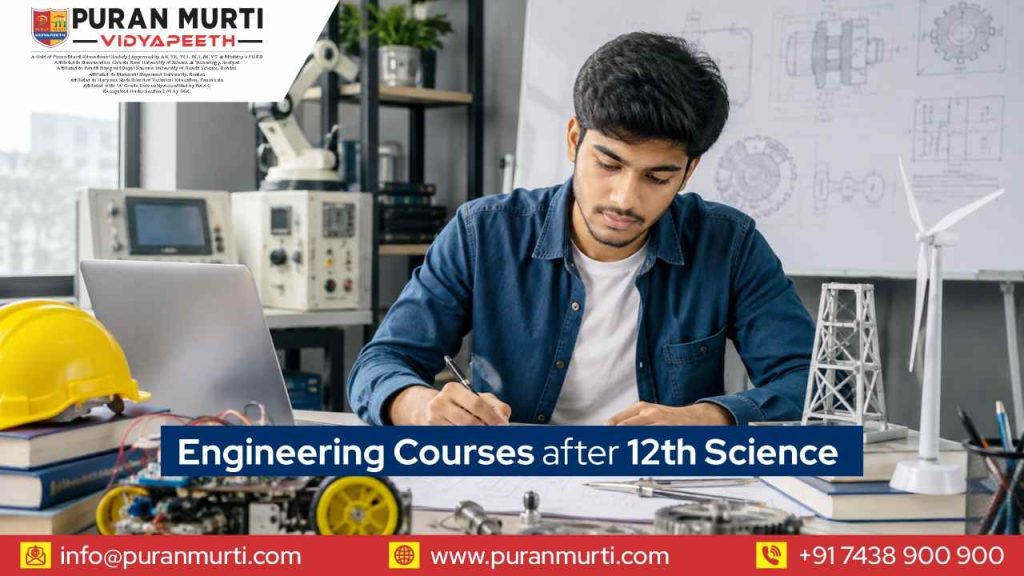
Choosing the right career after Class 12 is an important decision, especially for students from the Science stream. If you have studied Physics, Chemistry and Mathematics (PCM), engineering can open the door to many exciting career opportunities in technology, construction, manufacturing, software, aviation and other industries. Today, engineering is not limited to traditional branches like Mechanical or Civil Engineering. Students can choose from several modern fields such as Computer Science Engineering, Artificial Intelligence, Data Science, Electronics, Aerospace Engineering and Cybersecurity. This Engineering courses after 12th Science, eligibility, popular branches, career opportunities and important factors to consider while selecting a college.
What Are Engineering Courses After 12th Science?
Engineering courses after 12th Science are undergraduate programs designed for students who have completed Class 12 with subjects such as Physics, Chemistry and Mathematics. The most common undergraduate engineering degree is Bachelor of Technology (B.Tech) or Bachelor of Engineering (B.E.). These programs generally have a duration of 4 years, divided into eight semesters. Apply Now
Eligibility for Engineering After 12th
| Eligibility Criteria | Details |
|---|---|
| Educational Qualification | Class 12 or equivalent from a recognised board |
| Main Subjects | Physics and Mathematics are generally required |
| Other Subject | Chemistry/Biology/Technical Vocational subject may be accepted depending on the program |
| Minimum Marks | Varies according to college, course and admission rules |
| Entrance Exam | JEE Main or state/private entrance exams may be applicable |
| Course Duration | Usually 4 years |
Best Engineering Courses After 12th Science
There are many engineering branches available today. Your choice should depend on your interests, academic strengths and career goals.
Computer Science Engineering
Computer Science Engineering (CSE) is one of the most popular engineering branches. It focuses on programming, software development, databases, computer networks, operating systems and emerging technologies.
- Artificial Intelligence
- Machine Learning
- Data Science
- Cloud Computing
- Cybersecurity
- Web Development
Career options: Software Developer, Web Developer, Data Analyst, Cloud Engineer, Cybersecurity Professional and Software Engineer.
Mechanical Engineering
- Mechanical Engineering deals with machines, manufacturing systems, automobiles, thermodynamics and mechanical design.
- Students interested in machines, automobiles and industrial technology can consider this branch. Apply Now
Career options: Mechanical Engineer, Production Engineer, Design Engineer, Automotive Engineer and Maintenance Engineer.
Civil Engineering
- Civil Engineering focuses on the planning, design and construction of infrastructure such as buildings, bridges, roads, highways and water systems.
- It is a suitable choice for students interested in construction, infrastructure and structural design.
Career options: Civil Engineer, Structural Engineer, Site Engineer, Construction Manager and Project Engineer.
Electrical Engineering
- Electrical Engineering covers electrical systems, power generation, circuits, control systems and electrical machines.
- With the growing use of renewable energy and electric vehicles, electrical engineering also connects with several emerging technologies.
Career options: Electrical Engineer, Power Engineer, Control Engineer, Maintenance Engineer and Electrical Design Engineer.
Electronics and Communication Engineering
- Electronics and Communication Engineering (ECE) combines electronics, communication systems and digital technologies.
- Students learn about electronic circuits, communication systems, embedded systems, microprocessors and related technologies.
Career options: Electronics Engineer, Communication Engineer, Embedded Systems Engineer, Network Engineer and Hardware Engineer.
Artificial Intelligence and Machine Learning
- AI and Machine Learning are among the fastest-growing technology areas. This branch focuses on developing intelligent systems that can analyse data, recognise patterns and automate tasks.
- Students usually study programming, mathematics, statistics, machine learning and data-related concepts.
Career options: AI Engineer, Machine Learning Engineer, Data Scientist and AI Software Developer. Apply Now
Aerospace Engineering
- Aerospace Engineering focuses on aircraft, spacecraft, propulsion systems, aerodynamics and aviation technology.
- It is a specialised field for students who are interested in aircraft and space technology.
Career options: Aerospace Engineer, Design Engineer, Aerodynamics Engineer, Aircraft Systems Engineer and Research Professional.
Information Technology
- Information Technology (IT) focuses on software, computer systems, networks, databases and information management.
- IT graduates can work in software companies, technology firms, consulting organisations and other industries that use digital systems.
Career options: IT Engineer, System Administrator, Software Developer, Network Engineer and IT Consultant.
Biotechnology Engineering
- Biotechnology Engineering combines engineering principles with biology and technology. Students learn about biotechnology processes, biological systems and laboratory applications.
Career options: Biotechnologist, Research Associate, Quality Control Professional and Biotechnology Engineer.
Chemical Engineering
- Chemical Engineering focuses on chemical processes, manufacturing, materials, industrial production and process design.
- It has applications in industries such as pharmaceuticals, chemicals, food processing, energy and manufacturing.
Career options: Process Engineer, Chemical Engineer, Production Engineer and Quality Control Engineer. Apply Now
Engineering Courses After 12th Science
| Engineering Branch | Major Focus | Popular Career Areas |
|---|---|---|
| Computer Science | Software & Computing | IT, Software, AI |
| Mechanical | Machines & Manufacturing | Automobile, Production |
| Civil | Construction & Infrastructure | Construction, Infrastructure |
| Electrical | Power & Electrical Systems | Energy, Manufacturing |
| ECE | Electronics & Communication | Electronics, Telecom |
| AI & ML | Intelligent Technologies | AI, Data, Software |
| Aerospace | Aircraft & Space | Aviation, Aerospace |
| IT | Information Technology | Software, IT Services |
| Biotechnology | Biology & Technology | Biotech, Research |
| Chemical | Industrial Processes | Chemicals, Pharma, Manufacturing |
Why Choose Puran Murti Vidyapeeth for Engineering?
Puran Murti Vidyapeeth can be considered by students looking for an engineering education environment with a focus on academics, practical learning and career development.
While selecting an engineering college, students should look beyond the course name.
- Experienced faculty
- Well-equipped laboratories
- Practical and project-based learning
- Computer and technical facilities
- Industry exposure
- Internship opportunities
- Placement support
- Campus facilities
- Student activities
- Skill-development opportunities
Puran Murti Vidyapeeth can be explored by students who want to pursue engineering in Haryana and are comparing colleges based on their academic and career requirements. Apply Now
How to Choose the Right Engineering Branch?
Choosing an engineering branch should not be based only on what is popular. Think about your interests and long-term goals.
Consider Your Interests
- If you enjoy coding and computers, CSE, IT, AI or Data Science may be worth exploring.
- If you like machines and automobiles, Mechanical Engineering may be suitable.
- If construction and infrastructure interest you, consider Civil Engineering.
- Students interested in electronics and communication can explore ECE.
- For those interested in aircraft and space technology, Aerospace Engineering can be an option. Apply Now
Check the Course Curriculum
- Before taking admission, check what subjects are taught in the course. Look at practical subjects, laboratories, projects, internships and elective options.
Compare Colleges
- Compare colleges on the basis of faculty, infrastructure, laboratories, fees, location, internships, placement support and other facilities.
Think About Future Opportunities
- Technology changes quickly. Therefore, choose a course where you can continuously develop new skills along with your degree.
Admission Process for Engineering After 12th
The admission process can vary between institutions and states. Generally, the process includes: Apply Now
- Complete Class 12 with the required subjects.
- Appear for the required entrance examination, if applicable.
- Check your result and eligibility.
- Participate in counselling or the college admission process.
- Select your preferred branch and college.
- Complete document verification.
- Pay the required admission fee.
- Start the engineering program.
Career Opportunities After Engineering
Engineering graduates can work across many sectors depending on their specialisation and skills. Apply Now
- Information Technology
- Automobile
- Construction
- Manufacturing
- Electronics
- Telecommunications
- Aviation
- Renewable Energy
- Banking and FinTech
- Healthcare Technology
- Consulting
- Research and Development
Students can also pursue higher education such as M.Tech, MBA, MS or specialised professional certifications.
Skills Students Should Develop During Engineering
A degree is important, but practical skills can also play an important role in career development. Apply Now
- Communication skills
- Problem-solving
- Programming
- Technical knowledge
- Teamwork
- Project management
- Analytical thinking
- Industry knowledge
- Internship experience
- Presentation skills
Conclusion
Engineering remains a diverse career option for students who have completed 12th Science, particularly those with a strong interest in Mathematics, technology and problem-solving. From Computer Science and Artificial Intelligence to Mechanical, Civil, Electrical, Electronics and Aerospace Engineering, students have many branches to choose from. The right engineering course depends on your interests, academic strengths and career goals. Before taking admission, compare the curriculum, college facilities, practical training, fees, admission requirements and career opportunities.
Students looking for an engineering college in Haryana can also explore Puran Murti Vidyapeeth and compare its available programs and facilities with other institutions before making an informed admission decision. Apply Now
FAQs
1. Which engineering course is best after 12th Science?
There is no single course that is suitable for every student. CSE, Mechanical, Civil, Electrical, ECE, AI and other branches have different career paths. Students should choose according to their interests and goals. Apply Now
2. Can I do B.Tech after 12th Science?
Yes. Students who meet the required eligibility criteria can apply for B.Tech programs after completing Class 12 Science.
3. Is Mathematics compulsory for engineering?
Mathematics is generally required for many B.Tech engineering programs, but eligibility can vary by course and institution.
4. How many years is a B.Tech course?
A regular B.Tech program generally takes four years, divided into eight semesters.
5. Which engineering branch is related to software development?
Computer Science Engineering and Information Technology are closely related to software development. AI, Data Science and related specialisations can also lead to software and technology careers.
6. What can I do after Mechanical Engineering?
Mechanical Engineering graduates can explore careers in automobile, manufacturing, production, design, maintenance and other technical sectors. Apply Now
7. Is Civil Engineering a good option after 12th Science?
Civil Engineering can be considered by students interested in construction, infrastructure, structural design and project management.
8. Can I study Artificial Intelligence after 12th?
Yes. Students can pursue undergraduate programs or engineering specialisations related to Artificial Intelligence and Machine Learning, depending on the college and admission options.
9. What should I check before choosing an engineering college?
Check accreditation/recognition, course curriculum, faculty, laboratories, infrastructure, fees, internships, placement information and other student facilities.
10. Can I pursue higher studies after B.Tech?
Yes. After B.Tech, students can consider higher studies such as M.Tech, MBA, MS and specialised professional programs depending on their career goals. Apply Now