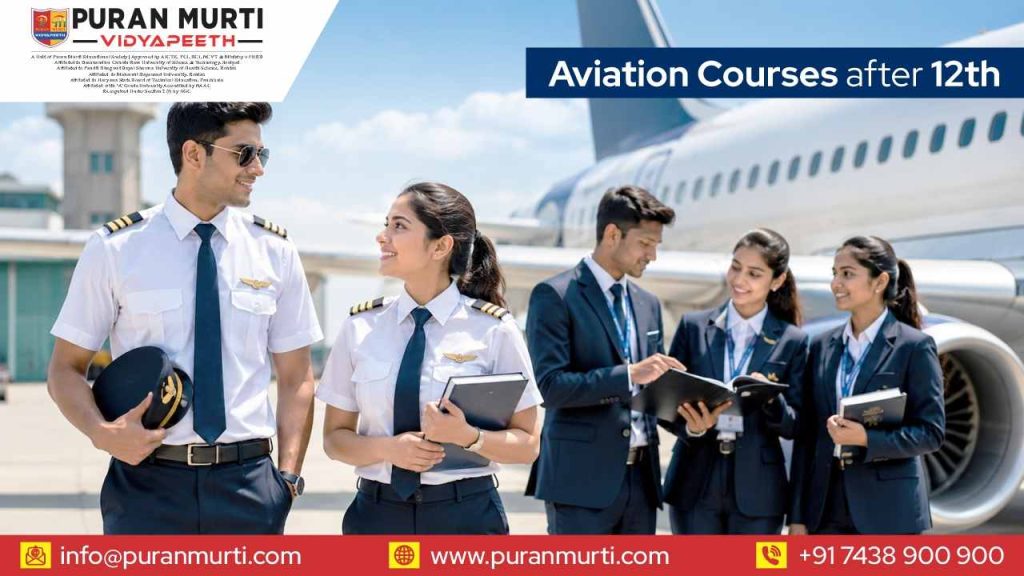
Aviation Courses After 12th
Posted on : 19 September, 2026 1:11 pm
Are you interested in airplanes, airports, aviation technology, or the airline industry? If yes, an aviation course after 12th can be an exciting career option. The aviation sector offers opportunities in technical as well as non-technical areas, including aircraft maintenance, airport management, airline operations, aviation safety and passenger services. Students from different streams can explore aviation-related courses after Class 12, depending on the eligibility requirements of the specific program. Students with Physics, Chemistry and Mathematics (PCM) have additional options in technical aviation and engineering-related fields. Apply Now
What Are Aviation Courses After 12th?
- Aviation courses are programs designed to prepare students for careers connected with aircraft, airports, airlines and aviation services.
- you can choose a technical course such as Aircraft Maintenance Engineering (AME) or an aviation-focused undergraduate course such as BBA in Aviation Management.
Some programs focus on aircraft and engineering, while others focus on airport operations, airline management, logistics and passenger services. Apply Now
Why Choose Aviation as a Career?
The aviation industry involves much more than pilots and cabin crew. A modern airport or airline requires professionals in many different areas.
- Opportunities in airlines and airports
- Technical and management career options
- Exposure to an international industry
- Different specialisations to choose from
- Opportunities in airport operations and aviation services
- Scope for professional skill development
- Possibility of careers in aircraft maintenance and aviation management
However, students should choose a course based on their interests, eligibility and long-term career plans rather than choosing aviation only because of its popularity. Apply Now
Best Aviation Courses After 12th
There are several aviation-related courses available after Class 12. The right option depends on your educational background and career interests.
Aircraft Maintenance Engineering (AME)
- Aircraft Maintenance Engineering is a specialised technical field related to the inspection, maintenance and airworthiness of aircraft.
- AME training is different from a conventional B.Tech degree. Students should carefully check the regulatory approval and applicable licensing requirements of the institute and program before admission.
- Students interested in aircraft maintenance should have a strong interest in technical subjects and aviation safety.
Career areas: Aircraft maintenance, airline technical departments, maintenance organisations and aviation-related technical services.
BBA in Aviation Management
A BBA in Aviation Management combines business education with aviation-related management concepts.
- Airport management
- Airline management
- Aviation operations
- Aviation safety
- Business communication
- Airport customer service
- Aviation marketing
- Logistics and management
Career areas: Airport operations, airline management, aviation administration, customer service and airport services.
B.Sc. Aviation
- B.Sc. Aviation is an undergraduate program that introduces students to aviation-related subjects along with scientific and technical concepts.
- Depending on the institution, the curriculum may cover areas such as aviation operations, aircraft systems, aviation safety, navigation and related subjects.
Students should check the exact curriculum and eligibility requirements before applying.
Aeronautical Engineering
- Aeronautical Engineering focuses on the design, development, testing and maintenance of aircraft and aircraft systems.
Students usually study subjects related to:
- Aerodynamics
- Aircraft structures
- Propulsion
- Flight mechanics
- Aircraft systems
- Aviation technology
This option can be suitable for students who have a strong interest in aircraft technology and engineering. Apply Now
Aerospace Engineering
- Aerospace Engineering covers both aircraft and spacecraft technologies. It is a broader engineering field that includes aeronautical as well as space-related applications.
- Students can learn about aircraft design, propulsion, aerodynamics, materials and aerospace systems.
Career areas: Aerospace companies, aircraft manufacturing, research organisations, defence-related industries and engineering services.
Airport Management Courses
- Students interested in the business and operational side of airports can consider airport management programs.
These courses may cover:
- Airport operations
- Passenger handling
- Aviation security
- Airline operations
- Airport administration
- Customer service
- Aviation regulations
Such courses can prepare students for roles related to airport and airline operations.
Cabin Crew and Aviation Hospitality Courses
Students interested in passenger services can explore cabin crew and aviation hospitality programs.
- Communication skills
- Passenger handling
- Hospitality
- Grooming
- Safety procedures
- Emergency response
- Customer service
Specific airline recruitment requirements vary, so students should check the requirements of individual airlines when applying for jobs. Apply Now
Aviation Courses After 12th
| Course | Typical Duration | Main Focus | Suitable For |
|---|---|---|---|
| AME | Varies by approved program | Aircraft maintenance | Technical aviation |
| BBA Aviation | Usually 3 years | Aviation management | Management & operations |
| B.Sc. Aviation | Usually 3 years | Aviation & science | Aviation studies |
| Aeronautical Engineering | Usually 4 years | Aircraft engineering | Aircraft technology |
| Aerospace Engineering | Usually 4 years | Aircraft & spacecraft | Aerospace technology |
| Airport Management | Varies | Airport operations | Airport careers |
| Cabin Crew Courses | Varies | Passenger services | Aviation hospitality |
Eligibility for Aviation Courses After 12th
For many undergraduate aviation programs, students need to have passed Class 12 from a recognised board. Some technical and engineering programs require Physics and Mathematics as compulsory subjects. Apply Now
For example:
| Course Type | Common Academic Requirement |
|---|---|
| BBA Aviation | 10+2 from a recognised board |
| B.Sc. Aviation | 10+2; subject requirements vary |
| Aeronautical Engineering | Usually PCM in Class 12 |
| Aerospace Engineering | Usually PCM in Class 12 |
| AME | Requirements depend on the approved training program |
| Airport Management | Generally 10+2; varies by institution |
Admission Process for Aviation Courses
The admission process depends on the college and course. A general process may include:
- Complete Class 12 from a recognised board.
- Check the eligibility criteria.
- Fill out the application form.
- Submit academic and other required documents.
- Appear for an entrance test or interview if applicable.
- Complete counselling or admission formalities.
- Pay the required fees.
- Begin the course.
Aviation Course Fees After 12th
| Course | Approximate Fee Range* |
|---|---|
| BBA Aviation | ₹1.5–4 lakh |
| B.Sc. Aviation | ₹2–5 lakh |
| Airport Management | ₹50,000–3 lakh |
| Aeronautical Engineering | ₹3–10 lakh+ |
| Aerospace Engineering | ₹3–10 lakh+ |
| AME | Varies significantly by approved program |
Why Consider Puran Murti Vidyapeeth for Aviation-Related Education?
- Puran Murti Vidyapeeth can be explored by students looking for aviation and aviation-related education opportunities in Haryana.
When selecting an institution, students should consider more than just the course title. Important factors include:
- Course curriculum
- Faculty experience
- Laboratories and practical facilities
- Training infrastructure
- Industry exposure
- Internship opportunities
- Skill development
- Placement assistance
- Campus facilities
- Recognition and approvals where applicable
Students should carefully compare the available aviation-related programs at Puran Murti Vidyapeeth with other institutions and select a course according to their career interests. Apply Now
Career Opportunities After Aviation Courses
Aviation graduates and trained professionals can explore different career areas depending on their qualification.
- Airport Operations Executive
- Airline Operations Executive
- Aviation Manager
- Airport Customer Service Executive
- Aviation Administration Professional
- Aircraft Maintenance Professional
- Aviation Safety Professional
- Airline Ground Staff
- Aviation Sales and Marketing Professional
- Aerospace Engineer
- Aeronautical Engineer
Aviation Salary After 12th
salaries can vary significantly. A fresher may start with an entry-level salary, while professionals with specialised qualifications and experience may earn more.
Factors affecting salary include: Apply Now
- Educational qualification
- Technical certification
- Job role
- Work experience
- Employer
- Location
- Industry specialisation
Technical aviation roles may have different salary structures from airport management, airline operations or passenger-service roles.
Skills Required for an Aviation Career
Aviation is a professional industry where communication, discipline and safety awareness are important.
- Good communication skills
- English language skills
- Technical knowledge
- Teamwork
- Problem-solving ability
- Time management
- Customer-service skills
- Safety awareness
- Professional behaviour
- Computer skills
Technical students should also develop strong knowledge of mathematics, physics and engineering concepts where relevant. Apply Now
How to Choose the Right Aviation Course?
Before selecting a course, ask yourself what part of aviation interests you most.
- If you enjoy aircraft technology and maintenance, explore AME and engineering-related options.
- If you prefer management and business, BBA Aviation or aviation management may be suitable.
- If you are interested in aircraft design, Aeronautical or Aerospace Engineering may be worth exploring.
- If you enjoy passenger interaction and hospitality, cabin crew and aviation hospitality programs can be considered.
Also compare the course curriculum, fees, practical training, college infrastructure, approvals, internships and career opportunities before making your decision. Apply Now
Conclusion
Aviation offers a wide range of career opportunities after Class 12. Students can choose from Aircraft Maintenance Engineering, BBA Aviation, B.Sc. Aviation, Aeronautical Engineering, Aerospace Engineering, Airport Management and other aviation-related programs. The best course depends on your academic background, interests and career goals. Students should research the course carefully, understand eligibility requirements and verify the recognition or regulatory approvals applicable to the program.
For students exploring aviation education in Haryana, Puran Murti Vidyapeeth can be included in their list of institutions to research and compare.
With the right education, practical exposure and professional skills, students can build a career in the diverse aviation industry. Apply Now
FAQs
1. Which aviation course is best after 12th?
There is no single course that is best for every student. AME, BBA Aviation, B.Sc. Aviation, Aeronautical Engineering and Aerospace Engineering serve different career goals.
2. Can I join an aviation course after 12th Science?
Yes. Science students can apply for several aviation courses, particularly technical and engineering-related programs, subject to the eligibility requirements. Apply Now
3. Can PCM students pursue aviation?
Yes. Students with Physics, Chemistry and Mathematics can explore several technical aviation and engineering programs.
4. Is aviation a good career option after 12th?
Aviation offers careers in aircraft maintenance, airport operations, airline management, engineering, passenger services and other areas. Students should choose a field according to their interests and qualifications.
5. What is the duration of aviation courses?
Duration varies. Undergraduate degrees such as BBA Aviation and B.Sc. Aviation are commonly three years, while engineering degrees are generally four years. Technical training programs can have different durations.
6. What can I do after BBA Aviation?
Graduates can explore roles in airport operations, airline administration, customer service, aviation management, sales, logistics and related areas.
7. What is Aeronautical Engineering?
Aeronautical Engineering is an engineering discipline focused primarily on aircraft design, development, systems, propulsion and related technologies. Apply Now