X-Ray Technician Course Guide 2026
Posted on : 7 February, 2026 12:46 am
Medical diagnosis has changed dramatically in recent decades. Today, doctors rely heavily on imaging techniques to detect diseases early and treat patients accurately. Among all diagnostic professionals, X-Ray Technicians hold a crucial position in the healthcare system. Without them, accurate diagnosis of fractures, lung diseases, infections, and internal injuries would not be possible.
If you are planning a career in healthcare that combines technology, patient care, and job stability, then the X-Ray Technician course can be an excellent choice. This guide explains everything you need to know about the course in detail, from basics to advanced career growth. Apply Now
What Is an X-Ray Technician Course?
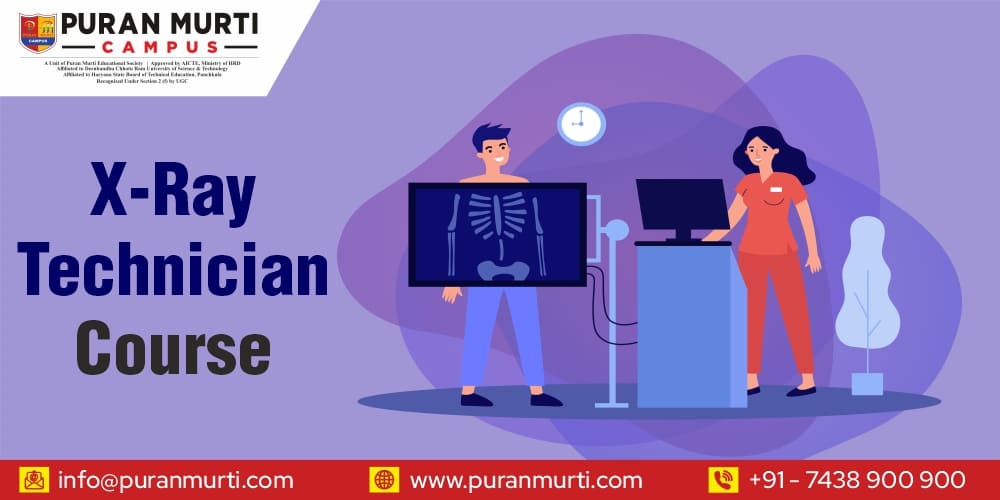
An X-Ray Technician course trains students to operate X-ray and imaging equipment used to capture images of the human body for medical diagnosis. These images help doctors and radiologists identify medical conditions such as bone fractures, tumors, chest infections, internal bleeding, and organ abnormalities.
The course teaches:
- How X-ray machines work
- Human anatomy and physiology
- Patient positioning techniques
- Radiation safety measures
- Imaging procedures
- Medical ethics and patient care
X-Ray Technicians work closely with doctors and radiologists and play a direct role in patient diagnosis and treatment planning.
Who Is an X-Ray Technician?
An X-Ray Technician, also known as a Radiography Technician, is a trained healthcare professional who performs imaging procedures using X-ray machines. Their responsibility is to produce clear and accurate images while ensuring patient safety and comfort.
They must:
- Position patients correctly
- Operate imaging machines
- Follow radiation safety protocols
- Maintain imaging equipment
- Assist radiologists during procedures
- Maintain patient records
Why Choose X-Ray Technician as a Career?
Choosing the right career is one of the most important decisions for a student. The X-Ray Technician profession offers several advantages.
High Demand Profession
Healthcare is growing every year, and diagnostic imaging is essential for almost all treatments. This creates constant demand for trained technicians.
Short Course Duration
Unlike MBBS or long medical degrees, X-Ray Technician courses can be completed in a shorter time.
Job Stability
Healthcare jobs are recession-proof and provide long-term stability.
Respectable Role
X-Ray Technicians are respected healthcare professionals working directly with doctors and patients.
Opportunities in India and Abroad
Skilled technicians are required in hospitals, diagnostic centers, and imaging labs worldwide.
Types of X-Ray Technician Courses
Students can choose different types of courses depending on their qualification and career goals.
Certificate Course in X-Ray Technology
- Duration: 6 months to 1 year
- Suitable for quick entry into the healthcare field
- Focus on basic imaging skills
Diploma in X-Ray Technology
- Duration: 2 years
- Most popular option among students
- Offers strong theoretical and practical knowledge
BSc in Medical Imaging Technology
- Duration: 3 years
- Advanced and in-depth learning
- Better salary and career growth
B Voc in Medical Imaging Technology
- Skill-oriented degree
- Industry-focused curriculum
- Strong employability support
| Level of Program | Typical Duration | Overview |
|---|---|---|
| Certificate | 6 months to 1 year | Focus on basic radiography skills; ideal for entry-level jobs. |
| Diploma | 1 to 2 years | Balanced training with theory and clinical practice. |
| Undergraduate degree | 3 years | Deep medical imaging knowledge; includes advanced topics. |
| Postgraduate diploma | 1 to 2 years | For students with prior healthcare background; advanced training. |
Eligibility Criteria for X-Ray Technician Course
Eligibility varies slightly depending on the course level.
For Certificate and Diploma Courses
- Passed 10 plus 2
- Science background preferred
- Physics, Chemistry, Biology recommended
- Minimum age usually 17 years
For Degree Courses
- 10 plus 2 with Physics, Chemistry, Biology
- Minimum marks as per institute norms
- Medical fitness certificate may be required
Admission Process for X-Ray Technician Course 2026
Most institutes follow a simple admission process.
Step 1: Application
Students apply directly to colleges through online or offline forms. Apply Now
Step 2: Merit-Based Selection
Admissions are generally based on 10 plus 2 marks.
Step 3: Counseling or Interview
Some colleges conduct basic counseling to guide students.
Step 4: Document Verification
Original academic and identity documents are verified.
Step 5: Fee Payment
Admission is confirmed after payment of fees.
Typical Timeline for 2026 Admissions
| Stage | Typical Period |
|---|---|
| Admission Notifications Released | January – April 2026 |
| Application Submission | February – June 2026 |
| Entrance Test / Merit Screening | March – July 2026 |
| Merit List / Shortlist | April – August 2026 |
| Counseling Document Verification | May – September 2026 |
| Course Start | June – October 2026 |
X-Ray Technician Course Syllabus Explained
The syllabus is designed to provide both theoretical knowledge and hands-on practical skills.
Core Subjects
- Human Anatomy and Physiology
- Radiographic Physics
- X-Ray Equipment and Accessories
- Radiation Protection and Safety
- Imaging Techniques
- Medical Terminology
- Pathology Basics
- Patient Care and Ethics
Practical Training
- Operating X-ray machines
- Patient positioning
- Image processing
- Safety procedures
- Hospital and lab exposure
Types of Technician X-Ray Course
| Course Type | Course Name | Duration | Eligibility | Level of Study | Key Focus Areas | Career Outcome |
|---|---|---|---|---|---|---|
| Certificate Course | Certificate in X-Ray Technician / Radiography | 6 months to 1 year | Secondary or higher secondary education, science preferred | Entry Level | Basic radiography, anatomy basics, X-ray machine operation, patient positioning, radiation safety | Junior X-Ray Technician, Imaging Assistant |
| Diploma Course | Diploma in X-Ray Technician / Diploma in Radiography | 1 to 2 years | Higher secondary education with science subjects | Intermediate | Anatomy, radiographic physics, imaging procedures, patient care, clinical training | X-Ray Technician, Radiologic Technologist |
| Undergraduate Degree | Bachelor in X-Ray Technology / Radiography | 3 years | Higher secondary with Physics, Chemistry, Biology | Advanced | Advanced imaging techniques, cross-sectional anatomy, radiation protection, quality control | Senior Radiologic Technologist, Imaging Supervisor |
| Postgraduate Diploma | PG Diploma in X-Ray Technology | 1 to 2 years | Bachelor degree in radiography or related field | Postgraduate | Specialized imaging, advanced physics, clinical decision-making | Advanced Imaging Technologist, Department Supervisor |
| Specialization Course | CT, MRI, Mammography, Interventional Radiography | 6 months to 1 year | Prior qualification in X-Ray or radiography | Specialist | Advanced modality-specific imaging techniques | Specialist Technician, Modality Expert |
| Distance / Hybrid Mode | Distance or Online X-Ray Technician Course (with practical training) | Varies | Same as regular courses | Flexible | Theory via distance learning, practical training in approved centers | Entry to mid-level technical roles |
Skills Required to Become a Successful X-Ray Technician
Apart from academic knowledge, certain skills are essential.
Technical Skills
- Machine operation
- Image positioning accuracy
- Radiation safety awareness
- Computer skills
Soft Skills
- Communication skills
- Patience and empathy
- Attention to detail
- Ability to work under pressure
- Physical stamina
Practical Training and Internship
Practical training is a vital part of the course.
Importance of Internship
- Real hospital experience
- Hands-on imaging practice
- Confidence building
- Better placement opportunities
Internships are usually conducted in:
- Government hospitals
- Private hospitals
- Diagnostic imaging centers
- Trauma and emergency units
Career Scope After X-Ray Technician Course
The demand for X-Ray Technicians is rising due to:
- Increasing population
- Growing number of hospitals
- Rising accident cases
- Lifestyle diseases
- Medical insurance expansion
Career Options
- X-Ray Technician
- Radiology Assistant
- Imaging Technologist
- CT Technician (after specialization)
- MRI Technician (after specialization)
- Imaging Department Supervisor
Job Opportunities for X-Ray Technicians
X-Ray Technicians can work in various healthcare settings.
Employment Areas
- Government hospitals
- Private hospitals
- Diagnostic centers
- Imaging labs
- Orthopedic clinics
- Trauma care units
- Medical colleges
- Defense healthcare services
Salary After X-Ray Technician Course
Salary depends on qualification, experience, location, and specialization.
Salary Growth Overview
- Freshers start with entry-level salaries
- Experience increases income steadily
- Specialization in CT or MRI increases earning potential
- NCR and metro cities offer higher pay
Government Jobs for X-Ray Technicians
X-Ray Technicians can apply for government jobs through:
- State health departments
- Medical colleges
- Public hospitals
- Defense services
Government jobs provide:
- Job security
- Fixed pay scale
- Promotion opportunities
- Retirement benefits
Higher Studies and Specialization Options
Students can enhance their career by pursuing:
- CT Scan Technology
- MRI Technology
- Ultrasound Technology
- Advanced Radiology Courses
- Hospital Administration
Specialization leads to higher salary and leadership roles.
International Career Opportunities
With experience and certification, X-Ray Technicians can work abroad in:
- Middle East countries
- Gulf region
- Selected European nations
International roles offer better salary packages and exposure.
Advantages of X-Ray Technician Course
- Short course duration
- High employability
- Healthcare job stability
- Skill-based profession
- Respectable career
- Opportunities for growth and specialization
- Challenges in the X-Ray Technician Profession
While rewarding, the profession also has challenges:
- Long working hours
- Exposure to radiation (controlled and safe)
- Physical demands
- Emotional pressure in emergency cases
Proper training and safety measures reduce risks significantly.
Top Colleges Offering Technician X-Ray Course (2026)
1. Puran Murti Vidyapeeth (Delhi NCR)
- Offers B.Voc (Medical Imaging Technology) — a 3-year paramedical degree that covers X-ray, CT, MRI, ultrasound and diagnostic imaging techniques. Admission is generally merit-based or through entrance evaluation.
- Also offers D.Voc in Medical Imaging Technology focusing on diagnostic imaging including X-ray, digital imaging, CT and MRI with practical exposure.
Location: Delhi NCR region (Noida/NCR vicinity)
Course Types: B.Voc, D.Voc (Medical Imaging Technology)
2. Bangalore Medical College and Research Institute (BMCRI), Bangalore
-
Well known for Diploma in X-Ray Technician and allied paramedical courses in radiography and imaging technology.
3. King George’s Medical University (KGMU), Lucknow
-
Offers high-quality paramedical and allied health programs including Diploma in Radiography and X-Ray Technology and other radiology related streams.
4. Santosh Institute of Allied Health Sciences, Ghaziabad (Delhi NCR)
-
Recognized paramedical college with Diploma in X-Ray Technician and other allied health science courses.
5. Christian Medical College (CMC), Vellore
-
Prestigious medical and paramedical institute offering B.Sc in Imaging Technology / Radiography and advanced allied health courses.
Who Should Choose This Course?
This course is ideal for students who:
- Are interested in healthcare
- Like working with machines and technology
- Want a stable medical career
- Prefer practical and skill-based learning
- Want early job opportunities
Future Scope of X-Ray Technician Career
The future is extremely promising due to:
- Expansion of diagnostic services
- Technological advancements
- Preventive healthcare growth
- Medical tourism
- Digital imaging innovations
X-Ray Technicians will remain a core part of healthcare systems worldwide.
Final Conclusion
The X-Ray Technician course is a powerful career option for students who want to enter the medical field without long years of study. It offers a perfect balance of technology, patient care, job security, and growth opportunities.
With the right training, practical exposure, and continuous skill development, an X-Ray Technician can build a stable, respected, and rewarding career in the healthcare industry.
If you are serious about building a future in medical imaging, this course can be your gateway to success.
⇒ X-Ray Technician College in Delhi
Frequently Asked Questions (FAQs) – X-Ray Technician Course
1. What is an X-Ray Technician course?
An X-Ray Technician course is a paramedical program that trains students to operate X-ray and imaging machines used for medical diagnosis. The course teaches anatomy, radiographic techniques, patient positioning, radiation safety, and equipment handling to produce accurate diagnostic images for doctors.
2. Who can apply for an X-Ray Technician course?
Students who have passed 10 plus 2 are eligible to apply. For diploma and degree courses, a science background with Physics, Chemistry, and Biology is preferred. The minimum age requirement is generally 17 years at the time of admission.
3. What is the duration of the X-Ray Technician course?
The duration depends on the course type:
-
Certificate course: 6 months to 1 year
-
Diploma course: 2 years
-
Degree course (BSc or B.Voc): 3 years
4. Is NEET required for X-Ray Technician course admission?
No, NEET is not required for X-Ray Technician courses. Most colleges offer admission based on merit in 10 plus 2 or through direct admission and counseling.