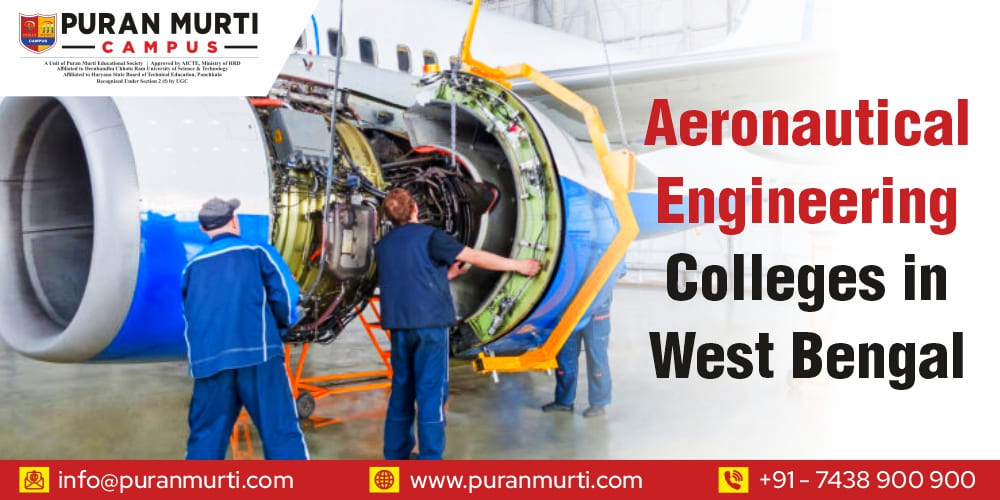
Aeronautical Engineering Colleges in West Bengal
Posted on : 17 January, 2026 3:05 pm
Aeronautical Engineering is one of the most honored and technically mature branches of engineering. Aeronautical engineering is a sub-discipline of aerospace engineering concerned with all aspects associated with the design, development, testing, operation and maintenance of an aircraft or aerospace system. In today’s economy, there has been tremendous growth in both aviation (commercial and military) and space exploration across North America, Europe and Asia. As a result, the demand for qualified aeronautical engineers is rapidly increasing every year. Here is the Aeronautical Engineering Colleges in West Bengal
West Bengal has developed into an education centre for eastern India and has produced many excellent engineering schools. Most of these schools offer quality programs in engineering, including several that focus on specialist areas in aviation. However, many students also want to attend the Puran Murti Vidyapeeth (PMC). The PMC is a leading, nationally recognised institution and one of the best aeronautical and aerospace schools in the country, with a strong emphasis on aeronautics education. Apply Now
This blog is a complete reference to Aeronautical Engineering Colleges in West Bengal, course content, eligibility criteria, course syllabus, admission procedure and fees, as well as the potential career directions there are for graduates of these programs. There is a special section on PMC. Apply Now
What is Aeronautical Engineering?
Aeronautical Engineering is an area of engineering that primarily focuses on the aerodynamics and technology of flight (aircraft). Aeronautical engineering encompasses the entire process of designing, constructing, maintaining and operating an aircraft or aerospace system, which can include any or all of the following areas: aerodynamics, propulsion systems, avionics technologies, aircraft materials, the design of aircraft structures and mechanical systems, and the mechanics of flight. Apply Now
Responsible for designing:
-
Commercial airplanes
-
Helicopters
-
Military aircraft
-
Unmanned aerial vehicles (UAVs)
-
Aircraft maintenance and safety systems
Aerospace Engineering combines Physics, Math, and Mechanics with cutting-edge Engineering Techniques, to create the worlds safest and most efficient Aircraft. The key sectors witnessing growth include:
Scope of Aeronautical Engineering in India
India’s aviation sector is one of the fastest-growing in the world. With projects from ISRO, DRDO, HAL, private airlines, MRO companies, and global aerospace firms, aeronautical engineers have wide career opportunities. Apply Now
Key growth areas include:
-
Commercial aviation
-
Defense and military aviation
-
Space research
-
Aircraft manufacturing
-
Maintenance, Repair & Overhaul (MRO)
-
Drone and UAV technology
Courses Available in Aeronautical Engineering
Undergraduate Courses
Diploma Courses
-
Diploma with International Modules (EASA-based)
Certification & Specialized Programs
-
Aircraft Maintenance Engineering (AME – DGCA approved)
-
Aviation management and pilot-related ground programs
Course Duration
| Course Type | Duration |
|---|---|
| B.Tech Aeronautical / Aerospace Engineering | 4 Years |
| Diploma in Aeronautical Engineering | 3 Years |
| AME (Aircraft Maintenance Engineering) | 3 Years |
| Integrated AME + B.Tech | 4 Years |
Aeronautical Engineering Syllabus (Overview)
Semester first:
- ENGLISH LANGUAGE SKILL
- MATHEMATICS – I
- PHYSICS
- BASIC ELECTRICAL ENGINEERING
- ENGINEERING GRAPHICS & DESIGN
PRACTICAL
- ENGLISH LANGUAGE LAB
- PHYSICS LAB
- BASIC ELECTRICAL ENGINEERING LAB
- INDUCTION PROGRAM
Second Semester
- MATHEMATICS-II
- CHEMISTRY
- PROGRAMMING FOR PROBLEM SOLVING
- WORKSHOP/ MANUFACTURING PRACTICES
PRACTICAL
- CHEMISTRYLAB
- PROGRAMMING FOR PROBLEM SOLVING LAB
- IN-HOUSE PRACTICALTRAINING
Third Semester
- Engineering Economics
- Mathematics – III (PDE, Probability & Statistics)
- BIOLOGY FOR ENGINEERS
- Basic Electronics Engineering
- Elements of Aerodynamics
- THERMODYNAMICS
- Constitution of India
PRACTICAL
- Elements of Aerodynamics Lab
Fourth Semester
- Aircraft Material & Processes
- Aircraft Performance
- Aircraft System & Instrumentation
- Aircraft Propulsion
- Aircraft structure
- Environmental Studies
PRACTICAL
- Aircraft Propulsion lab
- Aircraft Structure Lab
Fifth Semester
- Aero Engine Design
- Aircraft Structure Analysis & Design
- Aircraft Stability & Control
- Compressible & Finite Wing Aerodynamics
- Theory of Machines
PRACTICAL
- Aircraft Structure Analysis & Design Lab
- Compressible & Finite Wing Aerodynamics Lab
- Professional Training (Level II)

Sixth Semester
- Vibration & Aero Elasticity
- Computational fluid Dynamics
- (PROFESSIONAL ELECTIVE)
- Space Dynamics
- Helicopter Dynamics
- Wind Turbines
- Experimental Aerodynamics
- Robotics and Automation
- (OPEN-ELECTIVE)
- Professional Communication for Engineers
- Soft Skills and Inter-personal Communication
- Human Resource Management
- Values, Ethics and IPR
- Introduction to German Language
- Introduction to French language
PRACTICAL
- Computational fluid Dynamics Lab
- In-house Project
Seven Semester
- Airplane Design
- Avionics
- (PROFESSIONAL ELECTIVE)
- Viscous Flow Theory
- Wind Tunnel Techniques
- Missile Technology
- Gas Dynamics
- Advanced Aerodynamics
- (OPEN-ELECTIVE)
- Computer Network
- Cyber Security
- Industrial Safety
- Disaster Management
- Consumer Electronics
PRACTICAL
- Avionics Lab
- Professional Training (Level III)
- Minor Project
Eight Semester
- (Professional Elective-III)
- Aircraft Quality control, Quality Assurance and Certification
- Maintenance of airframe and systems
- Aircraft Maintenance and Air worthiness
- (Professional Elective -IV)
- Ergonomics in Aerospace
- Introduction to Automatic Flight Control
- Air Transportation and Operations
- Aircraft Modeling and Simulation
- (Professional Elective – V)
- Fuels and Propellant Technology
- Maintenance of Power plant and systems
- Rocket Propulsion
- (Open Elective-III)
- Artificial Intelligence & Expert Systems
- Electrical and Hybrid Vehicles
- Entrepreneurship
- Fundamentals of Sustainable Manufacturing
- Nano Science and Nano-Technology
- Smart Grid
PRACTICAL
- Major Project OR Internship
- General Fitness for the Profession Apply Now
Eligibility Criteria
For B.Tech Aeronautical / Aerospace Engineering
- Passed 10+2 with Physics, Chemistry and Mathematics (PCM)
- Minimum aggregate as per institute norms
- Generally 17 years or above
- Medical fitness
For Diploma Courses
-
Passed 10th or 10+2 from a recognized board
Admission Process
Admission to aeronautical engineering courses usually follows these steps: Apply Now
- Form Submission
- Entrance Exam / Merit-Based Selection
- Counseling & Seat Allocation
- Verification of Documents
- Fee Payment and Enrollment
Entrance Exams for Aeronautical Engineering
-
JEE Main – For B.Tech programs in engineering colleges
-
AME CET – Entrance test for Aviation
-
Institute-level Entrance / Merit Admission
Course Fees (Approximate)
| Course | Annual Fees Range |
|---|---|
| B.Tech Aeronautical / Aerospace | ₹80,000 – ₹2,50,000 |
| Diploma in Aeronautical Engineering | ₹60,000 – ₹1,50,000 |
| AME Programs | ₹1,50,000 – ₹2,00,000 |
Reference Highlight: Puran Murti Vidyapeeth (PMC)
Puran Murti Vidyapeeth is one of India’s names in aviation and engineering education, with varied aeronautical, aerospace, and aviation related programs. West Bengal students generally prefer PMC for its industry-oriented training and practical exposure. Apply Now
Courses Offered at Puran Murti Vidyapeeth
-
Aviation Management & Allied Programs
Course Fees at Puran Murti Vidyapeeth (Indicative)
| Course | Total Fees (Approx.) |
|---|---|
| B.Tech Aeronautical Engineering | ₹6 Lakhs |
| AME + B.Tech Integrated | 2,70,000 Per Year |
| Diploma in Aeronautical Engineering | ₹2,07,500 Lakhs |
PMC Facilities
- Aircraft and helicopter for practical training
- Advanced aeronautical and avionics labs
- Includes workshop and hangar facility
- Digital classroom and library
- Boys and girls hostel separately
- Sports facilities and cafeteria
- Industry interaction & guest lecturers
Admission Process at Puran Murti Vidyapeeth
-
It has AME CET / JEE Main / Merit-Based Counselling for admission.
-
Online applications submission and counseling assistance are available.
-
Scholarships for meritorious students. Apply Now
Higher Studies after Aeronautical Engineering
Student after Aeronautical Engineering can do :
-
M.Tech / ME in Aerospace or Aeronautical Engineering.
-
MBA in coming as Aviation or Operations Management.
-
Ph.D.in Aerospace Engineering.
-
International certifications and research programs-both.
Future Career Options After Aeronautical Engineering
Aeronautical engineers can work as: Apply Now
- Aircraft Design Engineer
- Aerospace Research Engineer
- Maintenance & Quality Engineer
- Avionics Engineer
- Flight Test Engineer
- Aviation Safety Officer
Top Recruiters
-
ISRO-supported
-
DRDO
-
Hindustan Aeronautics Limited (HAL)
-
Private Airlines
-
Aircraft Manufacturing Companies
-
MRO Organizations
-
Defense Aviation Units Apply Now
Why Choose Aeronautical Engineering?
-
It’s the field of high demand and future orientation.
-
With openings across defense and space sectors.
-
Can also give exposure to international careers.
-
Works are professionally challenging and innovative.
-
This is an esteemed engineering profession. Apply Now
Conclusion
In fact, Aeronautical Engineering has proved an excellent course of study for students interested in aircraft, aviation, and advanced technology. West Bengal has good opportunities to make degrees in a condition; however, due to its specialization campus, such as Puran Murti Vidyapeeth, it provides pointers to industry focus training edging-edge built strong support for careers.
The career is achievable for proven aeronautical engineers with the right education, dedication, and skills, building a successful and rewarding career in the future in global aviation. Apply Now