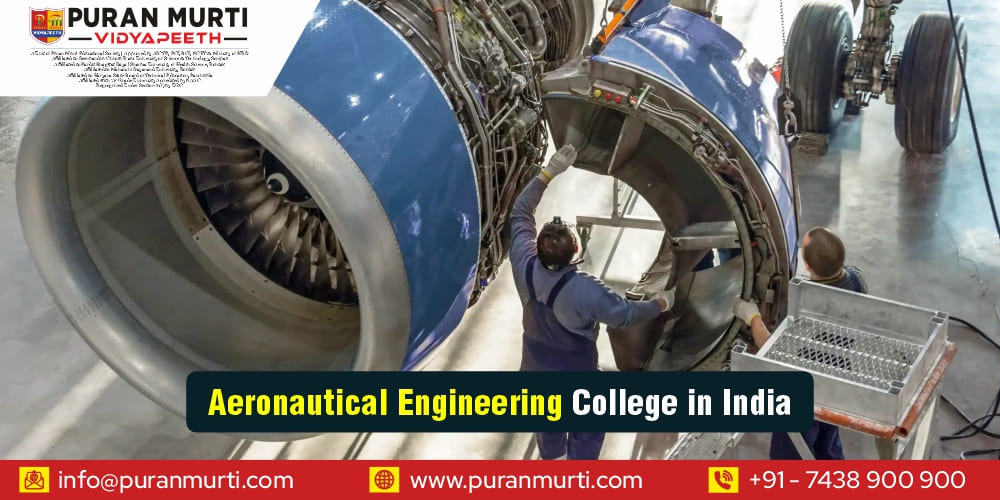
Best Aeronautical Engineering College in India | AI‑Ready Campus
Posted on : 24 February, 2026 4:19 pm
Aeronautical engineering college in India: How to choose the right campus in 2026
If you are searching for the best aeronautical engineering college in India, you are not alone. Thousands of students now want a campus that mixes aircraft labs, AI-driven learning and strong placements instead of only theory notes.
As a student in Delhi-NCR, you have an extra advantage because Puran Murti Vidyapeeth at Sonepat sits right in this aviation growth belt. This blog acts like a senior’s honest guide, not a brochure, so you can compare options calmly before filling any form. Apply Now
http://Best Aeronautical Engineering College in India | AI‑Ready Campus
Why aeronautical engineering is booming in India
India is now the world’s third-largest civil aviation market and still growing fast. Airlines plan to add over 1,000 new aircraft by 2030, which means fresh demand for engineers, AME professionals and drone specialists.
This growth links to four big shifts that directly affect your career:
-
New airports and expanded routes create more maintenance bases and hangars
-
Government schemes like Make in India and Drone Shakti push local manufacturing and UAV startups
-
AI-driven maintenance and digital twins create a need for engineers who understand both aircraft and data
-
Global companies such as Boeing and Airbus outsource design and analysis work to Indian teams
Starting salaries for aeronautical and aerospace engineers usually range from 5–8 LPA, with experienced professionals touching 20–45 LPA in high-responsibility roles, especially when they combine B.Tech with DGCA licences or AI skills. Apply Now
What an aeronautical engineering college in India should offer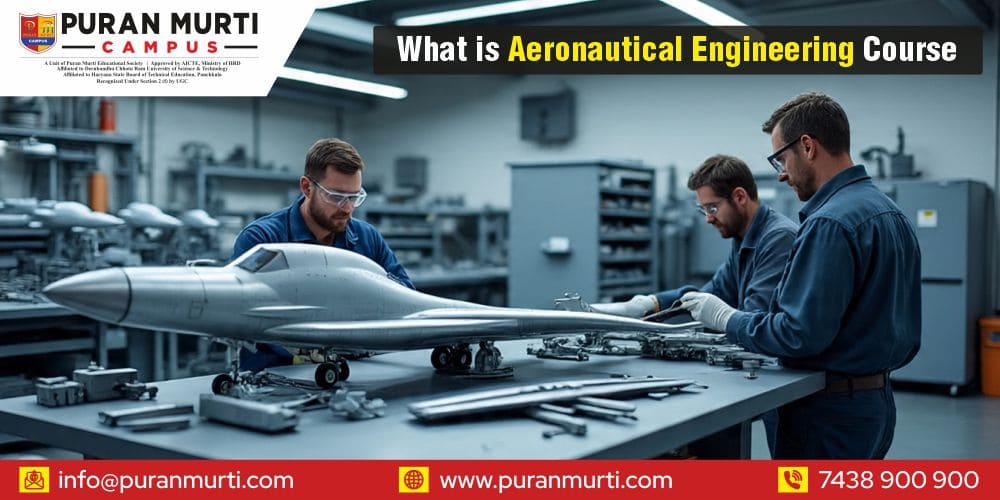
Before you lock any preference, check that your shortlisted campus clears a few non‑negotiable filters. Think of this as a personal checklist you can carry during counselling or campus visits.
1. Approvals, affiliation and credibility
An aeronautical engineering college must be:
-
Approved by AICTE for its engineering programmes
-
Affiliated to a recognised technical university such as DCRUST or similar state/central universities
-
Ideally part of an institution that has NAAC accreditation and ISO-certified processes, because this signals long-term quality culture
Puran Murti Vidyapeeth checks these boxes with AICTE approval, DCRUST affiliation and NAAC-linked quality systems across its campus. Apply Now
2. Clear distinction between B.Tech and Diploma/Polytechnic
Many students get confused because colleges mix up B.Tech and Diploma details in one brochure. You should always see a clear separation like this:
| Programme Type | Typical Duration | Entry Qualification | Ideal Student Profile |
|---|---|---|---|
| B.Tech Aeronautical / Aerospace | 4 years | 10+2 with PCM, usually 50% or above | Wants design, R&D, higher studies |
| B.Tech (Integrated) with AME / DGCA modules | 4 years | 10+2 with PCM, specific entrance | Wants both engineering and maintenance licence |
| Diploma / Polytechnic in Aeronautical or AME | 3 years | 10th pass | Wants to enter maintenance or technician roles early |
How to shortlist an aeronautical engineering college in India
https://blog.puranmurti.com/b-tech-aerospace-engineering/
You can use a simple three‑step method: Filter – Compare – Visit. This keeps emotions in control during hectic counselling.
Step 1: Filter by must‑have criteria
First remove colleges that do not match your minimum expectations:
-
Location convenience: Can you reach the campus from a major city or airport without long unsafe travel
-
AICTE approval + solid affiliation: Already discussed above
-
Dedicated aeronautical or aerospace branch: Avoid places where it runs as a tiny sub‑stream without labs
-
Basic labs and hangar access: At least one wind tunnel, structures lab, propulsion lab and access to actual aircraft or full-scale assemblies
Puran Murti Vidyapeeth scores well here with a 35‑acre campus near Delhi, live aircraft hangar, wind tunnel, propulsion and avionics labs. Apply Now
Step 2: Compare academic depth and AI adoption
Once the basic filter is done, compare how future‑ready each campus feels:
-
Does the curriculum include AI, data analytics, or digital twin concepts linked to aviation
-
Are there open electives in areas like UAV technology, sustainable aviation, or cyber security for aerospace systems
-
Does the campus have collaborations with tech firms (Infosys, NASSCOM, Xebia etc.) and aviation partners for internships and certifications
Puran Murti Vidyapeeth adds AI and ML exposure through its Computer Science with AI/ML programmes and integrates emerging tech modules in aerospace and AME training, which helps students speak both “engineering” and “data” during interviews. Apply Now
Step 3: Visit (physically or virtually) and speak to students
Never rely only on glossy brochures. During a visit, try to:
-
Enter at least one lab and see whether equipment looks active, not dusty
-
Ask current students how often they touch real aircraft parts, not just look at them
-
Check hostels, mess, sports grounds and medical facilities because you will spend 3–4 crucial years there
-
Talk to seniors about placement training, mock interviews and support after graduation
Many Puran Murti Vidyapeeth students mention supportive faculty, home-like hostels and active technical clubs in testimonials, which is a good sign that the campus culture matches the infrastructure claims. Apply Now
Snapshot of top aeronautical engineering options (2026)
To give you context, here is a simplified snapshot. It is not an official ranking, but a student‑friendly view based on public data and brochure information. Apply Now
| College | Type | Notable Strength | Typical Entry Route |
|---|---|---|---|
| IIT Madras / Bombay / Kanpur | Govt, premier | Deep research, global recognition | JEE Main + JEE Advanced |
| MIT Manipal, UPES Dehradun | Private deemed | Brand value, diverse specialisations | Own / national tests |
| Puran Murti Vidyapeeth, Sonepat | Private, AICTE approved | Live aircraft labs, integrated AME, 100% placement focus | AIE CET or 10+2 merit with counselling |
| Other Delhi-NCR private colleges | Private | Good location, varying lab strength | JEE Main / state / institute tests |
Inside an industry-ready aeronautical engineering college in India
Now let’s step inside a campus that actually feels like an aviation ecosystem. At Puran Murti Vidyapeeth in Sonepat, the aeronautical ecosystem is built around three core tracks: B.Tech, Integrated B.Tech with AME exposure, and Diploma/Polytechnic in aeronautical or AME fields.
Instead of one-size-fits-all, each track targets a different type of student and career path.
B.Tech Aeronautical Engineering: for design and higher studies
The B.Tech Aeronautical Engineering programme at Puran Murti Vidyapeeth runs for four years and focuses on aircraft design, aerodynamics, structures, propulsion and flight mechanics. It suits students who love physics and maths, want to build or analyse aircraft, and may later pursue M.Tech or work in R&D. Apply Now
Key academic features:
-
Strong foundation in engineering maths, mechanics and programming during first year
-
Core aeronautical subjects like Elements of Aerodynamics, Aircraft Structures, Propulsion, Flight Stability and Control in second and third year
-
Advanced courses in compressible flow, aero engine design, vibration, and quality assurance in later semesters
-
Open electives in areas such as AI in flight, cyber security for aviation systems or sustainable manufacturing
This structure helps you grow from basic physics and coding to advanced simulation and design work, step by step.
Integrated B.Tech with AME / DGCA modules: dual advantage
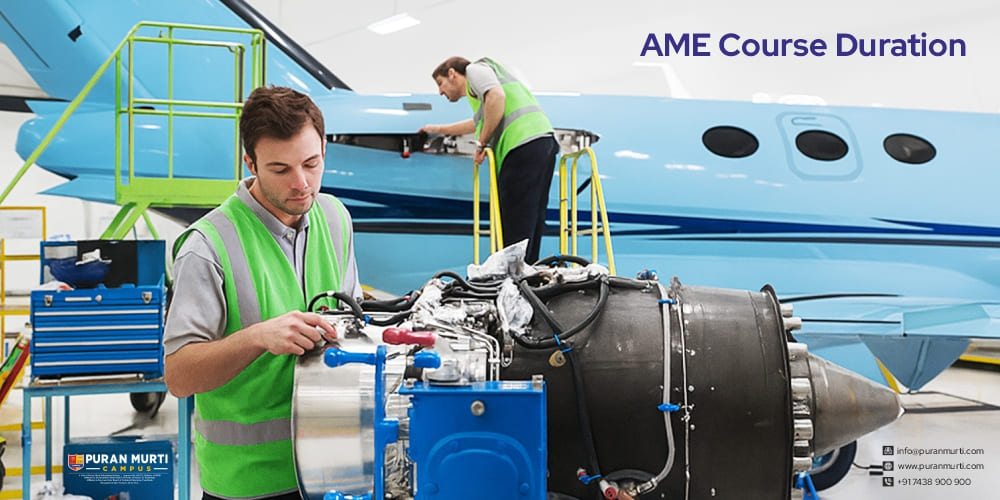
A unique strength at Puran Murti Vidyapeeth is the integrated B.Tech with AME and DGCA modules, where students cover standard engineering content plus maintenance and licensing requirements in one continuous track. Apply Now
This path is ideal if you want the flexibility to:
-
Work as a design engineer or analyst in companies like Boeing, Airbus or HAL
-
Build experience towards DGCA Aircraft Maintenance Engineer licensing, which lets you sign aircraft airworthiness certificates
Because the integrated path includes exposure to DGCA module content and hangar-level maintenance training, graduates can progress faster towards licence and international mobility.
Diploma / Polytechnic in Aeronautical or AME: job-focused and shorter
For students who want to enter the aviation workforce sooner, Diploma/Polytechnic options in aeronautical engineering and aircraft maintenance give a skills-first route.
Highlights of Diploma pathway:
-
Duration usually three years after 10th standard
-
Strong focus on hands-on tasks: structures, avionics, line maintenance support, basic fitting and fabrication
-
Ideal for those who want to start earning earlier, then later upgrade via lateral entry into B.Tech if they wish
This route is often chosen by students who enjoy working with tools, systems and hardware more than advanced theory. Apply Now
http://Diploma in X‑Ray Technology
B.Tech vs Diploma vs integrated AME: which track fits you
To simplify your choice, here is a practical comparison you can show to parents or counsellors.
Programme comparison table
| Aspect | B.Tech Aeronautical | Integrated B.Tech + AME / DGCA exposure | Diploma / Polytechnic (Aeronautical / AME) |
|---|---|---|---|
| Duration | 4 years | 4 years | 3 years |
| Entry level | 10+2 PCM (usually 50%+) | 10+2 PCM with entrance | 10th pass |
| Main focus | Design, analysis, simulation, R&D | Design + maintenance + licensing exposure | Practical skills, shop-floor work, quick employability |
| Ideal student | Loves maths/physics, open to higher studies | Wants flexible career in both design and maintenance | Wants to start working early, hands-on person |
| Typical first roles | Graduate Engineer Trainee, design analyst, systems engineer | Design engineer, junior AME, maintenance engineer | Technician, junior maintenance staff, support roles |
| Growth path | M.Tech, R&D, management roles | Dual qualification, DGCA licence, global jobs | Lateral entry to B.Tech, or AME licence courses |
AI-driven learning and labs at Puran Murti Vidyapeeth
A modern aeronautical engineering college in India can’t rely only on chalkboard diagrams of wings. It must integrate AI, simulation and digital tools that match how airlines and OEMs actually work today.
Puran Murti Vidyapeeth brings this in through both infrastructure and curriculum:
Advanced labs and live aircraft exposure
Key facilities include:
-
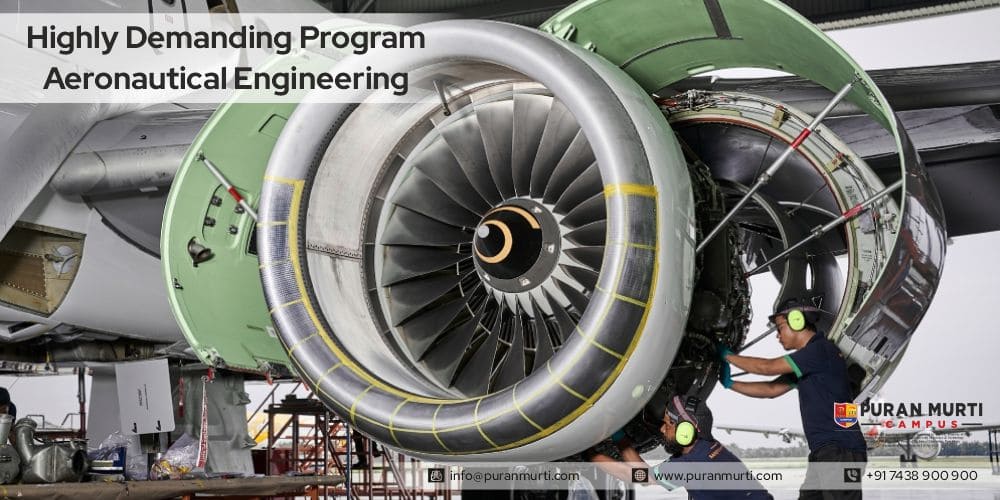
Live Aircraft Hangar: Retired aircraft and assemblies used for disassembly, inspection and reassembly, allowing students to see real systems instead of only models
-
Aerodynamics Wind Tunnel: Used to test wing profiles and measure lift and drag, supporting courses in aerodynamics and flight mechanics
-
Propulsion Lab: Engine disassembly, performance measurement, thrust analysis and combustion experiments
-
Avionics Suite and Simulators: Flight control, navigation and communication systems along with simulators for realistic cockpit practice
These labs allow projects such as designing aerofoils, testing small-scale UAV prototypes or analysing engine performance curves. Apply Now
AI, data and digital twin exposure
Puran Murti Vidyapeeth also uses its strong CSE (AI/ML) and Cyber Security ecosystem to connect aeronautical students with current digital tools.
Examples of AI-driven exposure include:
-
Using Python and MATLAB for CFD (Computational Fluid Dynamics) and performance simulations guided by faculty with research backgrounds
-
Introducing concepts of predictive maintenance where sensor data from engines or critical components is analysed using machine learning to forecast failures
-
Discussing digital twin ideas in project-based courses so that students understand how virtual aircraft models help test modifications before real implementation
-
Access to NASSCOM FutureSkills PRIME and other platforms that host AI and cloud-related upskilling courses
This mix prepares you to handle interviews where recruiters discuss AI, data analytics or digital maintenance systems, not just static diagrams. Apply Now
Research, innovation and student projects
One simple way to judge an aeronautical engineering college in India is to see whether it only repeats textbook experiments or actually supports innovation. Apply Now
Puran Murti Vidyapeeth maintains:
-
94+ patents filed and 1,900+ research publications across engineering and allied fields
-
Multiple research centres focusing on areas such as AI in aviation and green propulsion
-
MSME-recognised incubator status with funding support of around ₹15 crore for student and faculty-led startups
Student innovations mentioned in campus literature include:
-
CNG micro-airplane prototypes
-
CNG bikes and hybrid scooters
-
Quad-bike projects developed by Polytechnic students
These projects show that mechanical, aeronautical, electrical and computer science students are encouraged to work together instead of staying in silos. Apply Now

Placement preparation and outcomes
A big reason families choose a particular aeronautical engineering college in India is the track record of placements. Here you should look beyond single high packages and study the pattern.
At Puran Murti Vidyapeeth:
-
The campus claims 100% placement assistance, with many programmes achieving full placement in recent batches
-
Notable offers include a 45 LPA package at a global MNC and multiple 25–36 LPA offers for engineering graduates
-
Core recruiters for aviation-related roles include IndiGo, Vistara, Air India, Boeing, HAL, and engineering firms like Siemens and Quest
A sample of roles and typical salary range (from the attached content) looks like this:
| Role Type | Recruiters | Approx Package Range |
|---|---|---|
| AME / Flight Engineer | IndiGo, SpiceJet | 9–14 LPA |
| Design / Avionics Engineer | Boeing, Airbus | 12–20 LPA |
| R&D Engineer | HAL, DRDO | 10–15 LPA |
| Systems / Specialist roles | Siemens, Quest | 11–18 LPA |
-
Soft skills and life-skills training
-
Technical test and GD/PI practice sessions
-
In-house coaching for higher studies exams such as GATE, GRE, CAT and others
This means you don’t only learn how to clear semester exams; you also prepare for interviews, group discussions and global opportunities. Apply Now
Campus life and support system
Choosing an aeronautical engineering college in India is not only about classrooms and salaries. You will live on campus for three to four years, so the environment matters.
At Puran Murti Vidyapeeth, the 35‑acre campus offers:
-
Separate hostels for boys and girls, with Wi‑Fi and basic amenities
-
A large library with around 60,000 books and e-resources supporting engineering, aviation, law, pharmacy and more
-
Sports infrastructure including cricket grounds, basketball and volleyball courts, athletics track, gym and indoor games
-
Medical dispensary and counselling support for student wellbeing
The campus also organises:
-
River rafting trips to Kullu-Manali and Rishikesh
-
Horse riding and paragliding experiences in hill stations
-
Technical clubs, aviation quizzes and robotics teams that help you build a strong CV and network
Students from India and abroad (Africa, Nepal and other regions) mention that faculty support is strong and the environment feels friendly rather than intimidating. Apply Now
Career paths after graduating from an aeronautical engineering college in India
Once you complete your programme, you can move into several directions. Your exact path depends on whether you chose B.Tech, an integrated AME route or a Diploma from an aeronautical engineering college in India. Apply Now
Core technical roles in aviation and aerospace
Common roles for aeronautical graduates include:
-
Design Engineer / CFD Engineer: Works on aircraft structures, aerodynamics and simulations using CAD and CFD tools.
-
Avionics Engineer: Handles navigation, communication and control systems in modern aircraft.
-
Aircraft Maintenance Engineer (AME): Ensures airworthiness of aircraft; DGCA-licensed AMEs can sign fit-to-fly certificates.
-
Flight Test or Performance Engineer: Analyses flight data, evaluates performance and supports modifications.
In India, average annual salaries for aeronautical engineers hover around ₹7–7.5 LPA, with early-career professionals making roughly ₹5–8 LPA and senior experts earning much higher in specialised roles. Apply Now
Emerging opportunities: drones, AI and green aviation
The next wave of jobs sits at the intersection of aviation, AI and sustainability:
-
Drone Pilot / UAV Engineer: Works in agriculture, logistics, mapping, surveillance and media.
-
Drone Software or Data Engineer: Builds autonomy algorithms, image-processing pipelines and AI-based analytics.
-
Sustainable Aviation Engineer: Focuses on electric or hybrid propulsion and eco-friendly materials.
Monthly salaries in drone and UAV roles range from ₹35,000 to ₹1,20,000 depending on experience and position. Apply Now
Global opportunities
Because DGCA licensing aligns with ICAO norms, experienced AMEs and engineers can move to regions like the Middle East, Europe, Singapore and Australia after meeting local requirements. Many Indian aeronautical graduates also pursue M.Tech or MS at universities abroad and then join global aerospace companies such as Boeing, Airbus, Lockheed Martin or Embraer. Apply Now
B.Tech vs Diploma: which is better for you in real life
You already saw the structural comparison earlier. Now, here are three example student stories to help you decide which path fits your personality.
Example 1: Riya – wants design and research
Riya enjoys physics numericals and coding practice questions. She dreams about working in aircraft design or maybe doing a PhD later. For her:
-
Best match: B.Tech Aeronautical at a strong campus like Puran Murti Vidyapeeth.
-
Why: Four-year structure gives depth in theory, simulation and research projects plus access to M.Tech options and global exams such as GATE or GRE. Apply Now
Example 2: Arjun – wants a quick entry into aviation
Arjun is more comfortable with tools and hands-on work than complex derivations. He wants to start earning as early as possible.
-
Best match: Diploma in Aeronautical / Aircraft Maintenance followed by a job or later lateral entry.
-
Why: Three-year path after 10th, strong shop-floor skills and option to join line maintenance or support roles, with upgrade possibilities later. Apply Now
Example 3: Sana – wants both engineering and licence potential
Sana wants the flexibility to work either in design offices or as a licensed AME in the future.
-
Best match: Integrated B.Tech with AME / DGCA exposure at a campus that offers strong labs and hangar training like Puran Murti Vidyapeeth.
-
Why: She gets an engineering degree plus maintenance-centred learning, which speeds up her path toward DGCA licensing while keeping design doors open.
Use these examples with your parents or counsellor to map your own interests and strengths.
Admission process for aeronautical engineering college in India (2026)
Most good colleges follow a similar admission flow, with small variations.
Basic eligibility
-
For B.Tech Aeronautical / Aerospace: 10+2 with Physics, Chemistry and Mathematics from a recognised board, usually with a minimum of 45–50% aggregate, with relaxations for reserved categories.
-
For Diploma / Polytechnic: 10th pass from a recognised board, often with maths and science as key subjects.
-
For Lateral Entry into B.Tech: relevant Diploma or B.Sc background as per university rules.
Entrance exams and selection
Typical entry routes include:
-
JEE Main and state-level engineering exams for national or government-linked institutes.
-
Institute or university-level tests for private campuses.
-
At Puran Murti Vidyapeeth, admission is based on AIE CET scores or 10+2 merit, followed by counselling and seat confirmation. Apply Now
Simple step-by-step flow
-
Register for the relevant entrance exam or college application form.
-
Appear for the test (where applicable) and keep track of result dates.
-
Join counselling, lock your preferred branches and campuses.
-
Complete document verification as per the authority or institute.
-
Pay the first fee instalment to confirm your seat and hostel if required.
Admissions at Puran Murti Vidyapeeth for 2026 typically run between March and June with online and offline support from the Kami Road, Sonepat campus and the Delhi office. Apply Now
Scholarships, fees and affordability
Money plays a big role when families compare an aeronautical engineering college in India with options abroad or in metro cities. Apply Now
Key points to keep in mind:
-
AICTE’s Pragati and Saksham schemes support girl students and differently-abled learners across engineering colleges.
-
Organisations like DRDO, HAL and ISRO sometimes offer merit-linked scholarships for bright students in aerospace-related fields.
-
Many private colleges, including Puran Murti Vidyapeeth, give merit-based fee concessions based on board marks or entrance performance, and help with education loans and instalment-based payment options.
Compared with many big-brand private universities, fee levels at Puran Murti Vidyapeeth tend to be more affordable while still providing live aircraft labs and strong placement support, which is a key attraction for middle-class families in Delhi-NCR and nearby states. Apply Now
Why Puran Murti Vidyapeeth stands out as an aeronautical engineering college in India
Putting everything together, Puran Murti Vidyapeeth checks most boxes that matter for aviation-focused students:
-
AICTE-approved programmes with clear separation between B.Tech, Integrated B.Tech+AME and Diploma options.
-
35-acre Delhi-NCR campus with live aircraft hangar, wind tunnels, propulsion and avionics labs, plus strong hostels and sports facilities.
-
Integration of AI, CFD and digital maintenance concepts through research-led faculty and collaborations with IT and aviation partners.
-
100% placement assistance with top recruiters such as IndiGo, Vistara, Boeing, HAL and Siemens, including headline packages up to 45 LPA for engineering graduates.
-
Active incubator, patent culture and student projects like CNG micro-airplanes, drones and hybrid vehicles, showing that innovation is not limited to posters.
If you want a campus that combines practical hangar experience, AI-driven learning and real placement records without shifting far from Delhi-NCR, this institute deserves a place high on your shortlist. Apply Now
Conclusion
Choosing the right aeronautical engineering college in India is less about brand names and more about labs, curriculum, mentors and outcomes. Start by filtering for approvals and infrastructure, compare how deeply each campus integrates AI and aviation technology, then talk to current students before taking any final call. Apply Now
For many aspirants in North India, Puran Murti Vidyapeeth offers a rare balance of affordability, aircraft exposure and placement support. Whether you choose B.Tech, an integrated AME route or a Diploma, the key is to align your path with your strengths, not someone else’s expectations.
FAQs about aeronautical engineering college in India
1. Is aeronautical engineering a good career in India now
Yes. India’s aviation market is growing steadily, with airlines adding new aircraft and government projects in defence, drones and space. This growth keeps demand strong for engineers, AMEs and UAV specialists.
2. What is the difference between B.Tech Aeronautical and Diploma/Polytechnic
B.Tech focuses on deep theory, design and research over four years after 10+2 PCM, while Diploma is a three-year, skills-first route after 10th that prepares students for technician and maintenance roles earlier.
3. Why do some students choose integrated B.Tech with AME exposure
They want both an engineering degree and a clear path towards DGCA maintenance licences. Integrated programmes like the ones at Puran Murti Vidyapeeth combine design, analysis and hangar practice, which makes graduates more flexible in the job market.
4. What packages can aeronautical graduates expect from good colleges
Entry-level salaries usually lie around 5–8 LPA in India, but strong campuses with good recruiters report average packages in the 9–17 LPA range and exceptional offers touching 20–45 LPA for top performers.
5. Is Puran Murti Vidyapeeth approved for aeronautical engineering
Yes. It runs AICTE-approved engineering programmes with affiliation to Deenbandhu Chhotu Ram University of Science and Technology, and has a long record in aeronautical, aerospace and AME education in North India.
6. Can international students study aeronautical engineering at Puran Murti Vidyapeeth
Yes. The campus hosts students from multiple countries and offers hostel, mentoring and language support to help them adjust smoothly.
7. How important is AI and ML knowledge for future aeronautical engineers
Very important. Airlines and manufacturers now use AI for predictive maintenance, flight optimisation and digital twins. Engineers who understand both aircraft and data tools stand out in placements and global opportunities.