
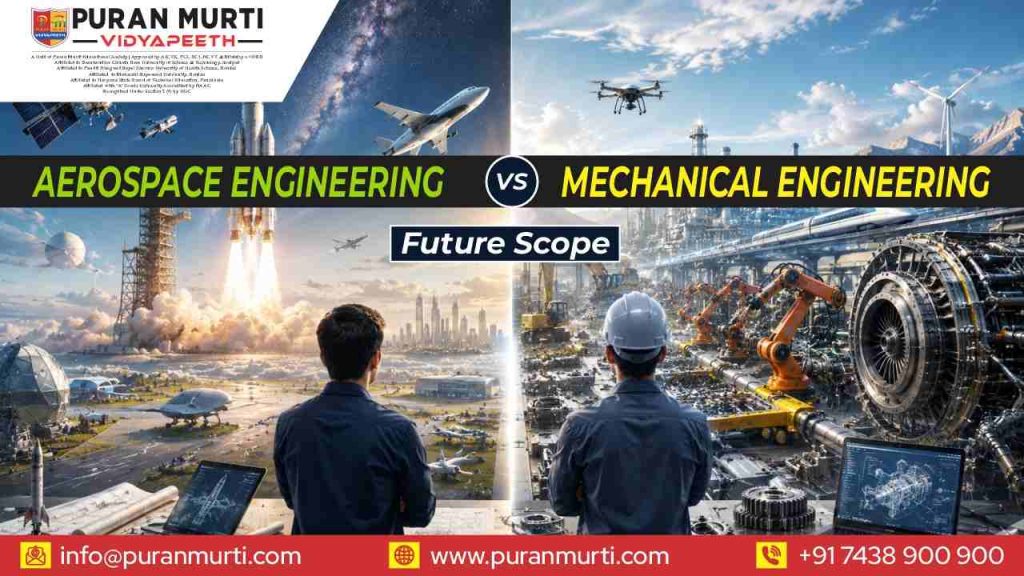
Aerospace Engineering vs Mechanical Engineering
Posted on : 8 June, 2026 12:48 pm
Choosing between Aerospace Engineering vs Mechanical Engineering can be challenging for students planning a career in engineering. Both fields involve innovation, design, and advanced technology, yet they lead to different professional paths. When comparing Aerospace Engineering vs Mechanical Engineering, it is important to understand how their subjects, industry applications, and career opportunities vary. While one discipline focuses primarily on aircraft, spacecraft, and flight systems, the other covers a much wider range of machines, manufacturing processes, and industrial technologies. As industries continue to adopt automation, sustainable energy solutions, and next-generation transportation systems, the discussion around Aerospace Engineering vs Mechanical Engineering has become increasingly relevant. Therefore, students should evaluate the future scope, salary potential, skill requirements, and long-term career growth associated with each field before making a decision.
What Is Aerospace Engineering?
Aerospace Engineering is a specialized engineering discipline dedicated to the design, development, testing, and improvement of flying vehicles and space systems. The field combines principles of physics, mathematics, materials science, and computer modeling to create technologies capable of operating in challenging environments.
| Key Information | Details |
|---|---|
| Degree Type | B.Tech/B.E. |
| Duration | 4 Years |
| Eligibility | 10+2 with PCM |
| Main Area | Aviation and Space |
| Core Focus | Flight Systems |
What Is Mechanical Engineering?
Mechanical Engineering is one of the broadest branches of engineering. It deals with machines, manufacturing systems, engines, thermal equipment, industrial automation, and mechanical design. Because of its versatility, mechanical engineering remains relevant across numerous industries.
| Key Information | Details |
|---|---|
| Degree Type | B.Tech/B.E. |
| Duration | 4 Years |
| Eligibility | 10+2 with PCM |
| Main Area | Mechanical Systems |
| Core Focus | Design and Manufacturing |
Aerospace Engineering vs Mechanical Engineering: Fundamental Difference
Although both disciplines share engineering fundamentals, their areas of specialization differ considerably.
| Aerospace Engineering | Mechanical Engineering |
|---|---|
| Focuses on aircraft and spacecraft | Focuses on machines and industrial systems |
| Specialized branch | Broad branch |
| Aviation-oriented curriculum | Multi-industry curriculum |
| Greater emphasis on aerodynamics | Greater emphasis on machine design |
Academic Focus in Aerospace Engineering
Students typically study subjects related to flight, propulsion, and aerospace systems.
| Major Topics |
|---|
| Aerodynamics |
| Aircraft Structures |
| Flight Mechanics |
| Space Technology |
| Propulsion Systems |
Academic Focus in Mechanical Engineering
Mechanical Engineering students develop expertise across multiple technical domains.
| Major Topics |
|---|
| Thermodynamics |
| Fluid Mechanics |
| Machine Design |
| Manufacturing Technology |
| Robotics Fundamentals |
Future Scope of Aerospace Engineering
The aerospace sector is undergoing significant transformation. Growing investments in commercial aviation, satellite technology, defense modernization, and private space exploration are creating new opportunities for qualified professionals.
| Emerging Area | Growth Potential |
|---|---|
| Satellite Technology | High |
| Space Exploration | Very High |
| Defense Aviation | High |
| UAV Development | High |
| Commercial Aviation | Strong |
Future Scope of Mechanical Engineering
Mechanical Engineering continues to evolve with technological advancements. Industries increasingly require engineers capable of working with automation systems, smart factories, renewable energy technologies, and advanced manufacturing techniques.
| Emerging Area | Growth Potential |
|---|---|
| Robotics | High |
| Electric Vehicles | Very High |
| Automation | High |
| Renewable Energy | High |
| Smart Manufacturing | Strong |
Career Opportunities in Aerospace Engineering
Graduates can pursue positions such as:
- Aerospace Design Engineer
- Flight Systems Engineer
- Propulsion Engineer
- Research Scientist
- Satellite Systems Engineer
Career Opportunities in Mechanical Engineering
Mechanical Engineering graduates can work as:
- Design Engineer
- Production Engineer
- Manufacturing Engineer
- Automotive Engineer
- Maintenance Engineer
Salary Comparison in 2026
Compensation depends on location, skills, organization, and specialization.
| Career Path | Average Starting Salary |
|---|---|
| Aerospace Engineering | ₹5–10 LPA |
| Mechanical Engineering | ₹4–8 LPA |
Industry Exposure Comparison
| Parameter | Aerospace Engineering | Mechanical Engineering |
|---|---|---|
| Aviation Industry | Excellent | Moderate |
| Manufacturing Industry | Limited | Excellent |
| Defense Sector | Excellent | Good |
| Automotive Sector | Limited | Excellent |
| Space Sector | Excellent | Moderate |
Global Employment Opportunities
Both disciplines offer international career prospects. However, Aerospace Engineering is often concentrated within specific sectors, while Mechanical Engineering provides access to a wider range of industries.
| Category | Aerospace Engineering | Mechanical Engineering |
|---|---|---|
| International Demand | High | High |
| Industry Diversity | Moderate | Very High |
| Mobility Between Industries | Moderate | Excellent |
| Specialized Expertise | Very High | High |
Advantages of Aerospace Engineering
- Exposure to advanced technologies
- Opportunities in aviation and space industries
- Strong research prospects
- Specialized career paths
- Global relevance
Advantages of Mechanical Engineering
- Broad employment opportunities
- Greater industry flexibility
- Diverse specialization options
- Strong manufacturing demand
- Adaptability across sectors
Challenges in Aerospace Engineering
- Highly specialized curriculum
- Competitive recruitment process
- Limited industry segments
- Advanced technical requirements
Challenges in Mechanical Engineering
- Larger competition pool
- Need for continuous upskilling
- Industry-specific specialization requirements
- Rapid technological changes
Higher Education Options
| Course | Advanced Study Options |
|---|---|
| Aerospace Engineering | M.Tech, MS, PhD |
| Mechanical Engineering | M.Tech, MS, MBA, PhD |
Which Course Offers Better Future Scope?
The answer depends largely on personal interests and career objectives. Students passionate about aircraft, spacecraft, and flight technologies may find Aerospace Engineering more rewarding. Conversely, those seeking flexibility and opportunities across multiple industries may benefit from Mechanical Engineering.
Who Should Choose Aerospace Engineering?
Aerospace Engineering may be suitable for students who:
- Enjoy aviation and space science
- Have strong analytical abilities
- Like advanced mathematics and physics
- Want to work with aircraft and spacecraft technologies
Who Should Choose Mechanical Engineering?
Mechanical Engineering may be a better fit for students who:
- Prefer versatile career options
- Enjoy machine design and manufacturing
- Want opportunities across several industries
- Are interested in automation and industrial systems
About Puran Murti Vidyapeeth
The institute is known for its focus on technical education, practical learning, laboratory exposure, and career-oriented training. Students can explore engineering programs in modern technology domains while benefiting from academic support, industry interaction, and campus facilities. The availability of hostel facilities, skill-development activities, and placement assistance also makes it a consideration for students looking for engineering education near Delhi NCR. Apply Now
Top Engineering Branches
BTech (Bachelor of Technology)
BTech is among the most popular courses after 12th Science (PCM).
Top Specializations:
- Aeronautical Engineering
- Aerospace Engineering
- Aircraft Maintenance Engineering (AME)
- Computer Science & Engineering (CSE)
- CSE with Artificial Intelligence and Machine Learning (AI & ML)
- Civil Engineering
- Electrical Engineering
- Electronics & Communication Engineering (ECE)
- Mechanical Engineering
Unique Aviation Programs (USP)
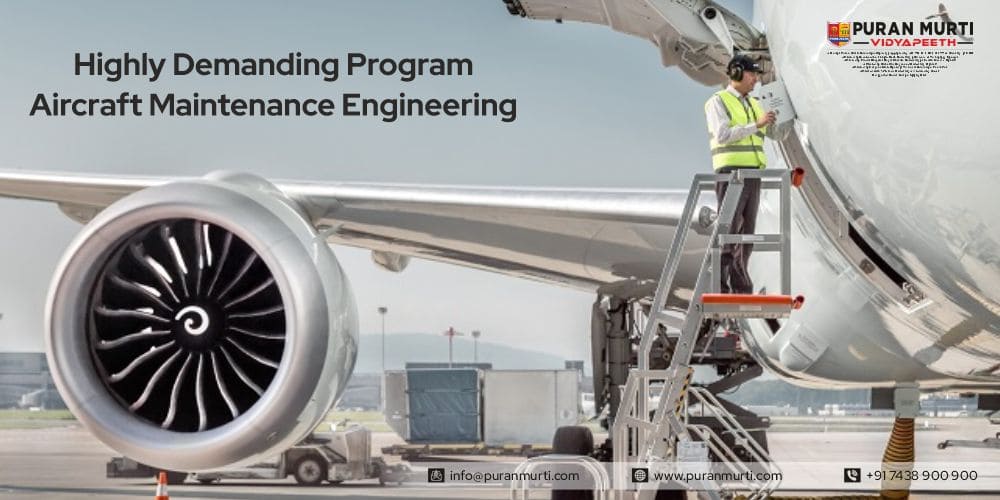
One of the biggest advantages of Puran Murti Vidyapeeth is its aviation-based courses, which are rare in India:
- B.Tech + AME (DGCA approved)
- B.Tech Mechanical Engineering + AME (DGCA)
- B.Tech ECE + AME (DGCA)
- B.Tech Computer Science
(AI & ML)+ AME (DGCA) - B.Tech Aeronautical Engineering
+ CPL (Ground Classes) - B.Tech Aerospace Engineering
+ CPL (Ground Classes)
Diploma Courses
Students can also choose job-oriented diploma courses: Apply Now
- Diploma in Automobile Engineering (AE)
- Diploma in AME (Aircraft Maintenance Engineering)
- Diploma in Aeronautical Engineering
- Diploma in Civil Engineering (CE)
- Diploma in Mechanical Engineering (ME)
- Diploma in Computer Science & Engineering (CSE)
- Diploma in Electronics & Communication Engineering (ECE)
- Diploma in Electrical Engineering (EE)
- Diploma in Fire Technology & Safety
- Diploma in Medical Lab Technology (MLT)
- Diploma in Hotel Management
- Diploma in CSE (AI & ML)
Final Thoughts
The comparison between Aerospace Engineering vs Mechanical Engineering is not about identifying a universally superior option. Instead, it is about finding the discipline that aligns best with your interests, strengths, and long-term ambitions. Aerospace Engineering offers a focused pathway into aviation, defense, and space-related industries. In contrast, Mechanical Engineering provides broader career flexibility and access to a wider range of sectors. As both fields continue to benefit from technological advancement and industrial growth, students can build successful and rewarding careers by choosing the path that matches their professional aspirations.

FAQs
1. Is Aerospace Engineering harder than Mechanical Engineering?
Both programs are academically demanding. Aerospace Engineering is generally more specialized, whereas Mechanical Engineering covers a broader range of technical subjects.
2. Can Mechanical Engineers work in aerospace companies?
Yes. Many aerospace organizations recruit Mechanical Engineers for manufacturing, structural analysis, thermal systems, and product development roles.
3. Which branch has a wider scope?
Mechanical Engineering typically offers a wider scope because it is applicable across numerous industries, including automotive, manufacturing, energy, and robotics.
4. Does Aerospace Engineering have a good future in India?
Yes. Increasing investments in aviation, defense projects, satellite technology, and space programs continue to create opportunities for aerospace professionals.
5. Which course offers better salary growth?
Salary growth depends on skills, specialization, experience, and employer. Both fields offer strong earning potential for qualified professionals.