
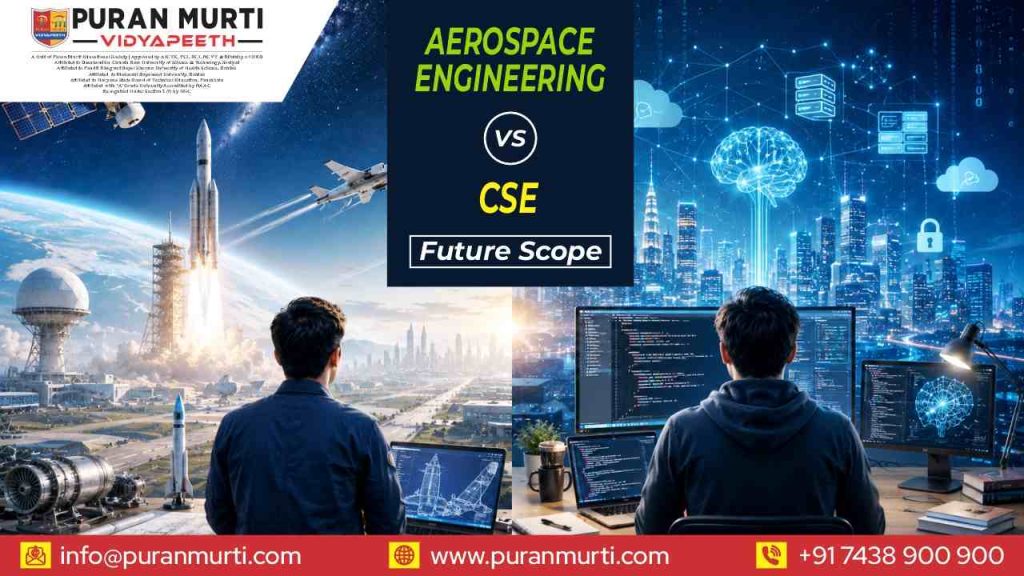
Aerospace Engineering vs CSE future scope
Posted on : 8 June, 2026 12:48 pm
Choosing between Aerospace Engineering vs CSE is a common challenge for students who want a rewarding engineering career. While both fields offer excellent opportunities, they differ significantly in subjects, skills, work environments, salaries, and future growth. Therefore, understanding the key differences between Aerospace Engineering vs CSE is essential before making a decision. Moreover, as industries continue to evolve with technological advancements, the comparison of Aerospace Engineering vs CSE has become even more relevant for students planning their future. In addition, both fields contribute to innovation in unique ways, making the choice highly dependent on personal interests and career goals.
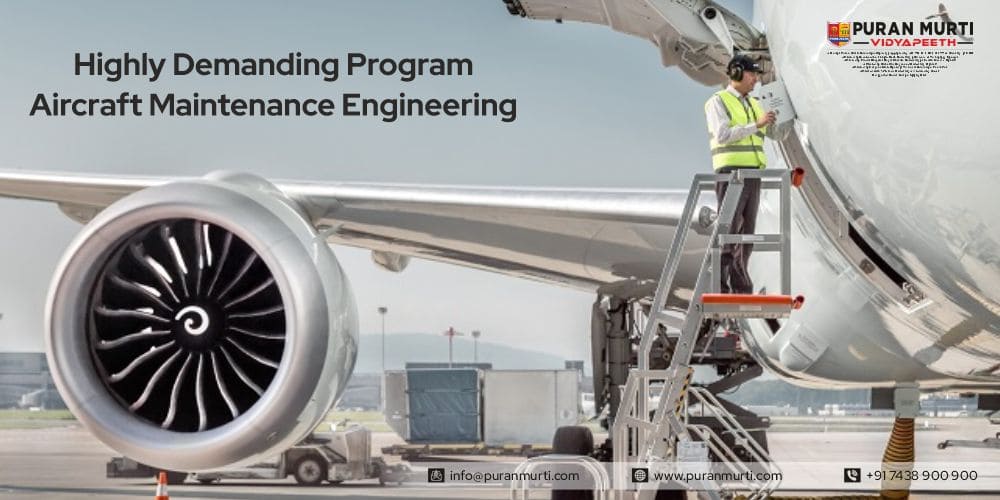
Understanding Aerospace Engineering
Aerospace Engineering is a specialized branch of engineering that focuses on the design, development, testing, and maintenance of aircraft, spacecraft, satellites, missiles, and related systems.
The field combines principles from physics, mathematics, materials science, and mechanical engineering to create advanced aviation and space technologies.
Key Areas in Aerospace Engineering
| Area | Description |
|---|---|
| Aerodynamics | Study of airflow around aircraft |
| Propulsion | Design of jet and rocket engines |
| Structures | Aircraft and spacecraft structural design |
| Avionics | Electronic systems used in aerospace vehicles |
| Space Technology | Satellite and spacecraft development |
Understanding Computer Science Engineering (CSE)
Computer Science Engineering focuses on software development, programming, algorithms, artificial intelligence, databases, cybersecurity, and computer systems.
Today, CSE plays a crucial role in almost every industry, including healthcare, finance, education, transportation, and entertainment.
Major Areas in CSE
| Area | Description |
|---|---|
| Software Development | Building applications and systems |
| Artificial Intelligence | Machine learning and automation |
| Cybersecurity | Protection of digital systems |
| Data Science | Analysis of large datasets |
| Cloud Computing | Online computing infrastructure |
Aerospace Engineering vs CSE: Quick Comparison
| Parameter | Aerospace Engineering | CSE |
|---|---|---|
| Core Focus | Aircraft and spacecraft | Software and computing |
| Industry | Aviation and space | IT and technology |
| Demand | Specialized | Broad and global |
| Programming Requirement | Moderate | Extensive |
| Mathematics Level | High | High |
| Research Opportunities | Strong | Very strong |
| Global Mobility | Good | Excellent |
| Startup Opportunities | Limited | High |
Educational Curriculum Comparison
Although both programs require strong analytical skills, their academic focus is quite different.
Aerospace Engineering Subjects
| Subjects |
|---|
| Aerodynamics |
| Flight Mechanics |
| Aircraft Structures |
| Propulsion Systems |
| Spacecraft Engineering |
| Control Systems |
CSE Subjects
| Subjects |
|---|
| Programming Languages |
| Data Structures |
| Operating Systems |
| Database Management |
| Artificial Intelligence |
| Machine Learning |
Skill Requirements
Skills Needed for Aerospace Engineering
- Strong mathematical ability
- Problem-solving skills
- Engineering design expertise
- Knowledge of physics
- Research and analytical thinking
- Technical documentation skills
Skills Needed for CSE
- Programming proficiency
- Logical reasoning
- Algorithm design
- Software development
- Data analysis
- Continuous learning ability
Aerospace Engineering vs CSE: Course Difficulty
Many students wonder which course is harder.
Aerospace Engineering is generally considered more challenging because it combines advanced mathematics, engineering principles, fluid dynamics, thermodynamics, and complex design concepts.
On the other hand, CSE requires extensive coding practice and continuous adaptation to rapidly changing technologies. Therefore, students who enjoy programming may find CSE more manageable than Aerospace Engineering.
Career Opportunities in Aerospace Engineering
After graduation, students can work in sectors related to aviation, defense, and space exploration.
Popular Job Roles
| Job Role | Description |
|---|---|
| Aerospace Engineer | Design aircraft and spacecraft |
| Flight Test Engineer | Conduct aircraft testing |
| Propulsion Engineer | Develop engine systems |
| Design Engineer | Create aerospace components |
| Satellite Engineer | Work on satellite technologies |
About Puran Murti Vidyapeeth
The institute is known for its focus on technical education, practical learning, laboratory exposure, and career-oriented training. Students can explore engineering programs in modern technology domains while benefiting from academic support, industry interaction, and campus facilities. The availability of hostel facilities, skill-development activities, and placement assistance also makes it a consideration for students looking for engineering education near Delhi NCR. Apply Now
Top Engineering Branches
BTech (Bachelor of Technology)
BTech is among the most popular courses after 12th Science (PCM).
Top Specializations:
- Aeronautical Engineering
- Aerospace Engineering
- Aircraft Maintenance Engineering (AME)
- Computer Science & Engineering (CSE)
- CSE with Artificial Intelligence and Machine Learning (AI & ML)
- Civil Engineering
- Electrical Engineering
- Electronics & Communication Engineering (ECE)
- Mechanical Engineering
Unique Aviation Programs (USP)
One of the biggest advantages of Puran Murti Vidyapeeth is its aviation-based courses, which are rare in India:
- B.Tech + AME (DGCA approved)
- B.Tech Mechanical Engineering + AME (DGCA)
- B.Tech ECE + AME (DGCA)
- B.Tech Computer Science
(AI & ML)+ AME (DGCA) - B.Tech Aeronautical Engineering
+ CPL (Ground Classes) - B.Tech Aerospace Engineering
+ CPL (Ground Classes)
Diploma Courses
Students can also choose job-oriented diploma courses: Apply Now
- Diploma in Automobile Engineering (AE)
- Diploma in AME (Aircraft Maintenance Engineering)
- Diploma in Aeronautical Engineering
- Diploma in Civil Engineering (CE)
- Diploma in Mechanical Engineering (ME)
- Diploma in Computer Science & Engineering (CSE)
- Diploma in Electronics & Communication Engineering (ECE)
- Diploma in Electrical Engineering (EE)
- Diploma in Fire Technology & Safety
- Diploma in Medical Lab Technology (MLT)
- Diploma in Hotel Management
- Diploma in CSE (AI & ML)
Career Opportunities in CSE
CSE graduates enjoy a wider range of career options because software solutions are required in almost every industry. Moreover, the rapid growth of digital technologies has created new job roles across multiple sectors. As a result, CSE professionals can find opportunities in healthcare, finance, education, e-commerce, entertainment, manufacturing, and many other industries.
Furthermore, advancements in artificial intelligence, cloud computing, cybersecurity, and data science continue to expand career prospects. Therefore, students pursuing CSE often benefit from greater job flexibility and a broader employment market. In addition, the increasing demand for technology professionals has strengthened long-term career growth opportunities both nationally and internationally.
Popular Job Roles
| Job Role | Description |
|---|---|
| Software Engineer | Develop applications |
| Data Scientist | Analyze business data |
| AI Engineer | Build intelligent systems |
| Cybersecurity Analyst | Protect digital infrastructure |
| Cloud Engineer | Manage cloud platforms |
Aerospace Engineering vs CSE Salary Comparison
Salary varies depending on skills, location, employer, and experience.
| Experience Level | Aerospace Engineering | CSE |
|---|---|---|
| Freshers | Moderate to High | High |
| Mid-Level | High | Very High |
| Senior Level | Very High | Extremely High |
| International Opportunities | Strong | Stronger |
Generally, CSE graduates often receive higher starting salaries due to strong demand from technology companies. However, experienced aerospace engineers working on specialized projects can also earn impressive compensation.
Industry Demand and Growth
Aerospace Industry Growth
The aerospace industry is expanding because of:
- Commercial aviation growth
- Space exploration programs
- Satellite deployment projects
- Defense modernization
- Unmanned aerial vehicles
CSE Industry Growth
Meanwhile, the technology sector continues to grow through:
- Artificial Intelligence
- Cloud Computing
- Big Data
- Cybersecurity
- Automation
- Internet of Things
As a result, CSE currently offers broader employment opportunities across multiple industries.
Government Sector Opportunities
Aerospace Engineering
Government organizations actively recruit aerospace graduates.
Examples include:
- Indian Space Research Organisation
- Defence Research and Development Organisation
- National Aeronautics and Space Administration
- European Space Agency
CSE
Government opportunities for CSE graduates include:
- Digital governance projects
- Cybersecurity divisions
- Public sector technology organizations
- Research institutions
- Defense technology programs
Private Sector Opportunities
| Aspect | Aerospace Engineering | CSE |
|---|---|---|
| Number of Employers | Moderate | Very High |
| Startup Ecosystem | Limited | Excellent |
| Remote Work | Limited | Extensive |
| Freelancing | Low | Very High |
| Global Hiring | Good | Excellent |
Therefore, students seeking flexibility often prefer CSE.

Research and Innovation Opportunities
Both fields provide excellent research opportunities. Furthermore, students in both disciplines can contribute to groundbreaking innovations that shape the future of technology and society. Additionally, each field offers access to advanced laboratories, research projects, and industry collaborations. However, the focus areas of research differ significantly between Aerospace Engineering and CSE. Therefore, students should consider their interests before selecting a specialization. As a result, those who enjoy aviation and space technologies may be drawn toward aerospace research, whereas students interested in software, data, and intelligent systems may prefer computer science research. Ultimately, both disciplines offer strong pathways for innovation, discovery, and academic growth.
Aerospace Research Areas
- Space exploration
- Advanced propulsion
- Sustainable aviation
- Hypersonic vehicles
- Autonomous aircraft
CSE Research Areas
- Artificial Intelligence
- Quantum Computing
- Robotics
- Blockchain
- Human-Computer Interaction
Consequently, innovation-driven students can thrive in either discipline.
Higher Education Options
Aerospace Engineering Graduates
Popular higher studies include:
- M.Tech Aerospace Engineering
- Space Engineering
- Aerodynamics
- Propulsion Engineering
- Aviation Management
CSE Graduates
Popular options include:
- M.Tech CSE
- Data Science
- Artificial Intelligence
- Cybersecurity
- MBA
- Software Systems
Work Environment Comparison
| Factor | Aerospace Engineering | CSE |
|---|---|---|
| Office Work | Moderate | High |
| Field Work | Frequent | Limited |
| Lab Work | Extensive | Moderate |
| Remote Work | Limited | Common |
| Team Collaboration | High | High |
As expected, aerospace engineers often spend time in laboratories, testing facilities, and manufacturing environments, whereas CSE professionals primarily work in software development settings.
Future Scope of Aerospace Engineering
The future looks promising due to:
- Space tourism
- Satellite communication growth
- Commercial space missions
- Defense advancements
- Sustainable aircraft development
Therefore, demand for skilled aerospace professionals is expected to increase steadily.
Future Scope of CSE
CSE continues to dominate future employment trends because of:
- AI adoption
- Digital transformation
- Automation
- Cloud technologies
- Cybersecurity needs
Furthermore, businesses across nearly every sector depend on software solutions, creating continuous demand for computer science professionals.
Entrepreneurship Opportunities
| Area | Aerospace Engineering | CSE |
|---|---|---|
| Startup Cost | High | Lower |
| Market Entry | Difficult | Easier |
| Scalability | Moderate | High |
| Innovation Potential | High | Very High |
As a result, CSE graduates often find it easier to launch startups and digital products.
Which Field Is Better for International Careers?
Both fields offer international career opportunities. However, CSE generally provides easier global mobility because software skills are highly transferable across different countries, industries, and organizations. Additionally, many technology companies actively hire remote employees, which further expands international career prospects for CSE graduates.
In contrast, aerospace roles often involve security clearances, government regulations, and country-specific certification requirements. As a result, professionals may face additional restrictions when seeking opportunities abroad. Nevertheless, Aerospace Engineering still offers strong international career paths, particularly in aviation, defense, satellite technology, and space research. Furthermore, experienced aerospace engineers can find opportunities with multinational organizations and global aerospace projects.
Therefore, while both disciplines provide access to international careers, CSE typically offers greater flexibility and easier cross-border employment. Ultimately, students who prioritize global mobility and remote work opportunities may find CSE to be the more advantageous option.
Aerospace Engineering vs CSE: Pros and Cons
Aerospace Engineering Pros
- Prestigious career path
- Involvement in advanced technology
- Strong research opportunities
- Contribution to aviation and space missions
Aerospace Engineering Cons
- Specialized job market
- Fewer employers
- Limited remote work options
CSE Pros
- High demand worldwide
- Excellent salary potential
- Flexible career options
- Strong startup ecosystem
CSE Cons
- Intense competition
- Rapidly changing technologies
- Continuous skill upgrades required
Who Should Choose Aerospace Engineering?
You should consider Aerospace Engineering if you:
- Love aircraft and spacecraft
- Enjoy physics and engineering design
- Want to contribute to aviation innovation
- Are interested in space exploration
Who Should Choose CSE?
You should consider CSE if you:
- Enjoy coding and technology
- Like solving logical problems
- Want broad career opportunities
- Prefer flexibility and remote work options
Final Verdict: Aerospace Engineering vs CSE
The decision between Aerospace Engineering vs CSE ultimately depends on your interests, strengths, and long-term career aspirations. For example, if you are passionate about aircraft, spacecraft, flight systems, and engineering innovation, then Aerospace Engineering can offer a highly rewarding and specialized career path. On the other hand, if you enjoy coding, software development, artificial intelligence, and emerging digital technologies, then CSE may be a more suitable option. Additionally, CSE provides access to a wider range of industries, which can create greater career flexibility over time.
Furthermore, both fields offer excellent growth opportunities; however, they differ considerably in terms of job roles, work environments, and industry demand. While Aerospace Engineering focuses primarily on aviation, defense, and space exploration, CSE extends across sectors such as healthcare, finance, education, e-commerce, and cybersecurity. As a result, CSE graduates often encounter a broader selection of employment opportunities immediately after graduation.
Nevertheless, Aerospace Engineering remains an exciting and prestigious discipline with increasing opportunities driven by advancements in satellite technology, commercial aviation, space missions, and sustainable aircraft development. Meanwhile, the demand for CSE professionals continues to rise because of rapid digital transformation, artificial intelligence, cloud computing, and automation across global industries.
Therefore, instead of choosing a field based solely on salary trends or market popularity, it is important to evaluate your personal interests, academic strengths, and preferred work style. In the long run, students who genuinely enjoy their chosen discipline are more likely to achieve professional success and career satisfaction. Ultimately, the best choice in the Aerospace Engineering vs CSE debate is the one that aligns most closely with your passion, skills, and future goals.
Frequently Asked Questions
Is Aerospace Engineering better than CSE?
No, neither field is universally better. Instead, the right choice depends on your interests, skills, and career goals. For instance, Aerospace Engineering is well-suited for students interested in aviation and space technology, whereas CSE is ideal for those passionate about computing, programming, and software development.
Which has a higher salary, Aerospace Engineering or CSE?
Generally, CSE graduates tend to receive higher starting salaries because of strong demand in the technology sector. However, experienced aerospace professionals can also earn highly competitive compensation. Moreover, salary growth in both fields depends on skills, experience, location, and industry specialization.
Is Aerospace Engineering harder than CSE?
In general, Aerospace Engineering is considered more academically demanding because it involves advanced concepts in mathematics, physics, aerodynamics, and engineering design. However, CSE also presents challenges, particularly in programming, algorithms, and continuously evolving technologies. Therefore, the difficulty level often depends on a student’s interests and strengths.
Can Aerospace Engineers learn programming?
Yes, Aerospace Engineers can certainly learn programming. In fact, many aerospace professionals regularly use programming languages such as Python, MATLAB, and C++ for simulations, data analysis, modeling, and system design. Additionally, programming skills can significantly improve career opportunities in the aerospace industry.
Which field has better future scope in 2026?
Both fields have strong future prospects. However, CSE currently offers broader career opportunities because of growing demand in artificial intelligence, cloud computing, cybersecurity, and digital transformation. Nevertheless, Aerospace Engineering continues to expand through advancements in aviation, satellite technology, defense systems, and space exploration. Therefore, both disciplines offer promising long-term career growth depending on your interests and career objectives.