
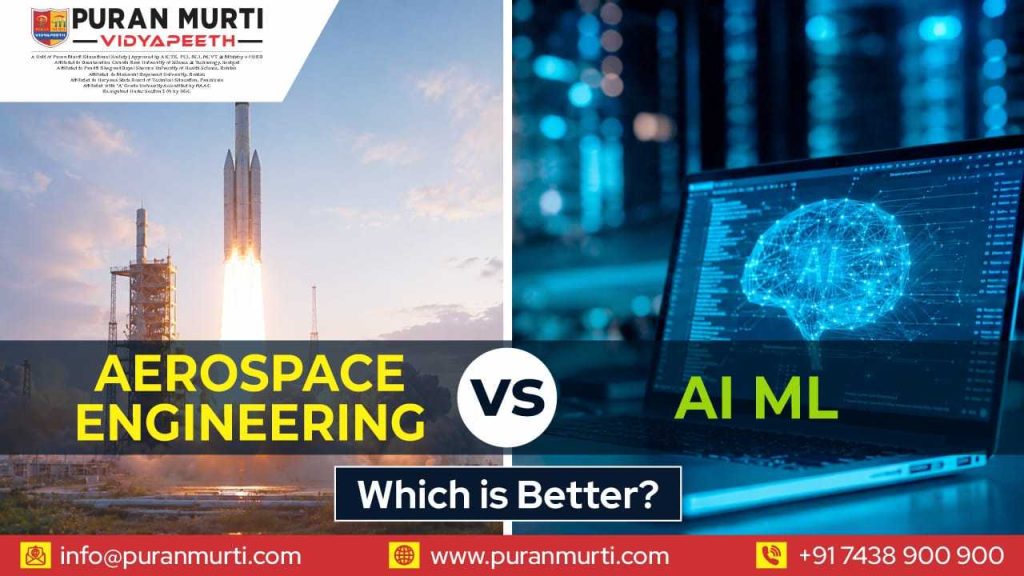
Aerospace Engineering vs AI ML Which is Better?
Posted on : 9 June, 2026 3:02 pm
Choosing the right engineering branch can significantly influence your future career, salary potential, and professional growth. Among the most popular options today, Aerospace Engineering vs AI & ML: Which Is Better is a question that many students ask before admission. While Aerospace Engineering focuses on aircraft, spacecraft, satellites, and aviation systems, Artificial Intelligence and Machine Learning (AI & ML) Engineering revolves around intelligent software, automation, data-driven systems, and advanced computing technologies.
Therefore, understanding the differences between Aerospace Engineering vs AI & ML is essential before making a decision. Moreover, both fields are associated with innovation, cutting-edge technology, and exciting career opportunities. However, they differ considerably in terms of curriculum, industry demand, salaries, work environments, and future scope. As a result, students should evaluate their interests and long-term career goals before choosing either discipline.
Understanding Aerospace Engineering
Aerospace Engineering is a specialized branch of engineering that deals with the design, development, testing, and maintenance of aircraft, spacecraft, satellites, missiles, and related systems.
Furthermore, aerospace engineers contribute to advancements in aviation, defense technology, and space exploration. Consequently, the field remains one of the most prestigious engineering disciplines worldwide.
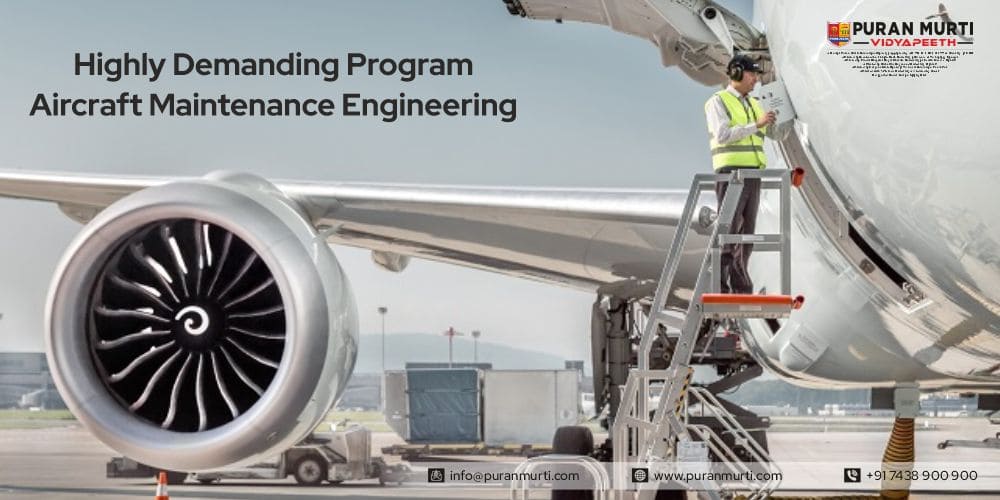
Core Areas in Aerospace Engineering
| Area | Description |
|---|---|
| Aerodynamics | Study of airflow around aircraft |
| Propulsion Systems | Jet and rocket engine development |
| Flight Mechanics | Aircraft stability and control |
| Aerospace Structures | Structural design and analysis |
| Space Engineering | Spacecraft and satellite technology |
Understanding AI & ML Engineering
Artificial Intelligence and Machine Learning Engineering is a rapidly growing field that focuses on creating intelligent systems capable of learning, analyzing data, and making decisions.
Additionally, AI & ML engineers develop technologies used in automation, robotics, predictive analytics, recommendation systems, computer vision, and natural language processing. Therefore, the field has become one of the most sought-after career choices globally.
Core Areas in AI & ML
| Area | Description |
|---|---|
| Artificial Intelligence | Intelligent decision-making systems |
| Machine Learning | Data-driven predictive models |
| Deep Learning | Advanced neural networks |
| Computer Vision | Image and video recognition |
| Natural Language Processing | Human-language understanding |
Aerospace Engineering vs AI & ML: Quick Comparison
| Parameter | Aerospace Engineering | AI & ML |
|---|---|---|
| Core Focus | Aircraft and spacecraft | Intelligent software systems |
| Industry | Aerospace and defense | Technology and digital industries |
| Programming Requirement | Moderate | Extensive |
| Mathematics Requirement | High | High |
| Industry Demand | Strong | Extremely High |
| Remote Work Opportunities | Limited | Extensive |
| Startup Potential | Moderate | Very High |
| Global Opportunities | High | Very High |
Course Curriculum Comparison
Although both disciplines require strong analytical abilities, the academic content differs significantly.
Aerospace Engineering Subjects
| Subjects |
|---|
| Aerodynamics |
| Flight Mechanics |
| Aircraft Structures |
| Propulsion Systems |
| Aerospace Materials |
| Space Technology |
AI & ML Subjects
| Subjects |
|---|
| Python Programming |
| Artificial Intelligence |
| Machine Learning |
| Deep Learning |
| Data Science |
| Neural Networks |
Skill Requirements
Skills Needed for Aerospace Engineering
- Strong mathematics foundation
- Engineering design skills
- Physics knowledge
- Problem-solving ability
- Research aptitude
- Technical analysis
Skills Needed for AI & ML
- Programming proficiency
- Data analysis skills
- Algorithm development
- Machine learning expertise
- Logical reasoning
- Continuous learning mindset
Aerospace Engineering vs AI & ML: Which Course Is More Difficult?
The answer depends largely on individual interests and strengths.
Generally, Aerospace Engineering is considered academically demanding because it involves complex concepts in aerodynamics, thermodynamics, structural mechanics, and propulsion systems. However, AI & ML also presents significant challenges because students must master programming, statistics, algorithms, and advanced machine learning techniques.
Therefore, students who enjoy physics and engineering design may prefer Aerospace Engineering. On the other hand, students interested in coding, automation, and intelligent systems may find AI & ML more suitable.
Career Opportunities in Aerospace Engineering
Aerospace Engineering graduates can work in aviation, defense, satellite technology, and space exploration industries.
Furthermore, the increasing investment in commercial space programs is creating new employment opportunities for aerospace professionals.
Popular Job Roles
| Job Role | Description |
|---|---|
| Aerospace Engineer | Design aerospace systems |
| Flight Test Engineer | Conduct aircraft testing |
| Propulsion Engineer | Develop engine technologies |
| Satellite Engineer | Work on satellite systems |
| Aircraft Design Engineer | Design aircraft components |
Career Opportunities in AI & ML
AI & ML professionals enjoy diverse career opportunities because intelligent technologies are becoming essential across industries. Moreover, businesses increasingly rely on data-driven decision-making and automation. As a result, demand for AI professionals continues to grow rapidly.
Popular Job Roles
| Job Role | Description |
|---|---|
| AI Engineer | Develop intelligent applications |
| Machine Learning Engineer | Build predictive models |
| Data Scientist | Analyze complex datasets |
| AI Research Scientist | Conduct AI research |
| Computer Vision Engineer | Develop image recognition systems |
Aerospace Engineering vs AI & ML Salary Comparison
| Experience Level | Aerospace Engineering | AI & ML |
|---|---|---|
| Freshers | Moderate to High | High |
| Mid-Level | High | Very High |
| Senior Level | Very High | Extremely High |
| International Opportunities | Strong | Very Strong |
Generally, AI & ML professionals receive higher starting salaries because of strong demand in the technology sector. However, experienced aerospace engineers working on specialized projects can also earn highly competitive compensation.
Industry Demand and Growth
Aerospace Industry Growth
The aerospace sector continues to grow because of:
- Commercial aviation expansion
- Space exploration programs
- Satellite deployment initiatives
- Defense modernization
- Drone technology development
AI & ML Industry Growth
Meanwhile, AI & ML are transforming industries through:
- Generative AI
- Predictive Analytics
- Robotics
- Automation
- Smart Manufacturing
- Intelligent Healthcare Systems
Consequently, AI & ML currently represent one of the fastest-growing career sectors worldwide.
Government Sector Opportunities
Aerospace Engineering
Government opportunities include:
- Indian Space Research Organisation
- Defence Research and Development Organisation
- National Aeronautics and Space Administration
AI & ML
Government opportunities include:
- AI policy initiatives
- Defense technology programs
- Smart city projects
- Data analytics departments
- Digital governance systems
Therefore, both fields offer opportunities within the public sector.
Private Sector Opportunities
| Factor | Aerospace Engineering | AI & ML |
|---|---|---|
| Number of Employers | Moderate | Very High |
| Startup Ecosystem | Moderate | Excellent |
| Remote Work | Limited | Extensive |
| Freelancing Opportunities | Low | High |
| Global Hiring | Strong | Very Strong |
As a result, AI & ML professionals generally benefit from a larger employment market.
Research and Innovation Opportunities
Both fields provide excellent research opportunities. Furthermore, both disciplines contribute significantly to technologies that are shaping the future. As a result, students interested in innovation and technological advancement can find rewarding research careers in either field.
However, the research focus areas of Aerospace Engineering and AI & ML differ considerably. For instance, aerospace researchers often work on challenges related to aviation efficiency, advanced propulsion systems, satellite technologies, and space exploration. In addition, ongoing developments in sustainable aviation and autonomous flight systems continue to create new research opportunities.
Meanwhile, AI & ML research focuses on developing intelligent systems capable of learning, adapting, and making decisions. Moreover, researchers in this field explore areas such as Generative AI, Deep Learning, Computer Vision, and Natural Language Processing. Consequently, AI innovations are influencing industries ranging from healthcare and finance to manufacturing and education.
Therefore, the choice between these fields often depends on your research interests. While Aerospace Engineering is ideal for students fascinated by aircraft, spacecraft, and advanced engineering systems, AI & ML may be better suited for those interested in intelligent technologies and data-driven innovation. Ultimately, both disciplines offer exciting opportunities to contribute to groundbreaking advancements and future technologies.
Aerospace Research Areas
- Sustainable aviation
- Hypersonic aircraft
- Advanced propulsion systems
- Space exploration technologies
- Autonomous flight systems
AI & ML Research Areas
- Generative AI
- Deep Learning
- Computer Vision
- Natural Language Processing
- Autonomous Systems
Therefore, students interested in innovation can succeed in either discipline.
Higher Education Opportunities
Aerospace Engineering Graduates
Popular options include:
- M.Tech Aerospace Engineering
- Aerodynamics
- Space Engineering
- Propulsion Engineering
- Aviation Management
AI & ML Graduates
Popular options include:
- M.Tech Artificial Intelligence
- Machine Learning
- Data Science
- Robotics
- Computational Intelligence
Work Environment Comparison
| Factor | Aerospace Engineering | AI & ML |
|---|---|---|
| Office Work | Moderate | High |
| Laboratory Work | Extensive | Moderate |
| Field Work | Frequent | Rare |
| Remote Work | Limited | Common |
| Flexibility | Moderate | High |
Consequently, AI & ML professionals often enjoy greater work flexibility and remote employment opportunities.
Future Scope of Aerospace Engineering
The future of Aerospace Engineering remains promising because of increasing investments in aviation, defense, and space exploration.
Furthermore, innovations in reusable rockets, satellite technology, and sustainable aircraft development are expected to create new career opportunities.
Future Scope of AI & ML
The future of AI & ML appears exceptionally strong. In fact, artificial intelligence is already transforming the way businesses operate, make decisions, and deliver services. As technology continues to evolve, the influence of AI and machine learning is expected to expand even further.
Moreover, organizations worldwide are investing heavily in artificial intelligence technologies to improve efficiency, productivity, and innovation. Consequently, companies are creating more roles for AI engineers, machine learning specialists, and data professionals. In addition, governments and research institutions are also increasing their investments in AI-driven initiatives.
Entrepreneurship Opportunities
| Area | Aerospace Engineering | AI & ML |
|---|---|---|
| Startup Cost | High | Lower |
| Market Entry | Difficult | Easier |
| Scalability | Moderate | Very High |
| Innovation Potential | High | Extremely High |
Therefore, AI & ML graduates often find it easier to launch scalable startups and technology businesses.
Aerospace Engineering vs AI & ML: Pros and Cons
Aerospace Engineering Pros
- Prestigious engineering discipline
- Exciting aviation and space projects
- Strong research opportunities
- Global recognition
Aerospace Engineering Cons
- Specialized job market
- Limited remote work opportunities
- Fewer employers compared to AI & ML
AI & ML Pros
- Extremely high demand
- Excellent salary potential
- Broad industry applications
- Strong startup ecosystem
- Flexible work arrangements
AI & ML Cons
- Highly competitive field
- Continuous skill upgrades required
- Rapid technological changes
Who Should Choose Aerospace Engineering?
You should consider Aerospace Engineering if you:
- Love aircraft and spacecraft technology
- Enjoy physics and engineering design
- Want to work in aviation or space sectors
- Prefer engineering-focused careers
Who Should Choose AI & ML?
You should consider AI & ML if you:
- Enjoy programming and software development
- Like working with data and algorithms
- Want broad career opportunities
- Are interested in artificial intelligence technologies
About Puran Murti Vidyapeeth
The institute is known for its focus on technical education, practical learning, laboratory exposure, and career-oriented training. Students can explore engineering programs in modern technology domains while benefiting from academic support, industry interaction, and campus facilities. The availability of hostel facilities, skill-development activities, and placement assistance also makes it a consideration for students looking for engineering education near Delhi NCR. Apply Now
Top Engineering Branches
BTech (Bachelor of Technology)
BTech is among the most popular courses after 12th Science (PCM).
Top Specializations:
- Aeronautical Engineering
- Aerospace Engineering
- Aircraft Maintenance Engineering (AME)
- Computer Science & Engineering (CSE)
- CSE with Artificial Intelligence and Machine Learning (AI & ML)
- Civil Engineering
- Electrical Engineering
- Electronics & Communication Engineering (ECE)
- Mechanical Engineering
Unique Aviation Programs (USP)
One of the biggest advantages of Puran Murti Vidyapeeth is its aviation-based courses, which are rare in India:
- B.Tech + AME (DGCA approved)
- B.Tech Mechanical Engineering + AME (DGCA)
- B.Tech ECE + AME (DGCA)
- B.Tech Computer Science
(AI & ML)+ AME (DGCA) - B.Tech Aeronautical Engineering
+ CPL (Ground Classes) - B.Tech Aerospace Engineering
+ CPL (Ground Classes)
Diploma Courses
Students can also choose job-oriented diploma courses: Apply Now
- Diploma in Automobile Engineering (AE)
- Diploma in AME (Aircraft Maintenance Engineering)
- Diploma in Aeronautical Engineering
- Diploma in Civil Engineering (CE)
- Diploma in Mechanical Engineering (ME)
- Diploma in Computer Science & Engineering (CSE)
- Diploma in Electronics & Communication Engineering (ECE)
- Diploma in Electrical Engineering (EE)
- Diploma in Fire Technology & Safety
- Diploma in Medical Lab Technology (MLT)
- Diploma in Hotel Management
- Diploma in CSE (AI & ML)
Final Verdict: Aerospace Engineering vs AI & ML – Which Is Better?
The answer to Aerospace Engineering vs AI & ML depends on your interests, strengths, and career ambitions. If you are fascinated by aircraft, spacecraft, flight systems, and engineering innovation, then Aerospace Engineering can provide a highly rewarding and prestigious career path.
On the other hand, if you are passionate about artificial intelligence, machine learning, automation, and software technologies, then AI & ML may be the better option. Furthermore, AI & ML currently offer broader employment opportunities, stronger salary growth, and greater industry flexibility. As a result, many students view AI & ML as one of the most future-ready engineering fields.
Nevertheless, Aerospace Engineering remains an excellent choice for students interested in aviation and space exploration. Ultimately, the best branch is the one that aligns with your passion, skills, and long-term career goals rather than simply following industry trends.

Frequently Asked Questions
Which is better, Aerospace Engineering or AI & ML?
Neither field is universally better. Instead, the right choice depends on your interests, career goals, and preferred work environment.
Does AI & ML have a higher salary than Aerospace Engineering?
Generally, AI & ML professionals earn higher starting salaries because of strong industry demand. However, experienced aerospace engineers can also earn excellent compensation.
Is Aerospace Engineering harder than AI & ML?
Both fields are challenging. While Aerospace Engineering focuses heavily on physics and engineering concepts, AI & ML requires strong programming, mathematics, and analytical skills.
Can Aerospace Engineers work in AI?
Yes. In fact, many aerospace organizations use artificial intelligence for simulations, autonomous systems, and data analysis. Therefore, aerospace engineers can transition into AI-related roles with additional training.
Which field has better future scope in 2026?
Both fields have strong future prospects. However, AI & ML currently offer broader opportunities because of increasing adoption across industries worldwide.