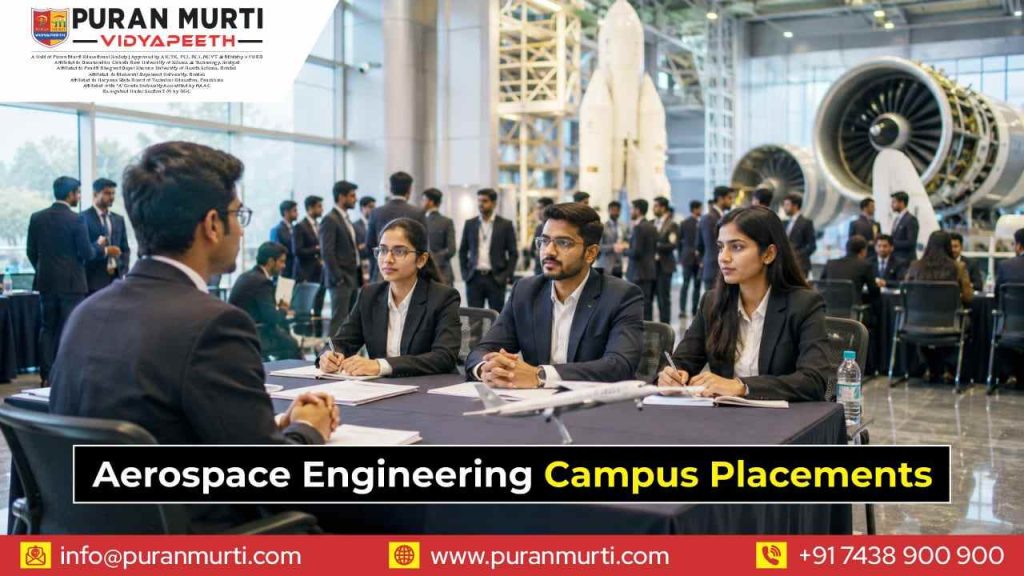
Aerospace Engineering Campus Placements
Posted on : 10 June, 2026 11:39 am
For many engineering aspirants, Aerospace Engineering Campus Placements are one of the most important factors when choosing a branch. While Aerospace Engineering is known for its connection to aircraft, spacecraft, and advanced technologies, students often wonder whether it offers strong placement opportunities after graduation.
The answer is yes. Aerospace Engineering Campus Placements have improved considerably over the years as the aviation, defense, drone technology, satellite systems, and space industries continue to expand. As a result, companies are actively looking for skilled aerospace graduates who can contribute to innovation and technological advancement.
In this blog, we will explore Aerospace Engineering Campus Placements, including top recruiters, salary packages, placement statistics, future scope, and practical strategies that can help students secure rewarding career opportunities in the aerospace industry.
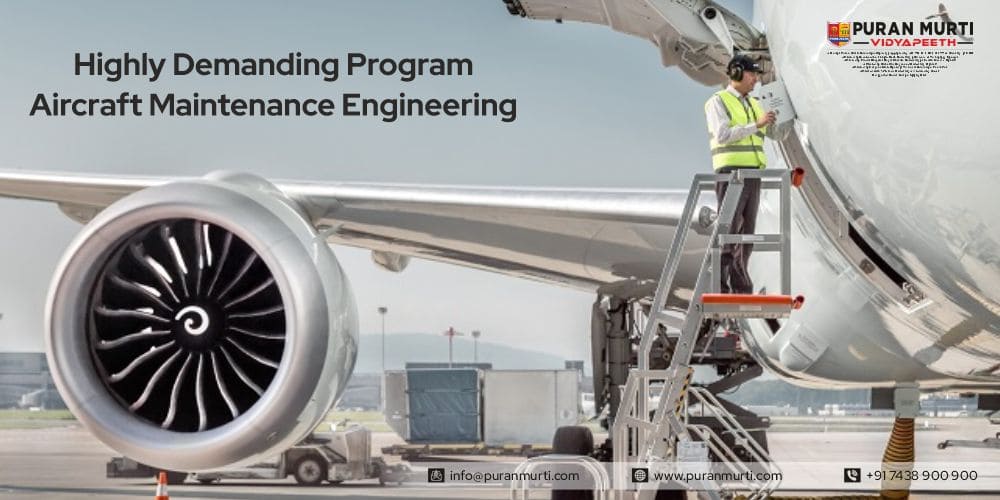
What is Aerospace Engineering?
Aerospace Engineering is a specialized branch of engineering that focuses on the design, development, testing, manufacturing, and maintenance of aircraft, spacecraft, satellites, missiles, and related systems.
The discipline is broadly divided into Aeronautical Engineering, which deals with aircraft operating within Earth’s atmosphere, and Astronautical Engineering, which focuses on spacecraft and space technologies.
Because aerospace projects involve complex systems and cutting-edge innovations, graduates often work in highly technical and research-oriented environments.
Are Aerospace Engineering Campus Placements Good?
Aerospace Engineering offers promising placement opportunities for students who develop strong technical knowledge and practical skills. Although placement percentages vary among institutions, the overall demand for aerospace professionals continues to grow.
Moreover, opportunities are no longer limited to traditional aviation companies. Today, aerospace graduates can explore careers in defense organizations, drone technology companies, manufacturing industries, research institutions, satellite communication firms, and private space startups.
Students who gain expertise in design software, simulations, programming, and engineering analysis often enjoy better placement outcomes than those who rely solely on academic performance.
Aerospace Engineering Placement Overview
| Parameter | Details |
|---|---|
| Placement Rate | 60%–90% |
| Average Package | ₹4 LPA–₹10 LPA |
| Highest Package | ₹15 LPA–₹40+ LPA |
| Major Recruiters | Aerospace, Aviation, Defense, Manufacturing, IT |
| Popular Roles | Aerospace Engineer, Design Engineer, Systems Engineer |
| Government Recruiters | ISRO, DRDO, HAL, NAL |
These figures may vary based on the institution, economic conditions, and recruiter participation, but they provide a realistic overview of the placement landscape.
Factors Affecting Aerospace Engineering Placements
Several factors influence placement success in Aerospace Engineering.
College Reputation
Premier institutions generally attract more recruiters and provide greater exposure to industry collaborations. Consequently, students from reputed colleges often receive more placement opportunities.
Technical Skills
Recruiters prefer candidates who can contribute from day one. Therefore, proficiency in tools such as CATIA, ANSYS, MATLAB, SolidWorks, AutoCAD, and Python can significantly improve employability.
Internship Experience
Internships help students gain practical knowledge and industry exposure. Furthermore, they demonstrate a candidate’s ability to apply classroom concepts to real-world projects.
Academic Performance
A good CGPA remains important because many organizations use academic performance as an initial screening criterion during campus recruitment.
Communication and Soft Skills
Apart from technical expertise, recruiters evaluate communication skills, teamwork, leadership abilities, and problem-solving capabilities.
Aerospace Engineering Placement Statistics
Placement performance varies across institutions.
Tier-1 Colleges
| Category | Statistics |
|---|---|
| Placement Rate | 80%–95% |
| Average Package | ₹8 LPA–₹15 LPA |
| Highest Package | ₹25 LPA–₹40+ LPA |
Tier-2 Colleges
| Category | Statistics |
|---|---|
| Placement Rate | 65%–85% |
| Average Package | ₹4 LPA–₹8 LPA |
| Highest Package | ₹12 LPA–₹20 LPA |
Tier-3 Colleges
| Category | Statistics |
|---|---|
| Placement Rate | 50%–75% |
| Average Package | ₹3 LPA–₹6 LPA |
| Highest Package | ₹8 LPA–₹15 LPA |
Therefore, students from any institution can improve their placement prospects through consistent skill development and practical learning.
Top Recruiters for Aerospace Engineering Placements
One of the biggest strengths of Aerospace Engineering is the diversity of industries that recruit graduates.
Aerospace and Aviation Companies
Major recruiters include Airbus, Boeing, Collins Aerospace, Safran, Pratt & Whitney, and Rolls-Royce. These organizations hire engineers for design, manufacturing, testing, and maintenance roles.
Defense Organizations
Defense technology remains one of the largest employment sectors for aerospace graduates. Key recruiters include DRDO, HAL, Bharat Dynamics Limited, and Bharat Electronics Limited.
Space Organizations
As space exploration expands globally, opportunities in this sector continue to increase. Recruiters include ISRO, private space startups, and satellite technology companies.
Manufacturing Companies
Organizations such as Tata Advanced Systems, L&T, Mahindra Aerospace, and Godrej Aerospace regularly recruit aerospace graduates.
IT and Software Companies
Many aerospace graduates also receive offers from IT companies because of their strong analytical, mathematical, and problem-solving skills.
Aerospace Engineering Salary Through Campus Placements
Salary packages depend on factors such as college reputation, skill set, recruiter profile, and job location.
Entry-Level Salary
| Category | Salary |
|---|---|
| Average Package | ₹4–₹8 LPA |
| Good Package | ₹8–₹12 LPA |
| Excellent Package | ₹12+ LPA |
Government Sector Salary
| Organization | Expected Salary |
|---|---|
| ISRO | ₹6–₹12 LPA |
| DRDO | ₹7–₹13 LPA |
| HAL | ₹6–₹11 LPA |
Graduates working internationally often receive significantly higher compensation packages due to the scale and maturity of global aerospace industries.
Skills Required for Better Placements
Students who develop additional skills often gain a competitive advantage during campus recruitment.
Technical skills include CAD design, MATLAB, ANSYS, Computational Fluid Dynamics (CFD), programming, simulation software, and aircraft systems knowledge.
Soft skills include communication, leadership, teamwork, presentation abilities, and critical thinking. Additionally, participation in technical competitions and project-based learning can strengthen a candidate’s resume.
How to Improve Aerospace Engineering Placement Chances
Students should begin placement preparation well before their final year.
A strong understanding of Aerodynamics, Flight Mechanics, Aircraft Structures, Propulsion, and Thermodynamics is essential. Furthermore, internships, research projects, and industry certifications can significantly enhance employability.
Learning industry-standard software tools and practicing aptitude tests and technical interview questions can also improve placement performance.

Future Scope of Aerospace Engineering
The future of Aerospace Engineering appears extremely promising. Commercial aviation continues to expand, defense budgets are increasing, satellite launches are becoming more frequent, and private space companies are attracting substantial investments.
In addition, emerging fields such as drone technology, urban air mobility, reusable rockets, and advanced aerospace manufacturing are expected to create new employment opportunities in the coming years.
As a result, Aerospace Engineering graduates are likely to benefit from a growing and evolving job market.
About Puran Murti Vidyapeeth
The institute is known for its focus on technical education, practical learning, laboratory exposure, and career-oriented training. Students can explore engineering programs in modern technology domains while benefiting from academic support, industry interaction, and campus facilities. The availability of hostel facilities, skill-development activities, and placement assistance also makes it a consideration for students looking for engineering education near Delhi NCR. Apply Now
Top Engineering Branches
BTech (Bachelor of Technology)
BTech is among the most popular courses after 12th Science (PCM).
Top Specializations:
- Aeronautical Engineering
- Aerospace Engineering
- Aircraft Maintenance Engineering (AME)
- Computer Science & Engineering (CSE)
- CSE with Artificial Intelligence and Machine Learning (AI & ML)
- Civil Engineering
- Electrical Engineering
- Electronics & Communication Engineering (ECE)
- Mechanical Engineering
Unique Aviation Programs (USP)
One of the biggest advantages of Puran Murti Vidyapeeth is its aviation-based courses, which are rare in India:
- B.Tech + AME (DGCA approved)
- B.Tech Mechanical Engineering + AME (DGCA)
- B.Tech ECE + AME (DGCA)
- B.Tech Computer Science
(AI & ML)+ AME (DGCA) - B.Tech Aeronautical Engineering
+ CPL (Ground Classes) - B.Tech Aerospace Engineering
+ CPL (Ground Classes)
Diploma Courses
Students can also choose job-oriented diploma courses: Apply Now
- Diploma in Automobile Engineering (AE)
- Diploma in AME (Aircraft Maintenance Engineering)
- Diploma in Aeronautical Engineering
- Diploma in Civil Engineering (CE)
- Diploma in Mechanical Engineering (ME)
- Diploma in Computer Science & Engineering (CSE)
- Diploma in Electronics & Communication Engineering (ECE)
- Diploma in Electrical Engineering (EE)
- Diploma in Fire Technology & Safety
- Diploma in Medical Lab Technology (MLT)
- Diploma in Hotel Management
- Diploma in CSE (AI & ML)
Conclusion
Aerospace Engineering campus placements offer excellent opportunities for students who combine strong academic foundations with practical skills and industry exposure. Although competition exists, the expanding aviation, defense, and space sectors continue to create rewarding career paths for qualified professionals.
Moreover, opportunities now extend beyond traditional aerospace organizations into software, manufacturing, research, and emerging technology sectors. Therefore, students who focus on internships, technical expertise, projects, and continuous learning can secure attractive placement packages and build successful long-term careers in the aerospace industry.
Frequently Asked Questions
What is the average package in Aerospace Engineering?
The average package generally ranges between ₹4 LPA and ₹10 LPA depending on the institution and recruiter.
Which companies recruit Aerospace Engineering students?
Top recruiters include Airbus, Boeing, ISRO, DRDO, HAL, Tata Advanced Systems, Mahindra Aerospace, and Collins Aerospace.
Is Aerospace Engineering good for placements?
Yes. Aerospace Engineering offers strong placement opportunities for students who possess relevant technical skills and practical experience.
Can Aerospace Engineering students get IT jobs?
Yes. Many IT and software companies recruit aerospace graduates because of their strong analytical and problem-solving abilities.
What skills improve Aerospace Engineering placements?
Knowledge of CAD software, MATLAB, ANSYS, programming, simulations, communication skills, and project experience can significantly improve placement prospects.