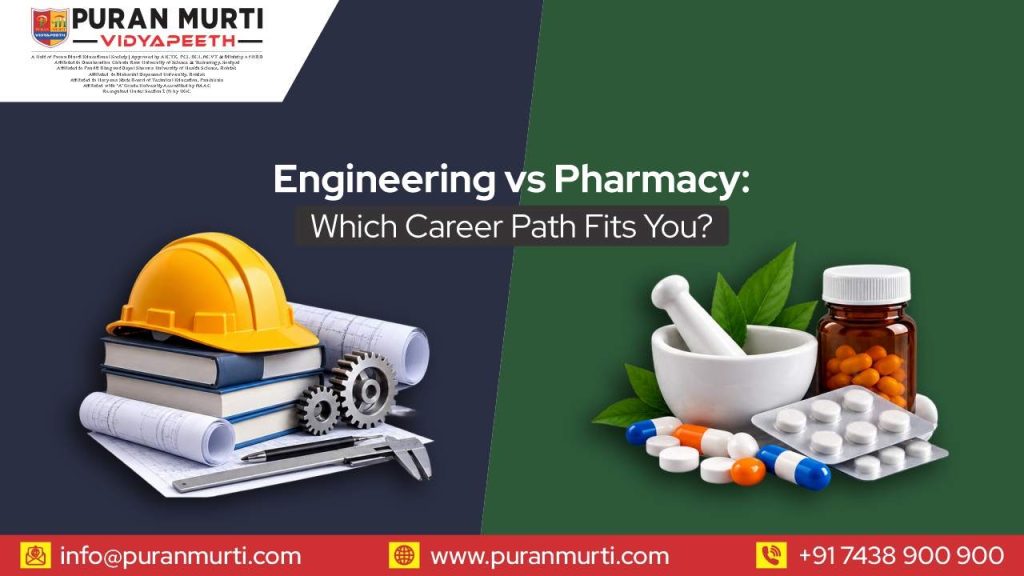
Engineering vs Pharmacy: Which Career Path Fits You?
Posted on : 30 September, 2026 4:56 pm
Choosing a course after Class 12 is an important decision. Many students compare Engineering vs Pharmacy because both offer professional career paths.
Engineering focuses on technology, design and problem-solving. Pharmacy focuses on medicines, healthcare and drug science. Both courses can lead to rewarding careers. However, the right option depends on your subjects, interests and career goals.
This guide compares Engineering vs Pharmacy in simple language. It covers courses, eligibility, subjects, jobs, skills, fees and future scope.
Engineering After Class 12
Engineering applies science and mathematics to real-world problems. Students learn how to design, build and improve products, systems and services.
Popular engineering branches include:
- Computer Science Engineering.
- Information Technology.
- Mechanical Engineering.
- Civil Engineering.
- Electrical Engineering.
- Electronics and Communication Engineering.
- Aeronautical Engineering.
- Aerospace Engineering.
- Artificial Intelligence and Data Science.
- Robotics and Automation.
Most B.Tech and B.E. courses take four years.
Pharmacy After Class 12
Pharmacy focuses on medicines and healthcare. Students learn how medicines are prepared, tested, stored and used.
The main pharmacy courses are:
- Bachelor of Pharmacy.
- Diploma in Pharmacy.
- Doctor of Pharmacy.
B.Pharm is usually a four-year degree. D.Pharm is generally a two-year diploma after Class 12. The Pharmacy Council of India lists B.Pharm and D.Pharm among its approved pharmacy courses.
Engineering vs Pharmacy: Quick Comparison
| Factor | Engineering | Pharmacy |
|---|---|---|
| Main focus | Technology and design | Medicines and healthcare |
| Common degree | B.Tech or B.E. | B.Pharm |
| Duration | Usually four years | Usually four years |
| Key subjects | Mathematics, physics and technology | Chemistry, biology and medicine |
| Common work areas | IT, manufacturing and construction | Hospitals, pharmacies and drug companies |
| Useful skills | Coding, design and problem-solving | Accuracy, science and communication |
| Best for students who enjoy | Machines, computers and innovation | Medicine, chemistry and healthcare |
Eligibility for Engineering
Most engineering programmes require Physics and Mathematics in Class 12. The third subject may include Chemistry, Biology, Biotechnology or a technical subject.
Students may need:
- Class 12 from a recognised board.
- Physics and Mathematics.
- The required minimum marks.
- An entrance examination score, if applicable.
Common entrance exams include JEE Main, state-level exams and university tests.
Eligibility rules vary between colleges. Always check the latest admission notice before applying.
Eligibility for Pharmacy
B.Pharm eligibility usually requires Class 12 with English, Physics and Chemistry. Students also need Mathematics or Biology.
The Pharmacy Council of India’s 2026 syllabus states that students need Physics and Chemistry, along with Mathematics or Biology.
Some colleges may also require a minimum percentage. For example, Puran Murti’s B.Pharm information lists PCM or PCB eligibility and a minimum of 50% marks.
Check the latest rules of the college and the relevant pharmacy authority before admission.
Engineering Subjects
Engineering subjects depend on the branch.
Computer Science
- Programming.
- Data structures.
- Databases.
- Computer networks.
- Operating systems.
- Artificial intelligence.
Mechanical Engineering
- Thermodynamics.
- Machine design.
- Manufacturing.
- Fluid mechanics.
- Engineering mechanics.
Civil Engineering
- Structural engineering.
- Surveying.
- Construction.
- Geotechnical engineering.
- Environmental engineering.
Electrical Engineering
- Circuit theory.
- Electrical machines.
- Power systems.
- Control systems.
- Power electronics.
Electronics and Communication
- Digital electronics.
- Communication systems.
- Microprocessors.
- Embedded systems.
- Signal processing.
Engineering requires regular practice. Students often work on projects, laboratory assignments and internships.
Pharmacy Subjects
B.Pharm includes science and healthcare subjects.
Students may study:
- Human anatomy.
- Pharmaceutical chemistry.
- Pharmaceutics.
- Pharmacology.
- Pharmacognosy.
- Biochemistry.
- Microbiology.
- Medicinal chemistry.
- Drug analysis.
- Clinical pharmacy.
- Hospital pharmacy.
- Pharmaceutical management.
Pharmacy students also receive practical training. They work in laboratories and learn about drug preparation and testing.
Career Options After Engineering
Engineering offers many career options.
Software Developer
Software developers create websites, applications and digital systems.
Data Analyst
Data analysts study information and prepare useful business reports.
Mechanical Engineer
Mechanical engineers design and maintain machines.
Civil Engineer
Civil engineers work on buildings, roads, bridges and infrastructure.
Electrical Engineer
Electrical engineers work with power systems, machines and electrical equipment.
Design Engineer
Design engineers create products and components using engineering software.
Project Engineer
Project engineers manage technical work, budgets and deadlines.
Aerospace Engineer
Aerospace engineers work on aircraft, spacecraft and related systems.
Career Options After Pharmacy
Pharmacy graduates can work in healthcare and pharmaceutical industries.
Pharmacist
Pharmacists dispense medicines and guide patients about their use.
Production Executive
Production professionals help manufacture medicines safely and efficiently.
Quality Control Analyst
Quality control analysts test medicines and raw materials.
Medical Representative
Medical representatives explain medicines to doctors and healthcare professionals.
Regulatory Affairs Executive
Regulatory professionals help companies follow medicine-related laws and rules.
Clinical Research Associate
Clinical research associates support studies that test medicines and treatments.
Hospital Pharmacist
Hospital pharmacists manage medicines in hospitals and healthcare centres.
Drug Inspector
Eligible graduates may prepare for government roles in drug regulation and inspection.
Engineering at Puran Murti Vidyapeeth
Puran Murti Vidyapeeth offers engineering programmes in the Delhi-NCR region of Haryana.
Students can explore branches such as:
- Computer Science Engineering.
- Artificial Intelligence and Machine Learning.
- Aeronautical Engineering.
- Aerospace Engineering.
- Mechanical Engineering.
- Civil Engineering.
- Electrical Engineering.
- Electronics and Communication Engineering.
- Aircraft Maintenance Engineering.
These branches generally take four years.
The institute provides options for students interested in technology, machines, infrastructure and aviation. Students should confirm current approvals, fees, eligibility and admission dates before applying.
Pharmacy at Puran Murti Vidyapeeth
Puran Murti offers B.Pharm and D.Pharm programmes.
The B.Pharm course is a four-year degree. D.Pharm is a two-year programme. Both courses combine theory with practical training.
The B.Pharm course is suitable for students who want to work in:
- Pharmaceutical companies.
- Hospitals.
- Drug testing laboratories.
- Retail pharmacies.
- Clinical research.
- Medical sales.
- Regulatory departments.
Puran Murti’s course information lists PCM or PCB eligibility for B.Pharm. It also states a minimum requirement of 50% in Class 12. Students should confirm the current admission rules directly with the institution.
Fees and Study Cost
Fees vary by college and course.
Engineering fees may depend on:
- Branch.
- College type.
- Laboratory facilities.
- Hostel.
- Transport.
- University charges.
Pharmacy fees may depend on:
- Course duration.
- Laboratory facilities.
- Practical training.
- University affiliation.
- Examination fees.
- Hostel and food.
Private colleges may charge more than government colleges. Make a full budget before admission.
Include these expenses:
- Tuition fees.
- Examination fees.
- Books.
- Hostel.
- Food.
- Transport.
- Uniform or equipment.
- Internship expenses.
Do not choose a college only because of a low fee. Check its recognition, facilities, faculty and placement support.
Skills for Engineering
Engineering students should develop technical and professional skills.
Important skills include:
- Programming.
- Computer-aided design.
- Data analysis.
- Technical writing.
- Problem-solving.
- Project management.
- Communication.
- Teamwork.
- Time management.
- Industry software.
Internships and projects can improve your job opportunities.
Skills for Pharmacy
Pharmacy students need scientific knowledge and accuracy.
Useful skills include:
- Laboratory work.
- Drug analysis.
- Research.
- Record keeping.
- Communication.
- Patient counselling.
- Quality checking.
- Medical terminology.
- Computer skills.
- Professional ethics.
Attention to detail is very important. A small mistake can affect medicine safety.
Work Environment
Engineering and pharmacy offer different work settings.
Engineers may work in:
- Offices.
- Laboratories.
- Factories.
- Construction sites.
- Software companies.
- Research centres.
Pharmacy professionals may work in:
- Hospitals.
- Retail pharmacies.
- Drug manufacturing units.
- Laboratories.
- Clinics.
- Regulatory offices.
Engineering jobs may involve projects, machines or software. Pharmacy jobs often involve medicines, healthcare teams and laboratory procedures.
Engineering vs Pharmacy: Which Is More Difficult?
Both courses can be challenging.
Engineering includes mathematics, science, technical subjects and projects. Some branches also require programming or design software.
Pharmacy includes chemistry, biology, anatomy, drug science and laboratory work. Students must remember scientific details and follow precise procedures.
The course feels easier when it matches your interests. Choose a subject that you can study with regular effort.
Which Course Has Better Scope?
Both fields have career scope.
Engineering has opportunities in:
- Information technology.
- Manufacturing.
- Construction.
- Electronics.
- Automotive.
- Energy.
- Aviation.
- Data science.
Pharmacy has opportunities in:
- Pharmaceutical manufacturing.
- Hospitals.
- Clinical research.
- Drug testing.
- Retail pharmacy.
- Medical sales.
- Regulatory affairs.
Career growth depends on your skills, experience, college and specialisation.
Engineering vs Pharmacy: Which Should You Choose?
Choose engineering if you:
- Enjoy Mathematics and Physics.
- Like computers or machines.
- Want to design and build things.
- Enjoy solving technical problems.
- Are interested in technology or infrastructure.
Choose pharmacy if you:
- Enjoy Chemistry and Biology.
- Are interested in medicines.
- Like laboratory work.
- Want to work in healthcare.
- Have strong attention to detail.
About Puran Murti Vidyapeeth Apply Now
The institute is known for its focus on technical education, practical learning, laboratory exposure, and career-oriented training. Students can explore engineering programs in modern technology domains while benefiting from academic support, industry interaction, and campus facilities. The availability of hostel facilities, skill-development activities, and placement assistance also makes it a consideration for students looking for engineering education near Delhi NCR. Apply Now
Top Engineering Branches
BTech (Bachelor of Technology)
BTech is among the most popular courses after 12th Science (PCM).
Top Specializations:
- Aeronautical Engineering
- Aerospace Engineering
- Aircraft Maintenance Engineering (AME)
- Computer Science & Engineering (CSE)
- CSE with Artificial Intelligence and Machine Learning (AI & ML)
- Civil Engineering
- Electrical Engineering
- Electronics & Communication Engineering (ECE)
- Mechanical Engineering
Unique Aviation Programs (USP)
One of the biggest advantages of Puran Murti Vidyapeeth is its aviation-based courses, which are rare in India:
- B.Tech + AME (DGCA approved)
- B.Tech Mechanical Engineering + AME (DGCA)
- B.Tech ECE + AME (DGCA)
- B.Tech Computer Science
(AI & ML)+ AME (DGCA) - B.Tech Aeronautical Engineering
+ CPL (Ground Classes) - B.Tech Aerospace Engineering
+ CPL (Ground Classes)
Diploma Courses
Students can also choose job-oriented diploma courses: Apply Now
- Diploma in Automobile Engineering (AE)
- Diploma in AME (Aircraft Maintenance Engineering)
- Diploma in Aeronautical Engineering
- Diploma in Civil Engineering (CE)
- Diploma in Mechanical Engineering (ME)
- Diploma in Computer Science & Engineering (CSE)
- Diploma in Electronics & Communication Engineering (ECE)
- Diploma in Electrical Engineering (EE)
- Diploma in Fire Technology & Safety
- Diploma in Medical Lab Technology (MLT)
- Diploma in Hotel Management
- Diploma in CSE (AI & ML)
Common Mistakes to Avoid
Do not choose engineering only because your friends are choosing it. Select a branch that matches your interests.
Do not choose pharmacy without checking practical training and approval. A recognised programme is important.
Do not believe salary promises without checking reliable placement data.
Avoid ignoring internship opportunities. Practical experience can improve your confidence.
Do not compare courses only by duration. Compare subjects, careers, fees and work environment.
How to Make the Final Decision
Follow these simple steps:
- Review your Class 12 subjects.
- Identify the topics you enjoy.
- Compare engineering branches.
- Learn about pharmacy careers.
- Check eligibility requirements.
- Compare course fees.
- Research colleges.
- Talk to professionals.
- Visit the campus if possible.
- Choose the course that fits your goals.
Final Thoughts
Engineering vs Pharmacy is a personal choice. Engineering may suit students who enjoy technology, machines, computers and design. Pharmacy may suit students who enjoy medicines, chemistry, biology and healthcare.
Both courses offer professional opportunities. However, your interest, skills and dedication will shape your career.
Puran Murti Vidyapeeth offers engineering and pharmacy programmes for students who want practical career-focused education. Engineering options include CSE, aerospace, mechanical, civil and electrical branches. Pharmacy options include B.Pharm and D.Pharm
Before admission, confirm course approvals, fees, eligibility, facilities and placement details. Choose a programme that matches your strengths and long-term plans.
Note: Admission rules, fees and course details can change. Verify the latest information on the official college website and the relevant regulatory authority before applying.

FAQs
Which is better, engineering or pharmacy?
Neither course is better for everyone. Engineering suits students interested in technology. Pharmacy suits students interested in medicines and healthcare.
Can PCM students study pharmacy?
Yes. B.Pharm eligibility may include Physics, Chemistry and Mathematics. Check the latest college requirements.
Can PCB students study engineering?
Some engineering programmes may accept Biology in specific cases. Most B.Tech courses require Mathematics. Check the official eligibility rules.
Which course has more career options?
Engineering has opportunities across technology, manufacturing, construction and energy. Pharmacy offers careers in medicines, hospitals, research and regulation.
What is the duration of B.Pharm?
B.Pharm is usually a four-year undergraduate degree. The Pharmacy Council of India recognises it as a four-year course after 10+2.
What pharmacy courses are available at Puran Murti?
Puran Murti lists B.Pharm as a four-year degree and D.Pharm as a two-year diploma
What engineering courses are available at Puran Murti?
Listed options include CSE, AI and ML, aeronautical, aerospace, mechanical, civil, electrical, ECE and aircraft maintenance engineering.
Is pharmacy a medical course?
Pharmacy is a healthcare profession. Pharmacists study medicines, but pharmacy is different from an MBBS medical degree.
Is engineering difficult?
Engineering can be challenging. Regular study, practice and project work can make the course manageable.
Should I choose a course based on salary?
Salary is only one factor. Consider your interest, skills, course quality, fees and long-term career growth.