Aerospace Engineering Course
Posted on : 16 April, 2026 1:05 am
Do you wonder every time you see a plane fly over? Ever dreamed of working with rockets, satellites, or even creating aircraft that reach the boundary of space? If so, then Aerospace Engineering Course could be your launchpad to an exciting career.
In this blog, we’re going to deconstruct all you want to know about the Aerospace Engineering course—from what it is and what you’ll learn, to career prospects and best colleges in India. All laid out in simple terms, like a friend explaining it to you.
What is Aerospace Engineering?
Let’s begin at the very beginning.
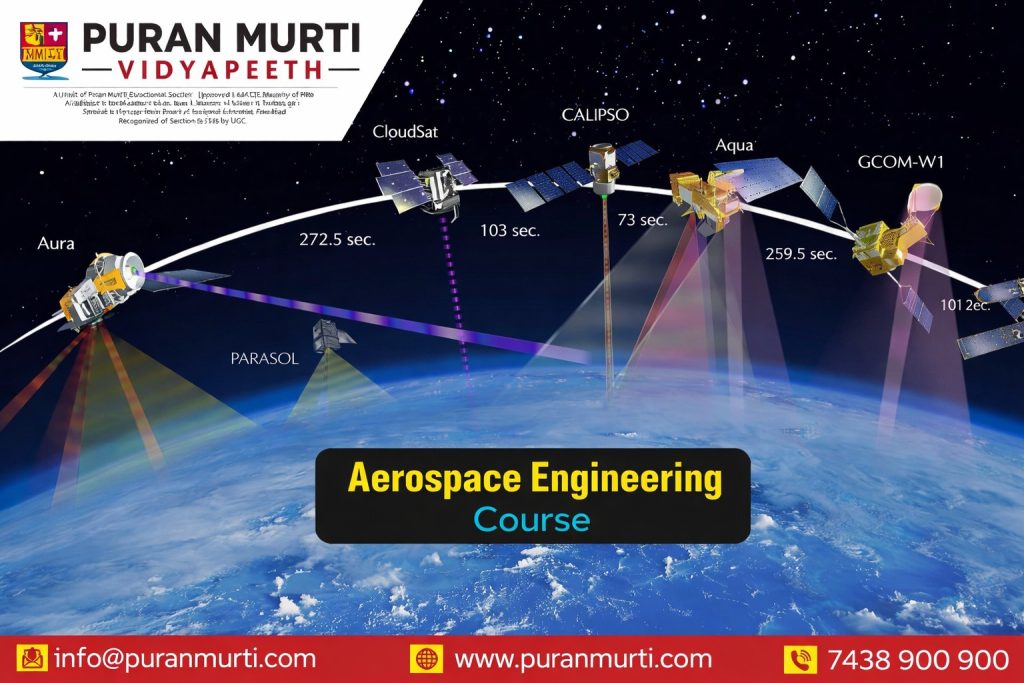
Aerospace Engineering is an engineering discipline that addresses the design, development, testing, and manufacture of aircraft, spacecraft, satellites, and missiles. Additionally, research in aerodynamics, propulsion systems, and aviation technologies is part of this.
In plain terms? You learn about how things fly—up in the air and into space.
It’s one of the most thrilling, cutting-edge, and demanding areas in engineering. Apply Here
Also Read :
What Will You Learn ?
Whether you pursue a B.Tech, M.Tech, or even a Diploma, here are some of the subjects you’ll dive into:
-
Aerodynamics – Air flow around objects
-
Flight Mechanics – Aircraft and spacecraft stability and maneuvering
-
Propulsion Systems – Jet engines, rocket engines, etc.
-
Aircraft Structures – Designing structures that can withstand stress and pressure
-
Avionics – Electronics in aerospace systems
-
Materials Science – Aircraft materials that are light yet strong
-
Space Technology – Satellites, launch vehicles, space systems
You will also learn coding, simulations, and maybe work on drones or small rockets as part of your projects.
Eligibility
To enroll in a B.Tech in Aerospace Engineering, here’s what you’ll need:
- Completed 12th with Physics, Chemistry, and Math (PCM)
- Minimum marks as needed by the college (typically 40–60%)
- A valid entry in entrance exams such as JEE Main, JEE Advanced, or university-level tests
If you’re looking to pursue a diploma or certificate program, requirements tend to be less complicated, and less competitive. Apply Here
Also Read :
Top Aerospace Engineering Colleges in India
Interested in pursuing Aerospace Engineering in India? These are some of the most prestigious institutes:
- Puran Murti Vidyapeeth – Known for industry-oriented programs
- IIT Kanpur
- IIT Madras
- Amrita Vishwa Vidyapeetham
- Manipal Institute of Technology
Job Prospects After Aerospace Engineering
And now comes the grand question: “What can I do after learning aerospace?”
- Aerospace Engineer – Design, test, and build aircraft or spacecraft
- Satellite Engineer – Employ with ISRO, private space agencies, or telecom
- Avionics Engineer – Design navigation, communications, and control systems
- Flight Safety Officer – Ensure designs comply with safety regulations
- Propulsion Engineer – Develop jet or rocket engines
- Researcher or Scientist – In government research facilities such as DRDO, ISRO, or HAL
- Private Sector Jobs – With airlines, drone industries, or international companies such as Boeing and Airbus
- Higher Studies – Specialize in space systems, robotics, or AI in aerospace
With space technology expanding rapidly and India taking giant leaps (hello, Chandrayaan & Gaganyaan!), the future looks good. Apply Here
Also Read : Top Engineering College Other then IITs and NITs India

Salary After Aerospace Engineering
Freshers will be able to get a salary of around ₹3 to ₹6 LPA in India. With experience or an MS degree, it can very well reach ₹10–15 LPA or more, particularly in ISRO, HAL, or multinational companies.
Why Aerospace Engineering?
Here’s why students choose this course:
- Love for flying machines or space
- Passion for solving challenging technical issues
- Interest in cutting-edge research and innovation
- The aspiration to work with NASA or ISRO one day
- Incredible combination of science + imagination + exploration
If any of this is you, you’re in the right place. Apply Here
Conclusion
Majoring in Aerospace Engineering is not only about earning a degree—it’s about joining a group of people who create the future of aviation and space.
It’s tough, of course. But if you’re passionate about it, space isn’t the limit—the sky is!
So, if you’re someone who’s always been fascinated by aircraft, rockets, or outer space, this course might just be your launchpad.
Frequently Asked Questions (FAQs)
1. What is Aerospace Engineering?
Aerospace Engineering is a specialized branch of engineering that focuses on the design, development, testing, and maintenance of aircraft, spacecraft, satellites, and missiles. It is broadly divided into aeronautical engineering (aircraft) and astronautical engineering (spacecraft).
2. What are the eligibility criteria ?
To pursue Aerospace Engineering, students must:
- Complete 10+2 with Physics, Chemistry, and Mathematics (PCM)
- Secure at least 50–75% marks (varies by college)
- Qualify for entrance exams like JEE Main, JEE Advanced, or state-level exams
3. What is the duration of Course?
- B.Tech in Aerospace Engineering: 4 years
- Diploma in Aerospace Engineering: 3 years
- M.Tech in Aerospace Engineering: 2 years
4. What subjects are taught in Aerospace Engineering?
Some key subjects include:
- Aerodynamics
- Aircraft Structures
- Flight Mechanics
- Propulsion Systems
- Avionics
- Thermodynamics
5. What are the top colleges for Engineering in India?
Some of the best colleges include:
- Indian Institute of Technology Bombay
- Puran Murti Vidyapeeth
- Indian Institute of Technology Kanpur
- Indian Institute of Technology Madras
- Punjab Engineering College
6. What is the fee structure for Aerospace Engineering?
The average fee ranges between:
- Government colleges: ₹50,000 – ₹2,00,000 per year
- Private colleges: ₹1,50,000 – ₹4,00,000 per year
7. What are the career opportunities after Aerospace Engineering?
Graduates can work in:
- Aircraft manufacturing companies
- Space research organizations
- Defense sector
- Airlines and aviation companies
Top recruiters include:
- Indian Space Research Organisation
- Defence Research and Development Organisation
- Hindustan Aeronautics Limited
8. What is the average salary after Aerospace Engineering?
- Freshers: ₹4 LPA – ₹8 LPA
- Experienced professionals: ₹10 LPA – ₹25 LPA+
Salary depends on skills, experience, and organization.
9. Is Aerospace Engineering a good career option in India?
Yes, Aerospace Engineering is a highly rewarding career with growing opportunities in aviation, defense, and space sectors. With increasing investments in space missions and aircraft manufacturing, demand for aerospace engineers is rising.
10. What skills are required for Aerospace Engineering?
Important skills include:
- Strong analytical and mathematical skills
- Problem-solving ability
- Knowledge of physics and engineering concepts
- Creativity and innovation
- Teamwork and communication
11. Can I pursue Aerospace Engineering after diploma?
Yes, students with a diploma in engineering can take lateral entry into the second year of B.Tech Aerospace Engineering.
12. What is the difference between Aeronautical and Aerospace Engineering?
- Aeronautical Engineering: Focuses on aircraft within Earth’s atmosphere
- Aerospace Engineering: Covers both aircraft and spacecraft (includes space technology)
13. Are there job opportunities abroad after Aerospace Engineering?
Yes, countries like the USA, Canada, Germany, and the UK offer excellent opportunities in aerospace companies and space agencies.
14. What entrance exams are required for Aerospace Engineering in India?
Common entrance exams include:
- JEE Main
- JEE Advanced
- State-level engineering entrance exams
- Direct Exam
15. Does Aerospace Engineering have scope in the future?
Absolutely. With advancements in space exploration, satellite technology, drones, and defense systems, Aerospace Engineering has a strong and promising future.