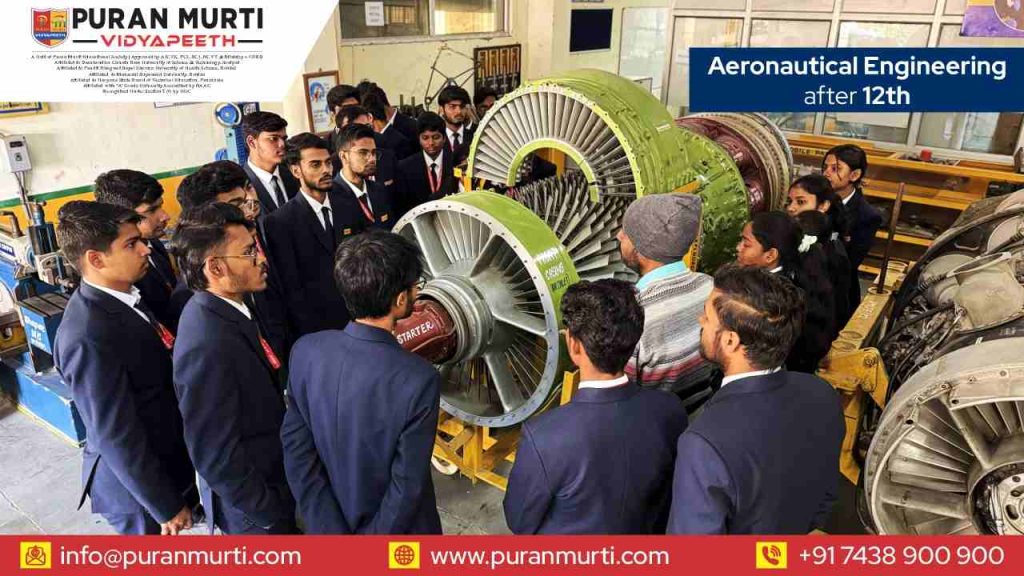
Aeronautical Engineering After 12th
Posted on : 21 September, 2026 2:10 pm
Choosing the right career after Class 12 is an important decision, especially for students who are interested in aircraft, aviation, technology, and engineering. If you have studied Physics, Chemistry, and Mathematics (PCM) and dream of working with aircraft, Aeronautical Engineering after 12th can be an exciting career option. Aeronautical Engineering focuses on the design, development, testing, maintenance, and operation of aircraft. It combines engineering concepts with practical knowledge of aviation and modern technology.
Students looking for quality technical education can also explore engineering programs and campus facilities at Puran Murti Vidyapeeth, where practical learning, technical skills, and career development can be important parts of the student experience.
What is Aeronautical Engineering?
Aeronautical Engineering is a branch of engineering related mainly to aircraft that operate within the Earth’s atmosphere. It covers areas such as aircraft design, aerodynamics, propulsion systems, avionics, aircraft structures, and flight technology. During the course, students learn how an aircraft is designed, how it moves through the air, how engines work, and how different aircraft systems operate.
Aeronautical Engineering is suitable for students who enjoy Mathematics, Physics, machines, technology, and problem-solving.
Why Choose Aeronautical Engineering After 12th?
- Interest in aircraft and aviation technology
- Strong combination of theoretical and practical learning
- Opportunities in aviation and aerospace-related industries
- Scope for technical and research-oriented careers
- Opportunity to work with aircraft systems and engineering technologies
- Career options in both private and government sectors
- Possibilities for higher studies and specialization
Eligibility for Aeronautical Engineering After 12th
| Requirement | Details |
|---|---|
| Educational Qualification | Class 12 or equivalent from a recognized board |
| Main Subjects | Physics and Mathematics are generally required |
| Chemistry | Commonly included in the PCM combination |
| Stream | Science stream with PCM |
| Entrance Exam | Depends on the institute and admission route |
| Admission | Merit-based or entrance-based, depending on the college |
Students should always check the latest eligibility criteria of the institute or university before applying because requirements can vary.
Aeronautical Engineering Courses After 12th
After Class 12, students can consider different academic routes related to aeronautical and aviation engineering.
B.Tech/B.E. in Aeronautical Engineering
- A bachelor’s degree is one of the most popular routes for students interested in becoming aeronautical engineers.
The program generally covers subjects such as:
- Engineering Mathematics
- Engineering Physics
- Engineering Mechanics
- Thermodynamics
- Fluid Mechanics
- Aerodynamics
- Aircraft Structures
- Aircraft Propulsion
- Flight Mechanics
- Avionics
- Aircraft Design
- Aerospace Materials
- Aircraft Maintenance Concepts
The course usually combines classroom learning with laboratory work, projects, workshops, and technical training.
Diploma in Aeronautical Engineering
- Students who want to enter technical education through a diploma route can consider a Diploma in Aeronautical Engineering, subject to the institute’s eligibility requirements.
- A diploma can provide foundational knowledge of aircraft systems, engineering principles, maintenance concepts, and technical operations.
Aeronautical Engineering Admission Process
The admission process can differ from one college to another. A general process may include:
- Complete Class 12 with the required subjects.
- Check the eligibility criteria of the selected institute.
- Appear for the required entrance examination, if applicable.
- Complete the online or offline application form.
- Submit academic and other required documents.
- Participate in counselling or the institute’s admission process.
- Complete fee payment and document verification.
- Begin the academic session.
Aeronautical Engineering Syllabus
| Study Area | Major Topics |
|---|---|
| Mathematics | Calculus, algebra, differential equations |
| Physics | Mechanics, thermodynamics, electricity |
| Aerodynamics | Airflow, lift, drag, aircraft performance |
| Aircraft Structures | Aircraft materials and structural design |
| Propulsion | Aircraft engines and propulsion systems |
| Flight Mechanics | Aircraft movement and performance |
| Avionics | Aircraft electronic and control systems |
| Aircraft Design | Design principles and engineering applications |
| Practical Training | Laboratories, projects and technical activities |
Skills Required for Aeronautical Engineering
A successful aeronautical engineering student needs more than good academic marks. Some useful skills include:
- Strong mathematical ability
- Good understanding of Physics
- Technical curiosity
- Analytical thinking
- Problem-solving skills
- Knowledge of computers and engineering software
- Attention to detail
- Communication skills
- Teamwork
- Interest in learning new aviation technologies
Students can gradually develop these skills through projects, laboratory work, internships, workshops, and practical training.
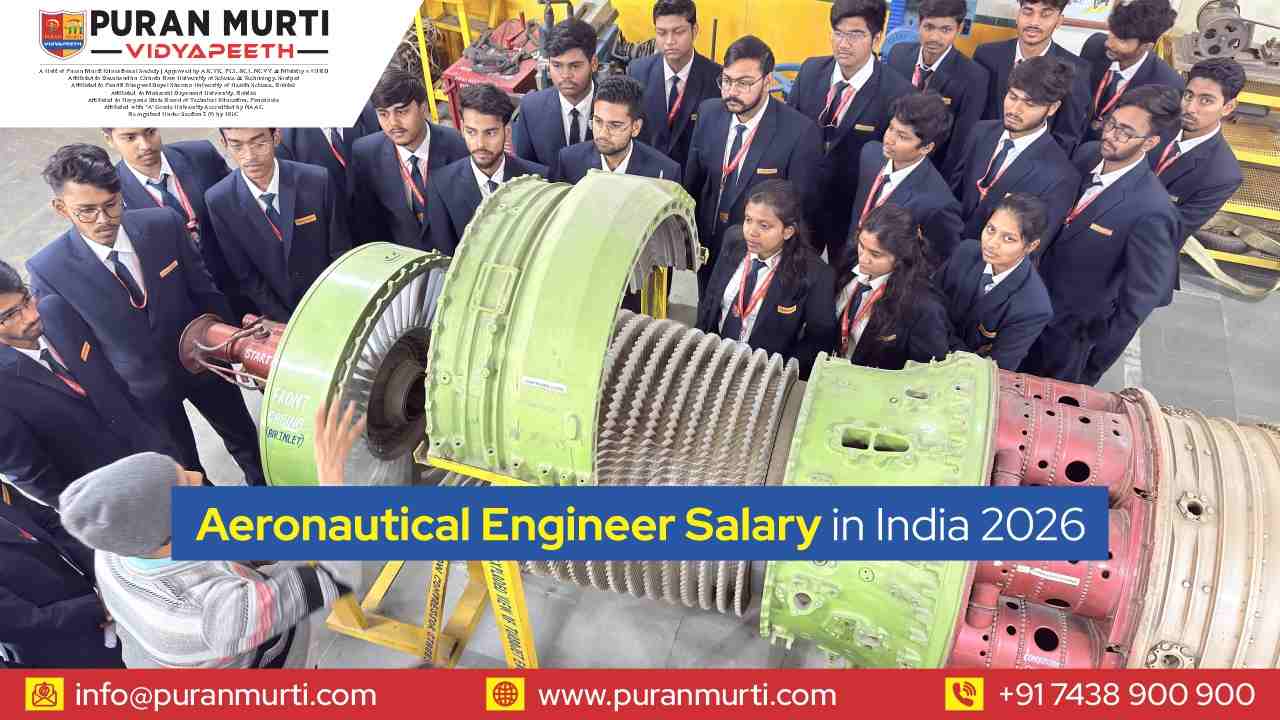
Career Options After Aeronautical Engineering
After completing an aeronautical engineering degree, graduates can explore several career areas.
Popular Job Roles
- Aeronautical Engineer
- Aircraft Design Engineer
- Aerospace Engineer
- Aircraft Systems Engineer
- Aerodynamics Engineer
- Aircraft Maintenance-related technical roles
- Flight Systems Engineer
- Manufacturing Engineer
- Quality Engineer
- Research and Development Engineer
Where Can Aeronautical Engineers Work?
Aeronautical engineering graduates can explore opportunities across different sectors, including:
- Aircraft manufacturing companies
- Aviation companies
- Airlines
- Aircraft maintenance organizations
- Aerospace industries
- Defense and research organizations
- Engineering design companies
- Research and development institutions
- Government organizations
- Higher education and academic institutions
Students interested in research can also pursue postgraduate education such as M.Tech, M.E., or related master’s programs.
Aeronautical Engineering Fees in India
The total cost of studying aeronautical engineering depends on the institute, location, course duration, infrastructure, hostel facilities, and other services.
| Expense | Depends On |
|---|---|
| Tuition Fees | College and course |
| Hostel Fees | Room type and facilities |
| Laboratory Fees | Practical facilities |
| Examination Fees | University/institute rules |
| Training Fees | Program structure |
| Other Charges | Student and campus services |
Aeronautical Engineering at Puran Murti Vidyapeeth
Puran Murti Vidyapeeth can be considered by students exploring engineering education after Class 12. For students interested in technical careers, a good college environment should support academic learning, practical exposure, laboratories, projects, skill development, and career preparation. Before taking admission, students should review the specific program offered, eligibility criteria, curriculum, facilities, faculty profile, training opportunities, fee structure, and placement-related information directly from the institution.
For students from the PCM stream, exploring engineering options at Puran Murti Vidyapeeth can be part of a broader career search after Class 12.
Aeronautical Engineering vs Aerospace Engineering
Aeronautical Engineering and Aerospace Engineering are closely related but are not exactly the same.
| Aeronautical Engineering | Aerospace Engineering |
|---|---|
| Mainly focuses on aircraft | Covers aircraft and spacecraft |
| Works primarily within Earth’s atmosphere | Includes atmospheric and space systems |
| Covers aerodynamics and aircraft systems | Includes aerospace, spacecraft and related systems |
| Strong connection with aviation | Broader aerospace focus |
Higher Studies After Aeronautical Engineering
Graduates can continue their education through postgraduate and specialized programs. Options may include:
- M.Tech in Aeronautical Engineering
- M.Tech in Aerospace Engineering
- M.E. in related engineering fields
- Specialized aviation technology programs
- Management programs
- Research programs
How to Prepare for Aeronautical Engineering After 12th?
Students can start preparing early by strengthening their PCM fundamentals.
- Build a strong foundation in Mathematics and Physics.
- Practice numerical problems regularly.
- Improve logical and analytical skills.
- Learn basic computer and programming concepts.
- Follow developments in aviation and aircraft technology.
- Participate in science or engineering projects.
- Develop communication and teamwork skills.
- Research colleges and compare their courses before admission.
- Check admission eligibility and entrance requirements carefully.
- Focus on practical learning along with theoretical concepts.
Is Aeronautical Engineering a Good Career After 12th?
Aeronautical Engineering can be a suitable career path for students who have a genuine interest in aircraft, engineering, aviation technology, Mathematics, and Physics. It offers opportunities across several technical sectors, but career growth depends on education, practical skills, specialization, experience, and industry requirements.
Students should understand the course structure and career opportunities before making an admission decision.
Frequently Asked Questions (FAQs)
1. Can I do Aeronautical Engineering after 12th?
Yes. Students who complete Class 12 with the required subjects, generally including Physics and Mathematics, can apply for relevant undergraduate programs according to the institute’s eligibility rules.
2. Which stream is required for Aeronautical Engineering?
The Science stream with Physics, Chemistry, and Mathematics (PCM) is generally the preferred combination for undergraduate engineering admission.
3. What does an Aeronautical Engineer do?
An aeronautical engineer can work in areas such as aircraft design, aerodynamics, propulsion, aircraft systems, manufacturing, testing, and engineering research.
4. What is the difference between Aeronautical and Aerospace Engineering?
Aeronautical Engineering mainly focuses on aircraft, while Aerospace Engineering has a broader scope that includes aircraft as well as spacecraft and related systems.
5. Is Mathematics important for Aeronautical Engineering?
Yes. Mathematics is an important foundation because aeronautical engineering involves calculations related to aerodynamics, structures, flight mechanics, and other engineering applications.
6. What subjects are studied in Aeronautical Engineering?
Common subjects include aerodynamics, aircraft structures, propulsion, flight mechanics, thermodynamics, fluid mechanics, avionics, aircraft design, and engineering mathematics.
7. Can Aeronautical Engineers work in the aviation industry?
Yes. Depending on their qualifications and applicable requirements, graduates can explore opportunities in aviation companies, aircraft manufacturing, maintenance organizations, research, design, and other related sectors.
8. Can I pursue higher studies after Aeronautical Engineering?
Yes. Graduates can pursue M.Tech, M.E., master’s programs, specialized courses, or research programs in relevant fields.
9. What skills are useful for an Aeronautical Engineer?
Mathematical ability, technical knowledge, analytical thinking, problem-solving, attention to detail, communication, teamwork, and practical engineering skills are useful.
10. Why consider Puran Murti Vidyapeeth for engineering studies?
Students can explore Puran Murti Vidyapeeth as an option for technical education and compare its available programs, infrastructure, practical learning opportunities, faculty, fees, and career support with other institutions before making an admission decision.
Conclusion
Aeronautical Engineering after 12th is an interesting option for PCM students who are fascinated by aircraft and engineering technology. From aerodynamics and aircraft structures to propulsion and avionics, the course provides exposure to several technical areas.
Before choosing a college, students should carefully compare eligibility, course curriculum, fees, laboratories, practical training, faculty, campus facilities, internships, and career support.
For students exploring engineering education, Puran Murti Vidyapeeth can also be included in the list of institutions to research. The right combination of academic knowledge, practical skills, projects, and continuous learning can help students build a strong foundation for a career in the aviation and aerospace-related sectors.