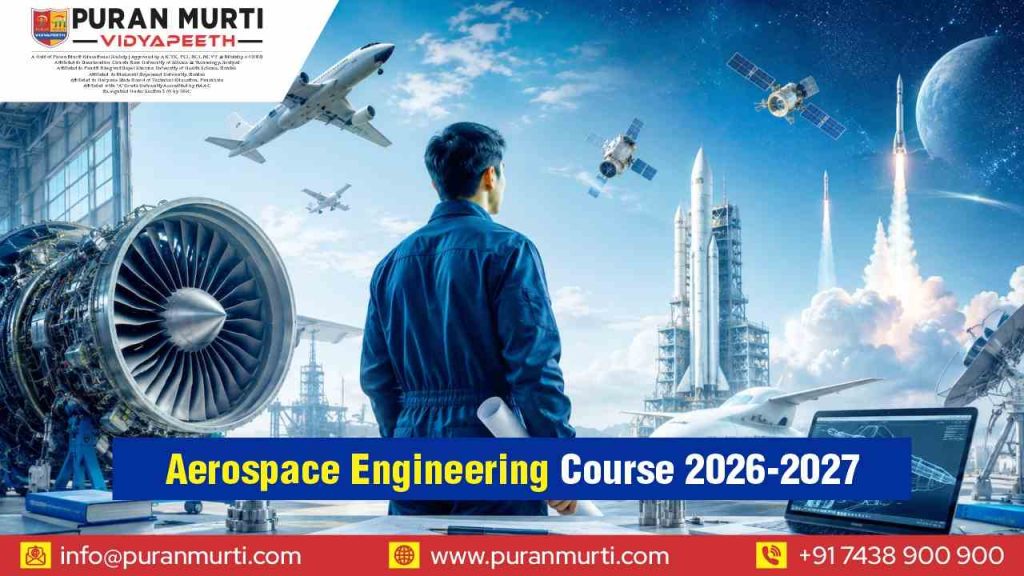
Aerospace Engineering Course 2027–2027
Posted on : 4 August, 2026 12:17 am
The aerospace industry is entering one of its most exciting decades. From reusable rockets and satellite technology to electric aircraft, drones, and next-generation defense systems, innovation is transforming aviation and space science worldwide. For students passionate about engineering, technology, and exploration, choosing an Aerospace Engineering Course in 2027–2027 can be the first step toward a rewarding career.
Whether your dream is to contribute to aircraft design, work on satellites, support India’s growing space missions, or join leading aerospace companies, Aerospace Engineering offers excellent opportunities. Students in Sonipat, Delhi NCR, and across India are increasingly exploring this field because of rising industry demand, technological advancements, and expanding career options.
Puran Murti Vidyapeeth provides an industry-oriented engineering education that emphasizes practical learning, innovation, modern laboratories, experienced faculty, and career development to prepare students for the evolving aerospace sector.
What is Aerospace Engineering?
Aerospace Engineering is a branch of engineering that focuses on the design, development, testing, manufacturing, and maintenance of aircraft, spacecraft, satellites, missiles, and related technologies.
It combines multiple engineering disciplines, including:
- Aerodynamics
- Propulsion
- Materials Engineering
- Structural Design
- Avionics
- Flight Mechanics
- Manufacturing Technology
- Artificial Intelligence applications in aviation
Aerospace Engineering is a specialized engineering discipline that deals with designing, building, testing, and maintaining aircraft, spacecraft, satellites, missiles, and aviation systems. It combines mechanical engineering, electronics, materials science, and computer technology to develop safe and efficient aerospace vehicles.
Why Choose Aerospace Engineering in 2027–2027?
The aerospace sector is experiencing significant growth because of:
- Increasing satellite launches
- Expansion of commercial aviation
- Growth in drone technology
- India’s expanding space programs
- Rising defense modernization
- Private space startups
- Global demand for aerospace professionals
As technology advances, skilled aerospace engineers will continue to play an important role in developing sustainable aviation and advanced space exploration systems.
Aerospace vs Aeronautical Engineering: Ultimate Student Guide for Beginner
Aerospace Engineering Course Highlights
| Particular | Details |
|---|---|
| Course | B.Tech Aerospace Engineering |
| Duration | 4 Years |
| Eligibility | 10+2 with Physics, Chemistry & Mathematics |
| Admission | Merit/Entrance-based (varies by institution) |
| Internship | Industry Training Available |
| Career Options | Aircraft, Space, Defence, Research |
| Higher Education | M.Tech, MBA, MS, PhD |
Eligibility for Aerospace Engineering Admission 2027–2027
Students generally need to:
- Pass Class 12 from a recognized board.
- Study Physics, Chemistry, and Mathematics (PCM).
- Meet the minimum eligibility criteria specified by the institution.
- Qualify through applicable admission processes where required.
Always verify the latest admission requirements with the institution before applying.
Course Duration
The Bachelor of Technology (B.Tech) in Aerospace Engineering is typically completed over 4 years, divided into 8 semesters with classroom learning, laboratory sessions, projects, industrial exposure, and internships.
Subjects Covered in Aerospace Engineering
Students learn both engineering fundamentals and specialized aerospace concepts.
Core Subjects
- Engineering Mathematics
- Engineering Physics
- Engineering Mechanics
- Fluid Mechanics
- Thermodynamics
- Aircraft Structures
- Aerodynamics
- Flight Mechanics
- Aircraft Propulsion
- Avionics
- Aircraft Design
- Spacecraft Technology
- Rocket Propulsion
- Computational Fluid Dynamics (CFD)
- Aerospace Materials
- Control Systems
Skills Required to Become an Aerospace Engineer
Successful aerospace engineers usually possess:
- Strong analytical thinking
- Mathematical ability
- Problem-solving skills
- Creativity
- Computer proficiency
- Attention to detail
- Teamwork
- Technical communication
- Research mindset
- Project management
Why Study Aerospace Engineering at Puran Murti Vidyapeeth?
Students often look for institutions that combine academic excellence with practical exposure. At Puran Murti Vidyapeeth, aspiring engineers benefit from:
Industry-Oriented Curriculum
The curriculum is designed to bridge academic concepts with industry practices.
Modern Laboratories
Students gain hands-on experience using engineering equipment, simulation software, and laboratory facilities.
Experienced Faculty
Learning from qualified faculty members helps students build strong technical fundamentals.
Project-Based Learning
Students participate in practical projects that enhance innovation and engineering skills.
Industry Exposure
Industrial visits, workshops, seminars, and guest lectures provide exposure to current aerospace and manufacturing trends.
Placement Assistance
Dedicated career guidance, skill development, and placement support help students prepare for employment opportunities.
Career Opportunities After Aerospace Engineering
Graduates can explore careers across government organizations, private companies, startups, research institutions, and higher education.
Popular job profiles include:
- Aerospace Engineer
- Aircraft Design Engineer
- Aerodynamics Engineer
- Flight Test Engineer
- Propulsion Engineer
- Structural Design Engineer
- Maintenance Engineer
- Manufacturing Engineer
- CAD Design Engineer
- Research Scientist
- Satellite Systems Engineer
- Quality Engineer
Top Recruiters
Aerospace graduates may find opportunities with organizations such as:
- ISRO
- DRDO
- HAL
- NAL
- Boeing
- Airbus
- Collins Aerospace
- GE Aerospace
- Safran
- Tata Advanced Systems
- Mahindra Aerospace
- L&T Defence
- Various aviation, manufacturing, and engineering companies
Recruitment depends on skills, academic performance, internships, and organizational requirements.
Higher Education Options
Students can pursue:
- M.Tech in Aerospace Engineering
- MS Abroad
- MBA
- PhD
- Research Programs
- Specialized Aviation Certifications
Future Scope of Aerospace Engineering
The future of aerospace engineering looks promising because of advancements in:
- Artificial Intelligence
- Electric Aircraft
- Space Exploration
- Hypersonic Vehicles
- Unmanned Aerial Vehicles (UAVs)
- Satellite Manufacturing
- Defence Technologies
- Sustainable Aviation
The increasing participation of private companies in India’s space ecosystem is expected to create additional opportunities for skilled engineers.

Salary After Aerospace Engineering
Salary varies depending on employer, location, role, skills, qualifications, and experience.
| Experience | Typical Salary Trend* |
| Fresh Graduate | Competitive entry-level packages |
| 3–5 Years | Higher technical and project roles |
| Senior Level | Leadership, R&D, and management opportunities |
*Compensation differs across organizations and industries.
Why Aerospace Engineering is a Good Career Choice
Aerospace Engineering is a strong career choice for students interested in aviation, space technology, and advanced engineering. It offers opportunities in aircraft manufacturing, satellite technology, defense, research, and emerging aerospace startups while developing highly transferable technical and analytical skills.
How to Build a Successful Aerospace Career
- Build strong fundamentals in mathematics and physics.
- Participate in engineering projects.
- Learn CAD and simulation software.
- Complete internships.
- Develop communication skills.
- Stay updated with aerospace technologies.
- Pursue relevant certifications.
- Prepare for placements and competitive opportunities.
Comparison: Aerospace Engineering vs Mechanical Engineering
| Feature | Aerospace Engineering | Mechanical Engineering |
| Focus | Aircraft & Spacecraft | Machines & Manufacturing |
| Industries | Aviation, Defence, Space | Manufacturing, Automotive, Energy |
| Specialization | High | Broad |
| Career Scope | Aerospace Sector | Multiple Industries |
People Also Ask
What is the Aerospace Engineering Course?
It is a four-year undergraduate engineering program focused on aircraft, spacecraft, satellites, aerodynamics, propulsion systems, and aviation technologies.
Is Aerospace Engineering a good career in India?
Yes. The growing aviation, defense, manufacturing, and space sectors continue to create opportunities for qualified aerospace engineers with strong technical skills.
Which skills are important for Aerospace Engineering?
Analytical thinking, mathematics, engineering design, CAD software, communication, teamwork, and problem-solving are among the most valuable skills.
Frequently Asked Questions
What is Aerospace Engineering?
Aerospace Engineering is the branch of engineering that focuses on designing, developing, testing, and maintaining aircraft, spacecraft, satellites, missiles, and aerospace systems.
Who can apply for Aerospace Engineering in 2027–2027?
Students who have completed 10+2 with Physics, Chemistry, and Mathematics and meet the institution’s eligibility criteria can apply.
How long is the Aerospace Engineering course?
The B.Tech Aerospace Engineering program generally takes four years to complete.
What are the career opportunities after Aerospace Engineering?
Graduates can work in aircraft manufacturing, defense, research, aviation, satellite technology, space organizations, and engineering consulting.
Is Aerospace Engineering difficult?
The course is academically rigorous because it involves mathematics, physics, engineering concepts, and practical applications. Consistent study and hands-on learning help students succeed.
Does Puran Murti Vidyapeeth provide placement support?
Yes. The institution focuses on career guidance, skill development, industry interaction, and placement assistance to help students prepare for employment opportunities.
Conclusion
Aerospace Engineering is an exciting and future-focused discipline that blends innovation, technology, and scientific discovery. As the aviation, defense, and space sectors continue to evolve, skilled aerospace engineers will remain in demand across India and globally.
If you are looking for an engineering education that combines academic excellence with practical exposure, experienced faculty, modern infrastructure, and career-oriented learning, Puran Murti Vidyapeeth, Sonipat, offers an environment where aspiring engineers can build the knowledge and skills needed for a successful future.
Take the Next Step
Interested in pursuing aerospace engineering in 2027–2027?
Connect with the admissions team at Puran Murti Vidyapeeth, schedule a campus visit, explore the laboratories, interact with faculty members, and learn how the institution can support your engineering journey.