
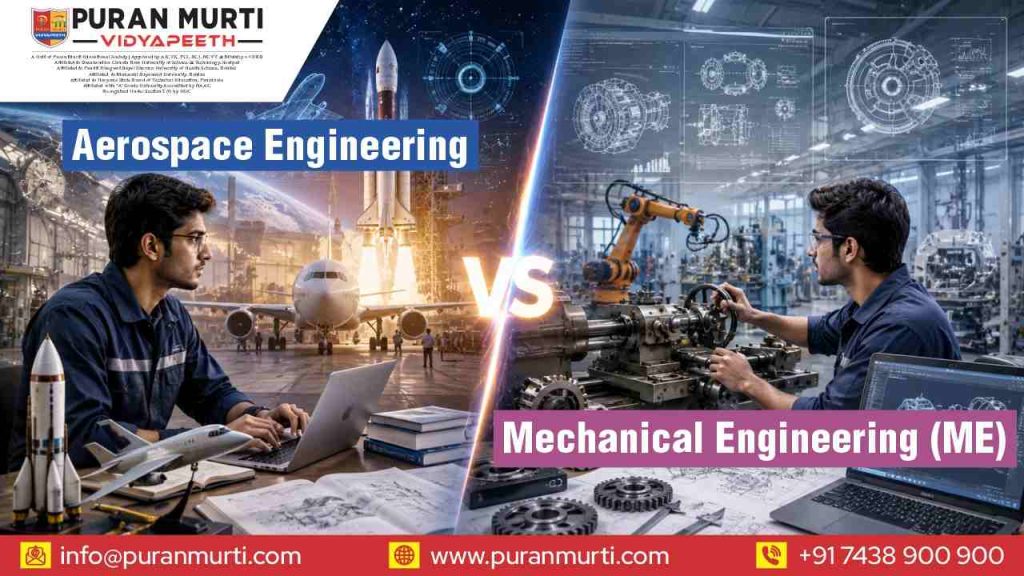
Aerospace Engineering VS(ME) Mechanical Engineering
Posted on : 16 June, 2026 2:53 pm
Aerospace Engineering vs (ME) Mechanical Engineering is one of the most searched engineering career comparisons among students who want to choose a high-paying and future-focused profession. Both branches offer excellent opportunities, strong industry demand, and rewarding career growth. However, their salary structures, job roles, and career trajectories differ significantly.
When selecting an engineering discipline, salary is often one of the most important deciding factors. Therefore, understanding Aerospace Engineering vs (ME) Mechanical Engineering can help students evaluate which field aligns better with their career goals, interests, and financial expectations.
In this comprehensive guide, we will compare eligibility, curriculum, placements, recruiters, future scope, and most importantly, Aerospace Engineering vs (ME) Mechanical Engineering to help you make an informed decision.
Understanding Aerospace Engineering
Aerospace Engineering is a specialized branch of engineering that focuses on the design, development, testing, and maintenance of aircraft, spacecraft, missiles, satellites, and defense systems.
The field combines principles of physics, mathematics, aerodynamics, materials science, and propulsion technology to create innovative solutions for aviation and space exploration.
Major Areas of Aerospace Engineering
- Aerodynamics
- Aircraft Structures
- Spacecraft Design
- Propulsion Systems
- Flight Mechanics
- Avionics
- Satellite Technology
Understanding Mechanical Engineering
Mechanical Engineering is one of the oldest and most versatile branches of engineering. It deals with the design, production, operation, and maintenance of machines, engines, manufacturing systems, and industrial equipment.
Mechanical engineers play a critical role in industries such as automotive, robotics, manufacturing, renewable energy, and industrial automation.
Major Areas of Mechanical Engineering
- Machine Design
- Manufacturing Engineering
- Thermal Engineering
- Robotics
- Industrial Engineering
- Automotive Engineering
- Energy Systems
Aerospace Engineering vs (ME) Mechanical Engineering Quick Comparison
| Parameter | Aerospace Engineering | Mechanical Engineering |
|---|---|---|
| Course Duration | 4 Years | 4 Years |
| Industry Focus | Aviation & Space | Manufacturing & Industrial Systems |
| Average Starting Salary | ₹5–10 LPA | ₹3.5–7 LPA |
| Mid-Level Salary | ₹8–15 LPA | ₹6–12 LPA |
| Senior-Level Salary | ₹25–50+ LPA | ₹20–40+ LPA |
| Global Opportunities | Very High | High |
| Industry Scope | Specialized | Broad |
| Demand in India | Growing Rapidly | Consistently Strong |
| Government Jobs | Excellent | Excellent |
Eligibility Criteria
Aerospace Engineering
Students must fulfill the following requirements:
- 10+2 with Physics, Chemistry, and Mathematics
- Minimum qualifying marks as prescribed by institutions
- Admission through JEE Main, JEE Advanced, or state-level entrance examinations
Mechanical Engineering
Eligibility requirements include:
- 10+2 with Physics, Chemistry, and Mathematics
- Required academic performance according to college criteria
- Admission through JEE Main, JEE Advanced, and state-level entrance examinations
Apply Now
Course Curriculum Comparison
Aerospace Engineering Subjects
- Aerodynamics
- Aircraft Structures
- Flight Mechanics
- Aerospace Propulsion
- Space Technology
- Avionics Systems
- Computational Fluid Dynamics
- Aircraft Performance
Mechanical Engineering Subjects
- Engineering Mechanics
- Thermodynamics
- Fluid Mechanics
- Machine Design
- Manufacturing Technology
- Heat Transfer
- Industrial Engineering
- Robotics Fundamentals
While Aerospace Engineering focuses heavily on aviation and space systems, Mechanical Engineering offers a broader engineering foundation applicable across multiple industries.
Skills Required
Aerospace Engineering Skills
- Strong Mathematical Skills
- Analytical Thinking
- Aerodynamics Knowledge
- Aircraft Design Understanding
- Problem-Solving Ability
- Simulation Software Expertise
- Research and Development Skills
Mechanical Engineering Skills
- Design Thinking
- CAD Software Proficiency
- Manufacturing Knowledge
- Technical Problem Solving
- Project Management
- Quality Control Skills
- Team Collaboration
Placement Opportunities
Aerospace Engineering Placements
Graduates can secure placements in:
- Aircraft Manufacturing Companies
- Defense Organizations
- Space Research Agencies
- Satellite Technology Firms
- Aviation Maintenance Organizations
- Aerospace Research Centers
Mechanical Engineering Placements
Mechanical engineers can work in:
- Manufacturing Industries
- Automotive Companies
- Robotics Firms
- Energy Sector Organizations
- Oil and Gas Industries
- Construction and Infrastructure Companies
Engineering generally offers a larger number of placement opportunities because of its broader industrial applicability.

Top Recruiters
Aerospace Engineering Recruiters
- ISRO
- DRDO
- HAL
- Boeing
- Airbus
- Lockheed Martin
- Rolls-Royce
- GE Aerospace
- Safran
- Collins Aerospace
Mechanical Engineering Recruiters
- Tata Motors
- Mahindra
- Maruti Suzuki
- Larsen & Toubro
- Siemens
- Bosch
- Reliance Industries
- BHEL
- Ashok Leyland
- Hero MotoCorp
Salary Comparison
Salary remains one of the biggest factors influencing career decisions. Therefore, a detailed comparison is essential.
Aerospace Engineering Salary
| Experience Level | Average Salary |
|---|---|
| Fresh Graduate | ₹5–10 LPA |
| 3–5 Years | ₹8–15 LPA |
| 5–10 Years | ₹12–25 LPA |
| Senior Professionals | ₹25–50+ LPA |
Mechanical Engineering Salary
| Experience Level | Average Salary |
|---|---|
| Fresh Graduate | ₹3.5–7 LPA |
| 3–5 Years | ₹6–12 LPA |
| 5–10 Years | ₹10–20 LPA |
| Senior Professionals | ₹20–40+ LPA |
Aerospace Engineering vs (ME) Mechanical Engineering Salary Analysis
Aerospace Engineering generally offers higher salary packages because of its specialized nature and the advanced technical expertise required. Professionals working in aerospace manufacturing, defense technology, and space exploration frequently receive premium compensation.
On the other hand, Mechanical Engineering provides stable earning potential across a wider range of industries. Although entry-level salaries may be slightly lower, experienced professionals often achieve significant growth through leadership and technical specialist roles.
Higher Education Opportunities
After Aerospace Engineering
- M.Tech in Aerospace Engineering
- M.Tech in Avionics
- Space Technology Programs
- MBA
- PhD in Aerospace Sciences
After Mechanical Engineering
- M.Tech in Mechanical Engineering
- Robotics Engineering
- Automotive Engineering
- Industrial Engineering
- MBA
- PhD Programs
Work Environment
Aerospace Engineers
Aerospace engineers commonly work in:
- Aircraft Manufacturing Facilities
- Aerospace Research Laboratories
- Defense Establishments
- Space Research Centers
- Testing Facilities
The work environment is highly technical and often involves advanced technologies and strict quality standards.
Mechanical Engineers
Mechanical engineers typically work in:
- Manufacturing Plants
- Design Offices
- Automotive Industries
- Energy Facilities
- Industrial Operations
Their responsibilities may range from office-based design tasks to hands-on production supervision.
Future Scope
Future Scope of Aerospace Engineering
The future of Aerospace Engineering looks highly promising because of:
- Expansion of Commercial Aviation
- Growing Defense Investments
- Private Space Missions
- Satellite Technology Development
- Space Tourism Initiatives
As global aerospace activities increase, demand for skilled aerospace professionals is expected to rise.
Apply Now
Future Scope of Mechanical Engineering
Mechanical Engineering continues to evolve through:
- Industrial Automation
- Robotics Integration
- Renewable Energy Projects
- Smart Manufacturing Technologies
- Electric Vehicle Development
As industries modernize, mechanical engineers will remain essential contributors to technological progress.
Advantages of Aerospace Engineering
- Higher Salary Potential
- Global Career Opportunities
- Specialized Skill Development
- Cutting-Edge Technology Exposure
- Prestigious Industry Positions
- Strong Research Opportunities
Advantages of Mechanical Engineering
- Diverse Career Options
- Broad Industry Presence
- Strong Job Stability
- Flexible Career Transitions
- Entrepreneurial Opportunities
- Consistent Demand Across Sectors
Aerospace Engineering vs (ME) Mechanical Engineering Which Is Better?
If salary is your primary concern, Aerospace Engineering often has an advantage due to its specialized nature and high-value industries such as aviation, defense, and space exploration.
However, Mechanical Engineering provides broader employment opportunities and greater career flexibility. Students who enjoy machinery, manufacturing processes, and industrial systems may find Mechanical Engineering more suitable.
Choose Aerospace Engineering if:
- You are passionate about aviation and space technology.
- You want specialized, high-paying career opportunities.
- You enjoy advanced scientific and engineering concepts.
Choose Mechanical Engineering if:
- You prefer a versatile engineering discipline.
- You want opportunities across multiple industries.
- You value career flexibility and stability.
Apply Now
Conclusion
The comparison of Aerospace Engineering vs (ME) Mechanical Engineering clearly shows that both fields offer rewarding careers and attractive salary prospects. Aerospace Engineering generally provides higher earning potential due to its specialized focus, while Mechanical Engineering offers broader career opportunities and long-term stability.
Ultimately, the best choice depends on your interests, strengths, and professional goals. Selecting a field that aligns with your passion and skills will lead to greater career satisfaction and success.
Frequently Asked Questions
1. Which engineering branch offers a higher salary, Aerospace or Mechanical?
Aerospace Engineering generally offers higher average salaries, especially in aviation, defense, and space industries.
2. Can Mechanical Engineers work in aerospace companies?
Yes. Many aerospace organizations hire Mechanical Engineers for design, manufacturing, testing, and maintenance roles.
3. Is Aerospace Engineering more difficult than Mechanical Engineering?
Aerospace Engineering is often considered more specialized and mathematically intensive, but the difficulty depends on individual interests and abilities.
4. Which branch has more job opportunities?
Mechanical Engineering offers broader job opportunities because it is applicable across multiple industries.
5. Is Aerospace Engineering a good career choice in 2026?
Yes. Growing investments in aviation, defense, satellite technology, and space exploration continue to create strong demand for aerospace professionals.