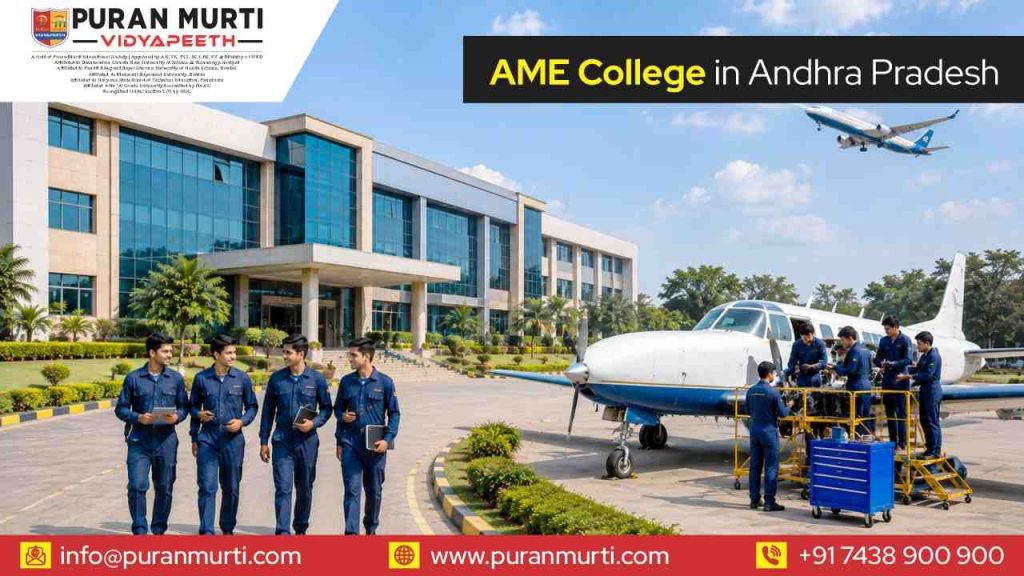
AME College in Andhra Pradesh
Posted on : 19 August, 2026 10:53 am
Choosing the right AME College In Andhra Pradesh is an important decision for students who want to build a career in aircraft maintenance and aviation. Aircraft Maintenance Engineering (AME) is a specialized field focused on aircraft inspection, maintenance, servicing, troubleshooting, and airworthiness.
Unlike pilot training, AME mainly focuses on the technical side of aviation. Students learn about aircraft systems, engines, electrical systems, avionics, aircraft structures, maintenance procedures, and aviation safety. Moreover, practical training helps students understand how aircraft maintenance is performed in professional environments.
If you are searching for an AME College In Andhra Pradesh, do not compare institutes only on fees or location. Instead, check the institute’s current DGCA approval, approved training scope, practical facilities, aircraft or equipment exposure, workshops, faculty, examination support, and career opportunities.
An AME College In Andhra Pradesh can be considered by students who want to study aviation maintenance closer to home while developing technical skills for the aviation industry. Therefore, students should carefully research the institute and verify the latest approval and admission details before applying.
“In aviation, precision matters. The right AME training can help students develop the technical knowledge and discipline needed to support aircraft safety.”
What Is Aircraft Maintenance Engineering?
Aircraft Maintenance Engineering is related to the inspection, maintenance, servicing, troubleshooting, and continued airworthiness of aircraft.
AME professionals work on technical systems and components to ensure aircraft remain safe and properly maintained. Furthermore, the field requires accuracy, technical knowledge, safety awareness, and attention to detail.
Students interested in aircraft technology can learn about areas such as:
- Aircraft Structures
- Aircraft Engines
- Electrical Systems
- Avionics
- Aircraft Maintenance Practices
- Aviation Safety
- Maintenance Procedures
- Aviation Regulations
As a result, AME can be a suitable field for students who enjoy technical subjects and aviation.
Why Choose An AME College In Andhra Pradesh?
Andhra Pradesh has growing connectivity, airports, aviation-related activity, and opportunities for students interested in technical careers.
Choosing an AME College In Andhra Pradesh may be convenient for students who want to study aviation maintenance within the state. Moreover, students can compare institutions based on their training facilities, approval status, practical exposure, faculty, and overall learning environment.
Before taking admission, students should consider:
- DGCA Approval
- Approved Training Scope
- Course Structure
- Practical Training
- Aircraft Exposure
- Workshops
- Faculty
- Training Equipment
- Examination Support
- Career Guidance
However, approval and training details can change. Therefore, students should verify the latest information through official sources before making a final decision.
AME Eligibility After 12th
Students interested in AME generally need to meet the applicable educational and age requirements prescribed by the relevant aviation authorities and training organization.
Science students with Physics and Mathematics at the required level may be eligible for certain AME pathways. However, eligibility can vary depending on the specific course, category, and current regulations.
Therefore, students should check the latest eligibility requirements before submitting an application.
What Do Students Learn In AME?
AME education combines theoretical knowledge with practical training. Moreover, students need to understand how aircraft systems work and how maintenance procedures are performed.
Important areas may include:
Aircraft Structures
Students learn about aircraft structures, components, materials, and maintenance practices.
Aircraft Engines
Engine-related studies introduce students to aircraft propulsion systems and maintenance procedures.
Electrical Systems
Students learn about aircraft electrical systems, components, circuits, and maintenance requirements.
Avionics
Avionics involves electronic systems used in aircraft. For example, students may learn about communication, navigation, instrumentation, and related systems.
Maintenance Practices
Practical maintenance knowledge is important because aircraft technicians must follow specific procedures and safety requirements.
Furthermore, students develop an understanding of documentation, inspection, troubleshooting, and maintenance standards.
Importance Of Practical Training
AME is a technical field, so practical exposure is an important part of learning. For example, students may work with aircraft components, maintenance equipment, tools, and training systems.
Practical training can help students understand:
- Aircraft inspection
- Component handling
- Maintenance procedures
- Troubleshooting
- Safety practices
- Technical documentation
- Use of maintenance tools
As a result, students can connect classroom concepts with practical aviation maintenance activities.
Skills Required For AME Students
Students interested in aircraft maintenance should develop both technical and professional skills.
Important skills include:
- Technical Knowledge
- Mechanical Understanding
- Problem-Solving
- Attention To Detail
- Safety Awareness
- Communication Skills
- Teamwork
- Technical Documentation
- Time Management
- Practical Skills
Moreover, aviation maintenance requires discipline because even small errors can have serious consequences.
Career Opportunities After AME
After completing the required training, examinations, and applicable licensing requirements, students can explore different aviation maintenance-related career paths.
Potential work areas include:
- Aircraft Maintenance Organizations
- Airlines
- MRO Companies
- Aviation Service Providers
- Aircraft Manufacturing
- Airport Technical Operations
- Aviation Training Organizations
Possible professional roles can include maintenance-related technical positions, depending on the individual’s qualification, experience, approvals, and licensing status.
Therefore, students should understand that completing an AME training program and obtaining the relevant licence or authorization are not necessarily the same thing.
AME Career Scope In India
India’s aviation sector has been expanding, with airlines, airports, aircraft operators, and maintenance organizations requiring trained technical professionals.
Moreover, increasing aircraft fleets and aviation infrastructure can create demand for maintenance and technical services.
However, career opportunities depend on several factors, including:
- Qualification
- Licence
- Experience
- Technical Skills
- Aircraft Type Training
- Employer
- Location
- Industry Requirements
As a result, students should focus on building strong technical knowledge and meeting all applicable regulatory requirements.
AME Salary In India
AME salary can vary significantly depending on qualification, licensing status, experience, employer, aircraft type, location, and job responsibilities.
Fresh trainees may begin with entry-level opportunities, while experienced and appropriately licensed professionals can progress into more specialized positions.
Moreover, additional aircraft type training, experience, and technical expertise can influence career progression.
Therefore, students should not select an AME course only on the basis of expected salary. Instead, they should consider training quality, regulatory approval, practical exposure, and long-term career development.
How To Choose The Right AME College?
Selecting the right institute requires careful research. First, check whether the training organization has the required current approval.
Next, examine the practical facilities and training equipment. Furthermore, ask about aircraft exposure, workshops, faculty experience, course structure, examinations, and student support.
A useful checklist includes:
| Factor | What To Check |
|---|---|
| Approval | Current DGCA Approval |
| Training Scope | Approved Course Or Category |
| Practical Facilities | Workshops And Equipment |
| Aircraft Exposure | Available Training Aircraft Or Systems |
| Faculty | Technical Experience |
| Course Structure | Subjects And Practical Training |
| Examination Support | Preparation And Guidance |
| Location | Accessibility |
| Career Support | Industry Guidance |
| Fees | Total Course Cost |
Therefore, comparing these factors can help students make a more informed decision.
AME College In Andhra Pradesh Vs Other Locations
Students do not always need to limit their search to their home state. For example, students may compare an AME College In Andhra Pradesh with institutes in Delhi NCR, Haryana, Maharashtra, Karnataka, or other aviation hubs.
Moreover, location can influence exposure to airports, MRO facilities, aviation companies, and other industry opportunities.
However, approval, training quality, and practical exposure should remain more important than location alone.
Higher Learning And Skill Development
AME students can continue developing their technical knowledge throughout their careers. Furthermore, aviation technology continues to evolve, so professionals need to stay updated with new aircraft systems, maintenance practices, safety standards, and regulatory requirements.
Additional technical training and aircraft-specific qualifications may also support career progression, depending on applicable regulations and employer requirements.
As a result, continuous learning is an important part of a long-term aviation maintenance career.
Why Practical Skills Matter In AME
Aircraft maintenance is not limited to theoretical knowledge. Instead, professionals must understand how to apply technical information correctly.
Practical skills can help students become familiar with tools, components, inspection procedures, documentation, and troubleshooting.
In addition, practical training can improve confidence and help students understand the responsibilities involved in aircraft maintenance.
Future Scope Of Aircraft Maintenance Engineering
The future of aviation maintenance is connected with the growth of aircraft fleets, airport infrastructure, MRO facilities, and new aviation technologies.
Furthermore, modern aircraft increasingly use advanced electronics, digital systems, composite materials, and sophisticated diagnostic technologies.
Therefore, future AME professionals may need knowledge of both traditional maintenance practices and modern aircraft technologies.
Conclusion
Choosing an AME College In Andhra Pradesh requires careful consideration of approval status, training facilities, practical exposure, faculty, course structure, and career support.
AME can be a suitable career option for students who enjoy aircraft, engineering, technology, practical work, and safety-focused responsibilities. Moreover, students should understand the difference between AME training and the licensing requirements associated with professional aircraft maintenance.
Ultimately, the right institute should provide appropriate training and help students build the technical knowledge and discipline required in aviation maintenance. Therefore, verify the latest regulatory and admission information before choosing an institute.
FAQs
1. What Is AME?
Aircraft Maintenance Engineering is a specialized aviation field related to aircraft inspection, maintenance, servicing, troubleshooting, and airworthiness.
2. Can I Pursue AME After 12th?
Yes, students who meet the applicable educational and other eligibility requirements can explore AME training after Class 12. However, requirements may vary according to the course and current regulations.
3. What Should I Check Before Choosing An AME College In Andhra Pradesh?
Check current DGCA approval, training scope, practical facilities, aircraft exposure, faculty, workshops, course structure, examination support, and career guidance.
4. Is AME The Same As Pilot Training?
No. Instead, pilot training focuses on operating aircraft, while AME focuses on aircraft maintenance, inspection, servicing, and technical airworthiness.
5. What Skills Are Important For An AME Career?
Technical knowledge, practical skills, attention to detail, problem-solving, safety awareness, communication, and discipline are important for aircraft maintenance careers.
6. Does AME Have Career Scope In India?
Yes. Moreover, qualified professionals can explore maintenance-related opportunities across airlines, MRO organizations, aircraft operators, aviation service providers, and other aviation-related organizations.