
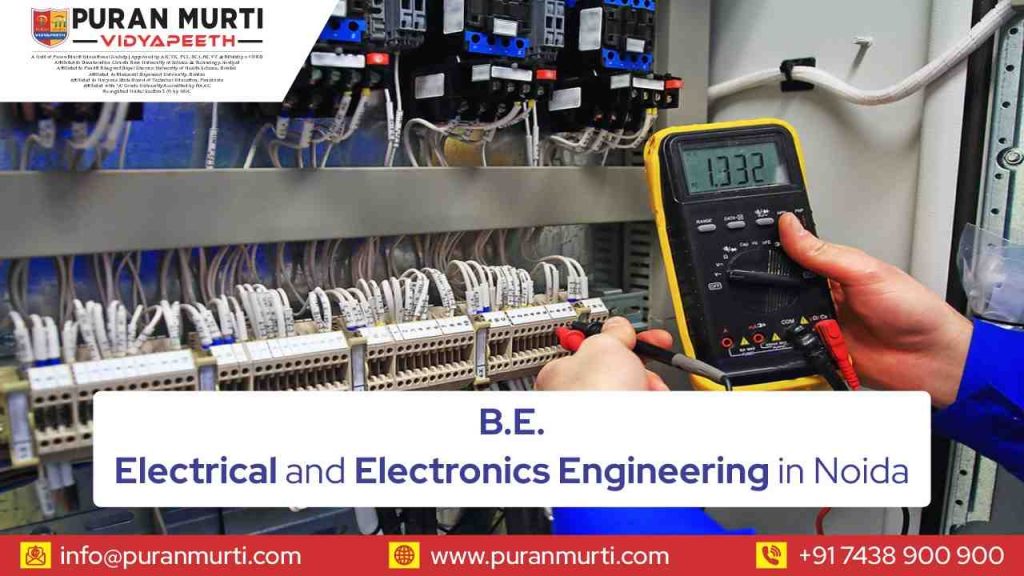
B.E. Electrical and Electronics Engineering in Noida
Posted on : 13 November, 2026 2:02 pm
Electrical and Electronics Engineering (EEE) is an important branch of engineering that focuses on electrical systems, electronic devices, power generation, electrical machines, and automation. Students interested in technology can explore B.E. Electrical and Electronics Engineering in Noida to develop technical skills and build a career in engineering.
There are several options for B.E. Electrical and Electronics Engineering in Noida, offering different academic facilities and admission opportunities. Students searching for B.E. Electrical and Electronics Engineering in Noida can compare colleges based on fees, eligibility, and placements.
Choosing B.E. Electrical and Electronics Engineering in Noida can help students explore opportunities in electrical and electronics industries. This blog covers B.E. Electrical and Electronics Engineering in Noida, including colleges, admission, fees, subjects, and career opportunities. Apply Now
Students can explore different government and private engineering institutions in Noida and Greater Noida. The following table includes colleges offering Electrical and Electronics Engineering or closely related undergraduate programmes.
College List
| S.No. | College Name | Location |
|---|---|---|
| 1 | Amity University | Noida |
| 2 | JSS Academy of Technical Education | Noida |
| 3 | Gautam Buddha University | Greater Noida |
| 4 | Galgotias College of Engineering and Technology | Greater Noida |
| 5 | JSS University | Noida |
| 6 | Puran Murti Vidyapeeth | Sonipat, Haryana |
What is B.E. Electrical and Electronics Engineering?
B.E. Electrical and Electronics Engineering is an undergraduate programme that combines electrical engineering and electronics. It provides knowledge of electrical circuits, power systems, electronic components, electrical machines, and automation.
Students learn how electrical energy is generated, transmitted, distributed, and used in different industries.Apply Now
Important Course Details
| Particulars | Details |
|---|---|
| Course Name | B.E. Electrical and Electronics Engineering |
| Course Level | Undergraduate |
| Course Duration | 4 Years |
| Total Semesters | 8 |
| Eligibility | 10+2 with required subjects |
| Main Subjects | Electrical Machines, Power Systems, Electronics |
| Study Mode | Regular |
| Career Areas | Power, Electronics, Automation and Manufacturing |
Eligibility Criteria for B.E. Electrical and Electronics Engineering
Students interested in this course must fulfil the eligibility requirements prescribed by their selected college.
The general eligibility criteria include:
- Candidates must pass Class 12 from a recognised board.
- Physics and Mathematics are generally compulsory subjects.
- Chemistry or another approved technical subject may be required.
- Students must obtain the minimum qualifying marks specified by the institution.
- Diploma holders in relevant engineering branches may apply for lateral-entry admission, subject to applicable rules.
Admission Process for B.E. Electrical and Electronics Engineering
The admission process depends on the college and university. Some institutions consider entrance examination scores, while others offer admission through merit or university-level selection.
The general admission process includes:
- Check Eligibility: Review the academic requirements of the selected institution.
- Entrance Examination: Appear for the required entrance examination, if applicable.
- Application Form: Complete the admission application form.
- Document Verification: Submit the required academic certificates and documents.
- Counselling: Participate in counselling or seat allocation, where applicable.
- Fee Payment: Pay the prescribed fees to confirm admission.
Entrance Examinations for Engineering Admission
| Entrance Exam | Purpose |
|---|---|
| JEE Main | Engineering admission at participating institutions |
| UPTAC Counselling | Uttar Pradesh technical admissions |
| CUET UG | Admission to participating universities |
| University-Level Admission | As per individual university rules |
B.E. Electrical and Electronics Engineering Subjects
The course includes different subjects related to electricity, electronics, power systems, and industrial applications.
Important Subjects
| Subject | Topics Covered |
|---|---|
| Engineering Mathematics | Mathematical concepts and calculations |
| Basic Electrical Engineering | Electrical circuits and fundamentals |
| Electrical Machines | Motors, generators and transformers |
| Power Systems | Electricity generation and distribution |
| Power Electronics | Electronic power conversion |
| Control Systems | Electrical system control |
| Digital Electronics | Digital circuits and logic systems |
| Microprocessors | Processor architecture and applications |
| Electrical Measurements | Electrical measurement techniques |
| Renewable Energy | Solar and wind energy technologies |
The syllabus may vary according to the university and academic regulations. Apply Now

B.E. Electrical and Electronics Engineering Fees in Noida
The fee structure depends on the institution, admission category, facilities, and university regulations. Students should compare tuition fees and additional expenses before selecting a college.
Types of Fees
| Fee Component | Details |
|---|---|
| Tuition Fees | Academic course charges |
| Admission Fees | Admission-related expenses |
| Examination Fees | Semester examination charges |
| Laboratory Fees | Practical and laboratory expenses |
| Hostel Fees | Accommodation charges |
| Transportation Fees | College transportation expenses |
| Other Charges | Library and miscellaneous expenses |
Students should check the latest fee structure from the official college admission brochure.Apply Now
Career Opportunities After B.E. Electrical and Electronics Engineering
After completing this programme, graduates can explore employment opportunities in electrical, electronics, manufacturing, power, and automation industries.
The course develops technical knowledge and practical skills that are useful in different industrial sectors.
Job Profiles After B.E. Electrical and Electronics Engineering
| Job Profile | Work Responsibilities |
|---|---|
| Electrical Engineer | Designs and maintains electrical systems |
| Electronics Engineer | Works with electronic devices and circuits |
| Power System Engineer | Handles power generation and distribution |
| Electrical Design Engineer | Prepares electrical designs |
| Maintenance Engineer | Maintains electrical equipment |
| Automation Engineer | Works with automated systems |
| Control Systems Engineer | Develops control systems |
| Project Engineer | Manages engineering projects |
Top Recruiting Industries
Electrical and Electronics Engineering graduates can explore jobs in several industries, including:
- Power generation and distribution
- Electronics manufacturing
- Renewable energy
- Automobile and electric vehicle industries
- Industrial automation
- Electrical equipment manufacturing
- Construction and infrastructure
- Railway and transportation
- Telecommunications
- Research and development
Higher Education Options After B.E. Electrical and Electronics Engineering
Students who want to continue their education after graduation can choose postgraduate programmes and specialised courses.
| Course | Specialisation |
|---|---|
| M.Tech | Electrical Engineering |
| M.Tech | Power Systems |
| M.Tech | Power Electronics |
| M.Tech | Control Systems |
| M.Tech | Renewable Energy |
| MBA | Operations Management |
| MBA | Business Management |
| Ph.D. | Electrical and Electronics Engineering |
Factors to Consider Before Choosing an Engineering College
Before selecting a college, students should compare different institutions based on the following factors:
- Course Availability: Check the availability of the required engineering programme.
- Accreditation: Review current approvals, accreditation, and university affiliation.
- Faculty: Consider the qualifications and experience of teaching staff.
- Laboratories: Check practical laboratory facilities.
- Placements: Review placement records and internship opportunities.
- Fee Structure: Compare tuition fees and other expenses.
- Hostel Facilities: Check accommodation and student facilities.
- Practical Training: Look for workshops, industrial visits, and technical projects.
Frequently Asked Questions
1. What is the duration of B.E. Electrical and Electronics Engineering?
The course generally takes four years to complete and is divided into eight semesters.
2. What are the eligibility criteria for B.E. Electrical and Electronics Engineering?
Students generally need to pass Class 12 with Physics and Mathematics and fulfil the additional subject and minimum marks requirements prescribed by the institution.
3. Is Electrical and Electronics Engineering a good career option?
Yes. Graduates can explore career opportunities in power generation, electronics, renewable energy, manufacturing, automation, and electric vehicle industries.
4. Which entrance exams are accepted for engineering admission in Noida?
JEE Main, UPTAC counselling, and CUET UG may be accepted by participating institutions. Admission requirements vary between colleges.
5. Can diploma holders apply for B.E. Electrical and Electronics Engineering?
Yes. Eligible diploma holders in relevant engineering branches may apply for lateral-entry admission according to the applicable university and admission rules. Apply Now
Conclusion
B.E. Electrical and Electronics Engineering is a suitable course for students interested in electrical systems, electronics, power generation, and modern technologies. Noida and Greater Noida offer several institutions where students can explore undergraduate engineering programmes.
Before taking admission, candidates should compare course availability, eligibility criteria, fees, academic facilities, and placement opportunities to make an informed decision. Apply Now