DMLT Full Form: Course Details, Eligibility, Scope & Career (2026)
Posted on : 29 July, 2026 2:01 am
Healthcare is one of the fastest-growing industries in India, creating thousands of opportunities for skilled professionals beyond doctors and nurses. Among these, Medical Laboratory Technicians play a crucial role in diagnosing diseases through laboratory testing. If you’ve searched for “DMLT Full Form”, you’re probably considering a rewarding healthcare career after Class 12.
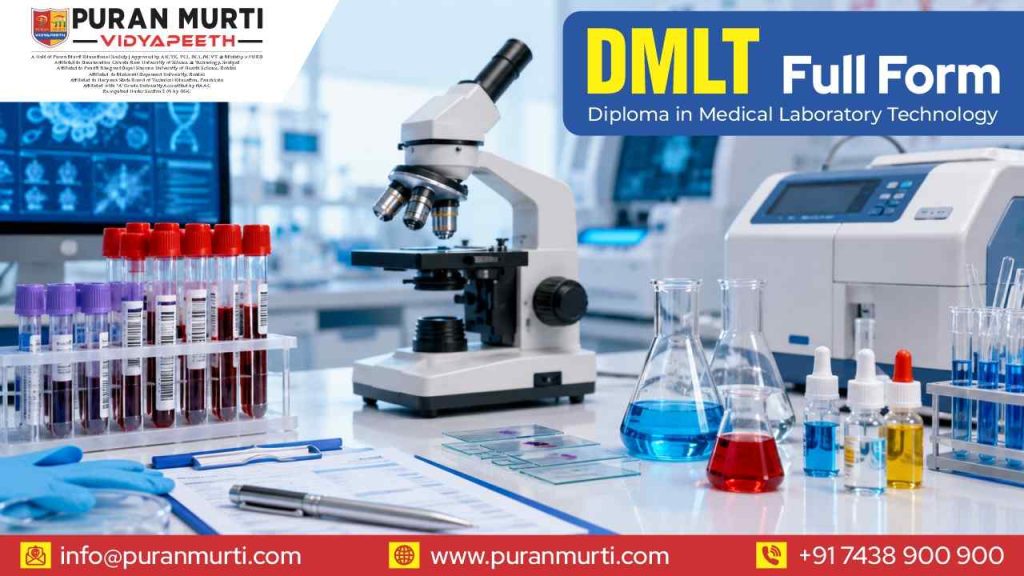
The DMLT full form is Diploma in Medical Laboratory Technology. It is a career-oriented diploma program that equips students with practical knowledge and technical skills required to perform laboratory investigations, handle diagnostic equipment, and assist doctors in accurate disease diagnosis.
With India’s healthcare sector expanding rapidly and diagnostic laboratories becoming increasingly advanced, qualified laboratory technicians are in high demand. This comprehensive guide explains everything you need to know about the DMLT course, including eligibility, duration, syllabus, fees, career opportunities, salary, higher education options, and why pursuing DMLT can be a smart career decision in 2026.
What is the DMLT Full Form?
DMLT stands for Diploma in Medical Laboratory Technology.
It is a diploma-level allied healthcare program that trains students to perform laboratory tests on blood, urine, tissues, and other body samples. These investigations help doctors diagnose diseases accurately and recommend suitable treatments.
DMLT Full Form is Diploma in Medical Laboratory Technology. It is a diploma course that prepares students to work as medical laboratory technicians by teaching diagnostic testing, laboratory procedures, pathology, microbiology, hematology, and laboratory management. The course usually lasts 2 years with practical training.
Diploma in Medical Lab Technician (DMLT): A Comprehensive Guide
Quick Overview of DMLT Course
| Particular | Details |
|---|---|
| Full Form | Diploma in Medical Laboratory Technology |
| Course Level | Diploma |
| Duration | 2 Years (may vary by institute) |
| Eligibility | 10+2 (Science preferred) |
| Admission | Merit or Entrance Based |
| Course Type | Regular |
| Average Fees | Varies by institution |
| Career Options | Lab Technician, Pathology Technician, Lab Assistant, Blood Bank Technician |
| Higher Studies | BMLT, B.Sc MLT, B.Sc Allied Health Sciences |
Why Choose DMLT After 12th?
Choosing DMLT can be an excellent decision for students interested in healthcare but looking for a shorter, skill-focused program.
Top Benefits of DMLT
- Industry-focused practical training
- Strong demand in hospitals and diagnostic centers
- Affordable compared to many healthcare programs
- Quick entry into the healthcare workforce
- Opportunity for higher education
- Job stability in a growing industry
- Hands-on learning experience
Healthcare services continue to expand due to population growth, preventive healthcare awareness, digital diagnostics, and improved medical infrastructure, making laboratory professionals increasingly valuable.
Who Should Pursue DMLT?
DMLT is suitable for students who:
- Have completed Class 12
- Enjoy biology and healthcare sciences
- Prefer practical learning
- Want an early career start
- Have attention to detail
- Wish to contribute to patient diagnosis
DMLT Eligibility Criteria
The eligibility requirements may vary across institutions.
Generally, students should have:
- Passed Class 12 from a recognized board
- Science stream (PCB or PCM preferred by many institutes)
- Minimum qualifying marks as prescribed by the institution
Some colleges may also admit students from other streams depending on institutional policies.
DMLT Admission Process 2026
Admission generally follows these steps:
- Submit the application form.
- Verify academic documents.
- Merit list or entrance examination (where applicable).
- Counseling and seat allocation.
- Fee submission and admission confirmation.
Students should always verify admission requirements with their preferred institution.
DMLT Course Duration
The DMLT program generally lasts 2 years, including classroom learning, laboratory practice, and practical training.
Some institutions may also include internship or clinical exposure to strengthen industry readiness.
DMLT Syllabus
Although the curriculum differs among institutions, the following subjects are commonly included.
First Year
- Human Anatomy
- Human Physiology
- Biochemistry
- Pathology
- Microbiology
- Basic Laboratory Techniques
Second Year
- Hematology
- Clinical Biochemistry
- Histopathology
- Blood Banking
- Immunology
- Clinical Laboratory Management
- Diagnostic Procedures
- Practical Laboratory Training
Practical sessions form a significant part of the course, helping students become confident in handling modern laboratory equipment.
Skills You Learn During DMLT
Students develop technical as well as professional competencies.
Technical Skills
- Sample collection
- Blood testing
- Urine analysis
- Clinical diagnostics
- Instrument handling
- Quality control
- Laboratory safety
Soft Skills
- Communication
- Teamwork
- Accuracy
- Time management
- Ethical practices
- Record keeping
These skills make graduates job-ready across multiple healthcare settings.
Career Scope After DMLT
The demand for qualified laboratory professionals continues to grow due to:
- Increasing diagnostic testing
- Rising healthcare awareness
- Expansion of hospitals
- Growth of pathology laboratories
- Preventive healthcare services
- Medical research
Career Opportunities
Graduates can work as:
- Medical Laboratory Technician
- Pathology Technician
- Laboratory Assistant
- Blood Bank Technician
- Clinical Laboratory Technician
- Research Laboratory Assistant
- Diagnostic Lab Executive
- Laboratory Supervisor (with experience)
Top Recruiters
DMLT graduates may find opportunities in:
- Multi-specialty hospitals
- Government healthcare institutions
- Private hospitals
- Diagnostic laboratories
- Blood banks
- Medical colleges
- Research organizations
- Public health laboratories
- Pharmaceutical companies

DMLT Salary in India
Salary depends on qualifications, location, employer, skills, and experience.
| Experience | Expected Salary Range |
| Fresher | Entry-level packages |
| 2–5 Years | Better growth opportunities |
| Experienced | Higher salaries in specialized labs and hospitals |
Professionals who continuously upgrade their skills through certifications and higher education generally experience stronger career growth.
Higher Education After DMLT
Students can continue their education through:
- BMLT
- B.Sc Medical Laboratory Technology
- B.Sc Allied Health Sciences
- Specialized certification programs
- Hospital administration courses
- Healthcare management programs
Higher qualifications can improve career prospects and open supervisory or specialized roles.
DMLT vs BMLT
| Feature | DMLT | BMLT |
| Full Form | Diploma in Medical Laboratory Technology | Bachelor in Medical Laboratory Technology |
| Level | Diploma | Undergraduate Degree |
| Duration | 2 Years | 3–4 Years |
| Entry Requirement | 10+2 | 10+2 |
| Career Start | Earlier | Advanced opportunities |
| Higher Studies | Available | Postgraduate options |
Why Medical Laboratory Technology is a Growing Career
India’s healthcare ecosystem has witnessed rapid expansion due to:
- Increasing lifestyle diseases
- Better diagnostic awareness
- Expansion of healthcare facilities
- Digital laboratory systems
- Preventive health checkups
- Technological advancements
Medical laboratory professionals remain essential because nearly every diagnosis relies on laboratory investigations.
Industry Trends in 2026
Several trends are shaping the future of laboratory technology:
- Automation in diagnostics
- AI-assisted laboratory reporting
- Digital pathology
- Molecular diagnostics
- Advanced blood analysis
- Precision medicine
- Quality assurance systems
Students who stay updated with emerging technologies are likely to enjoy better employment opportunities.
How to Build a Successful Career After DMLT
Step 1
Complete DMLT from a recognized institution.
Step 2
Focus on practical laboratory skills.
Step 3
Gain internship experience.
Step 4
Develop communication and documentation skills.
Step 5
Pursue higher education or specialized certifications.
Step 6
Keep learning new diagnostic technologies.
Why Practical Training Matters
Healthcare employers value candidates who can confidently perform laboratory procedures.
Practical exposure helps students:
- Understand real diagnostic workflows
- Operate modern laboratory instruments
- Follow safety protocols
- Improve accuracy
- Build confidence before employment
Institutions that provide industry exposure, laboratory practice, and hospital interaction help students become workforce-ready.
Choosing the Right DMLT College
Before selecting a college, consider:
- Experienced faculty
- Well-equipped laboratories
- Practical learning
- Industry exposure
- Internship opportunities
- Placement assistance
- Modern infrastructure
- Academic support
Students from Sonipat, Delhi NCR, and nearby regions should compare institutions based on academic quality, infrastructure, faculty expertise, and career support before making a decision.
Why Consider Puran Murti Vidyapeeth?
Students seeking quality career-oriented education in Sonipat, Haryana, can explore healthcare and professional programs at Puran Murti Vidyapeeth. The institution focuses on practical learning, modern infrastructure, experienced faculty, industry exposure, personality development, and placement support to prepare students for competitive careers.
Prospective students are encouraged to review the latest admission guidelines, eligibility requirements, available programs, and campus facilities before applying.
People Also Ask
What is the full form of DMLT?
DMLT stands for Diploma in Medical Laboratory Technology, a diploma course that prepares students for careers in diagnostic laboratories and hospitals.
Is DMLT a good career?
Yes. DMLT offers stable employment opportunities in hospitals, pathology laboratories, diagnostic centers, research institutions, and healthcare organizations.
Can I do DMLT after 12th?
Yes. Most institutions allow students to pursue DMLT after completing Class 12, especially those with a science background.
What is the duration of DMLT?
The DMLT course generally takes 2 years, depending on the institution and curriculum.
Frequently Asked Questions (FAQs)
What is the full form of DMLT?
DMLT stands for Diploma in Medical Laboratory Technology.
Is DMLT better than BMLT?
Both have different purposes. DMLT offers quicker entry into the workforce, while BMLT is a bachelor’s degree providing broader academic depth and advanced career opportunities.
What jobs can I get after DMLT?
Graduates may work as Medical Laboratory Technicians, Pathology Technicians, Blood Bank Technicians, Laboratory Assistants, and Diagnostic Lab Professionals.
Is DMLT difficult?
The course requires dedication and practical learning, but students with an interest in biology, laboratory science, and healthcare generally find it manageable.
Can DMLT graduates work in hospitals?
Yes. Hospitals, diagnostic laboratories, pathology centers, blood banks, and research laboratories regularly hire qualified DMLT graduates.
Is DMLT a good career in India in 2026?
Yes. With increasing healthcare demand, expanding diagnostic services, and technological advancements, DMLT continues to offer promising career opportunities.
Conclusion
The DMLT full form is Diploma in Medical Laboratory Technology, and it represents one of the most practical and rewarding career options for students interested in healthcare. The program combines scientific knowledge with hands-on laboratory training, enabling graduates to contribute meaningfully to disease diagnosis and patient care.
As India’s healthcare infrastructure continues to grow, skilled laboratory professionals are expected to remain in demand across hospitals, diagnostic laboratories, research centers, and healthcare organizations. By choosing the right institution, gaining practical experience, and continuously upgrading your skills, you can build a stable and fulfilling career in medical laboratory technology.
If you’re looking for a career-focused educational environment in Sonipat, explore the professional programs offered by Puran Murti Vidyapeeth. Visit the campus, interact with faculty members, learn about laboratory facilities, and discover how industry-oriented education can help you achieve your career goals.