
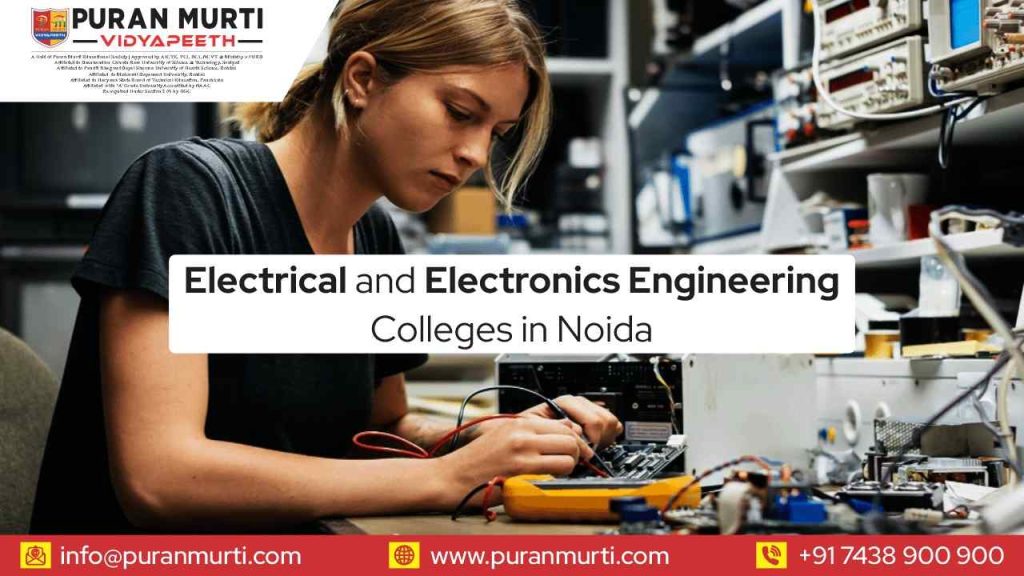
Electrical and Electronics Engineering Colleges in Noida
Posted on : 14 November, 2026 11:47 am
The Electrical and Electronics Engineering course (EEE) is an engineering subject that deals with electrical and electronics. This specialization involves studying how to generate, transmit, and supply electricity in addition to electronic circuits, electrical machinery, power systems, and automation.
A B.Tech in Electrical and Electronics Engineering is typically an 8-semester (4 year) undergraduate course. This course consists of lectures, lab work, projects, and technical trainings. Apply Now
Electrical and Electronics Engineering Colleges in Noida
| S.No. | College Name | Location |
|---|---|---|
| 1 | Amity University | Noida |
| 2 | JSS Academy of Technical Education | Noida |
| 3 | Gautam Buddha University | Greater Noida |
| 4 | Galgotias College of Engineering and Technology | Greater Noida |
| 5 | JSS University | Noida |
| 6 | Puran Murti Vidyapeeth | Sonipat, Haryana |
Why Choose Electrical and Electronics Engineering?
Key benefits of this course include:
- Knowledge of electrical and electronic systems.
- Knowledge of power generation and distribution.
- Hands on lab work.
- Knowledge of automation and control systems.
- Opportunities within the manufacturing and power industries.
- Opportunities for further education and specialist technical training. Apply Now

Eligibility Criteria for B.Tech Electrical and Electronics Engineering
Eligibility Criteria:
- Have cleared Class 12 from a recognised board
- Physics and Mathematics are compulsory.
- Chemistry/Computer Science/Electronics or any other approved subject can also be considered.
- Students need to score the minimum percentage required by the institute.
- Students holding Diploma can apply for lateral entry (subject to university rules).
- However, the exact eligibility criteria can vary from university to university. Hence, it is recommended that students go through the official admission guidelines.Apply Now
Electrical and Electronics Engineering admission procedure
The admission procedure differs for different institutes. However, you can follow the below-mentioned steps:
- Visit the official website of your preferred college.
- Go through the details of B.Tech course and eligibility criteria.
- Fill the application form.
- Attach your academic documents.
- Appear for the entrance exam or selection process.
- Attend counselling/Document verification.
- Pay the admission fee to confirm your seat.
Some institutes take into account the scores obtained in the entrance exam while some institutes might offer admission based on qualifying exam scores and their admission criteria.Apply Now
Course Duration and Structure
| Course Details | Information |
|---|---|
| Course Name | B.Tech Electrical and Electronics Engineering |
| Course Level | Undergraduate |
| Duration | 4 Years |
| Semester | 8 Semesters |
| Study Mode | Regular |
| Eligibility | Class 12 with required subjects |
| Admission Basis | Entrance exam or merit, depending on college |
Important Subjects in Electrical and Electronics Engineering
The course includes fundamental and advanced subjects related to electrical and electronic technologies.
| S.No. | Subject Name |
|---|---|
| 1 | Engineering Mathematics |
| 2 | Electrical Circuit Theory |
| 3 | Electrical Machines |
| 4 | Power Systems |
| 5 | Electronic Devices and Circuits |
| 6 | Digital Electronics |
| 7 | Power Electronics |
| 8 | Control Systems |
| 9 | Electrical Measurements |
| 10 | Microprocessors and Microcontrollers |
| 11 | Renewable Energy Systems |
| 12 | Industrial Automation |
The subjects may vary according to the university syllabus and programme structure.
Skills Identified During the Course
Throughout the Course Students will gain a range of technical and professional skills that will enable them to better understand engineering problems and operate with electrical equipment.
Key skills include:
- Design of electrical circuits
- Problem solving
- Technical analysis
- Knowledge of electrical machines
- Understanding of electronic devices
- Programming and automation fundamentals
- Working in teams
- Project management
Career Opportunities After Electrical and Electronics Engineering
After completing B.Tech Electrical and Electronics Engineering, graduates can apply for different technical roles depending on their skills and qualifications.
| S.No. | Job Profile |
|---|---|
| 1 | Electrical Engineer |
| 2 | Electronics Engineer |
| 3 | Power System Engineer |
| 4 | Maintenance Engineer |
| 5 | Control Systems Engineer |
| 6 | Automation Engineer |
| 7 | Design Engineer |
| 8 | Project Engineer |
| 9 | Testing Engineer |
| 10 | Renewable Energy Engineer |
Careers for Electrical and Electronics Engineers.
There are many industries graduates can work in, including:
1. Power Generation
Engineers working with electrical equipment and power systems in power plants and electricity distribution companies.
2. Manufacturing
Engineers working on electrical maintenance, production systems, testing equipment and within manufacturing organisations.
3. Renewable Energy
Engineers working on the design, installation, maintenance of electrical systems within solar and wind energy companies.
4. Electronics Industry
Companies working with circuits, electronic components, testing systems and products.
5. Automation Industry
Companies using electrical and electronics to develop and maintain control systems within industry.
Higher Education After B.Tech EEE
Students interested in further studies can choose postgraduate programmes after completing their bachelor’s degree.
Some available options include:
- M.Tech in Electrical Engineering
- M.Tech in Power Systems
- M.Tech in Power Electronics
- M.Tech in Control Systems
- MBA
- Specialised certification programmes
Higher education can help students develop advanced knowledge in a particular engineering field.
How to Select the Right EEE College in Noida?
Before choosing a college, students should compare important academic and practical factors.
Check Course Availability
Confirm whether the institution offers B.Tech Electrical and Electronics Engineering or a related programme such as Electrical Engineering.
Compare Fee Structures
Check tuition fees, examination charges, hostel expenses, transport fees, and other academic costs.
Review Laboratory Facilities
Electrical and Electronics Engineering requires practical learning. Students should check the availability of electrical machines, electronics, power systems, and control systems laboratories.
Check Placement Opportunities
Review placement records, internship opportunities, industry connections, and the types of jobs available to graduates.
Consider Location
Students should also consider transport facilities, hostel availability, and the distance between the college and their residence.
Frequently Asked Questions
1. Which colleges offer Electrical and Electronics Engineering?
JSS University and Amity University Noida both provide B.Tech Electrical & Electronics Engineering. You may also look for other colleges providing similar branches of engineering.
2. How long is the B.Tech Electrical and Electronics Engineering course?
The B.Tech Electrical and Electronics Engineering course can generally be completed in 4 years by following an 8 semester format.
3. What are the entrance requirements for EEE?
Most institutions will require you to have successfully passed your Class 12 with Physics and Mathematics and also achieve a certain amount of marks to meet the entry requirements.
4. What are the career prospects after a B.Tech EEE?
Upon completing your B.Tech EEE you could consider working as an Electrical Engineer, Electronics Engineer, Power System Engineer, Maintenance Engineer or Automation Engineer.
5. Can I do an M.Tech after my B.Tech EEE?
Yes you can. Upon completing your B.Tech you can choose to follow an M.Tech in Electrical Engineering or something similar which meets the entry requirements.
Conclusion
Electrical and Electronics Engineering offers opportunities in power generation, electronics, manufacturing, automation, and renewable energy. Students exploring Electrical and Electronics Engineering Colleges in Noida should compare course availability, fees, eligibility, admission procedures, laboratory facilities, and placement support before selecting an institution.
A careful comparison can help students choose a suitable engineering programme according to their academic interests and future career goals.