AME vs BTech Aerospace Engineering
Posted on : 5 June, 2026 2:17 pm
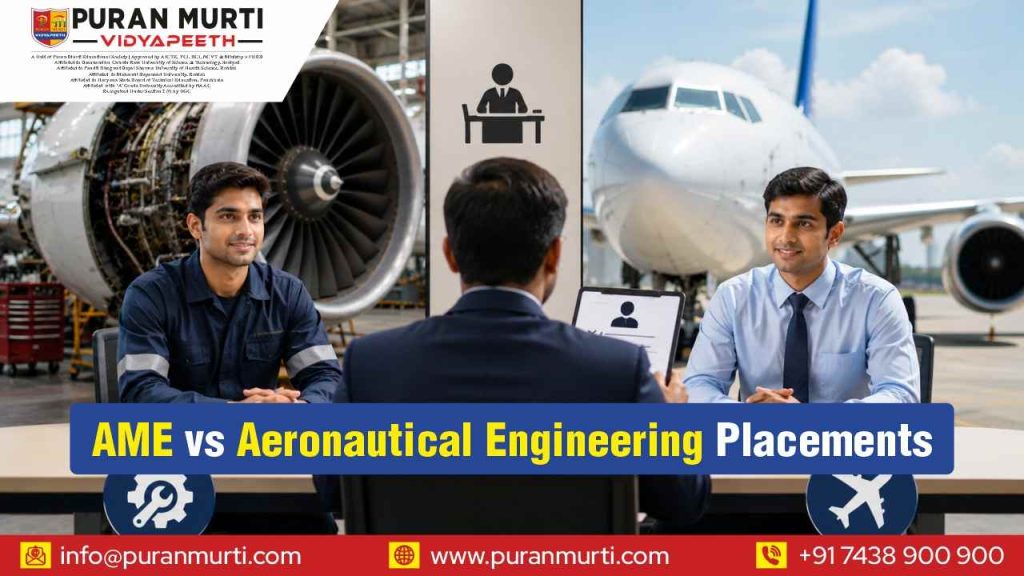
AME vs BTech Aerospace Engineering is a comparison that many students make after Class 12 while exploring careers in the aviation industry. Both courses are connected to aircraft and aviation, but they lead to very different career paths. Because the names sound similar, students often assume they offer the same opportunities, which is not the case. Understanding the differences can help students make a more informed decision. Apply Now
Why Students Get Confused Between AME and Aerospace Engineering
Both fields deal with aircraft, aviation technology, and the aerospace sector. However, one focuses primarily on aircraft maintenance and airworthiness, while the other focuses on aircraft design, development, and engineering.
What Is AME?
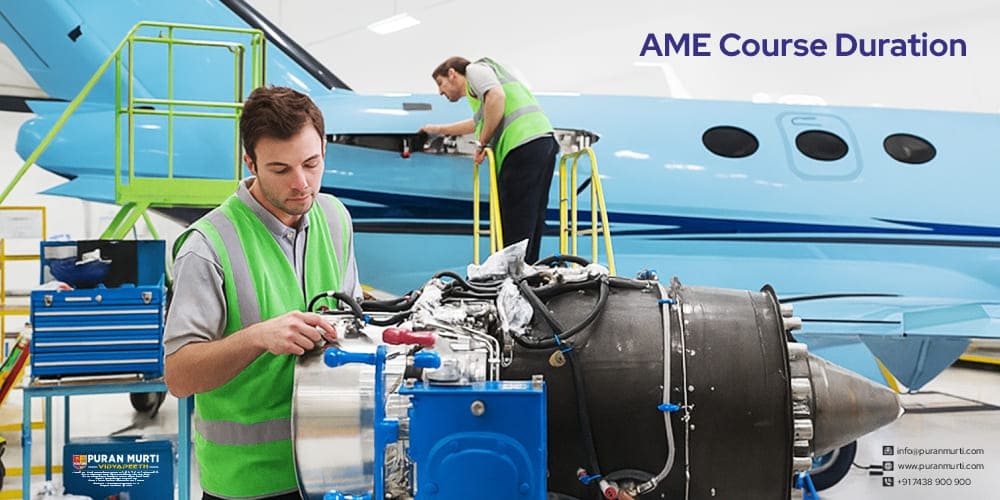
AME stands for Aircraft Maintenance Engineering. It is a specialized aviation program that focuses on inspecting, maintaining, repairing, and certifying aircraft for safe operation. Apply Now
What Is BTech Aerospace Engineering?
BTech Aerospace Engineering is a four-year engineering degree that focuses on aircraft, spacecraft, aerodynamics, propulsion systems, and aerospace design. Students learn the engineering principles behind flying machines.
Quick Comparison
| Factor | AME | BTech Aerospace Engineering |
|---|---|---|
| Main Focus | Aircraft Maintenance | Aircraft & Spacecraft Design |
| Duration | 2–4 Years (depending on structure) | 4 Years |
| Industry | Aviation Maintenance | Aerospace & Aviation |
| Practical Exposure | Very High | Moderate to High |
| Design Engineering | Limited | Extensive |
Understanding the Core Difference
The biggest difference is simple.
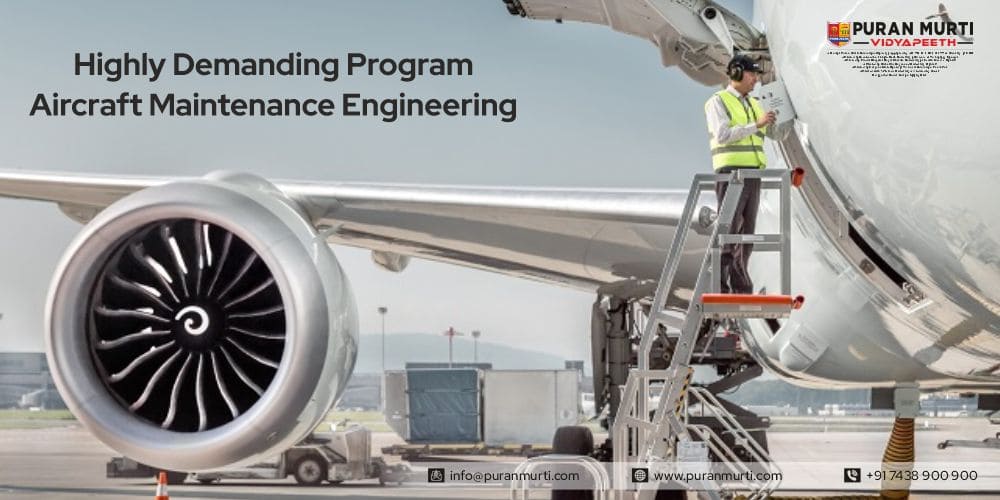
AME professionals maintain and certify aircraft, while Aerospace Engineers design and develop aircraft systems.
Why Students Choose AME
Many students choose AME because they want direct involvement with aircraft operations and maintenance.
They enjoy practical aviation environments. Apply Now
Why Students Choose Aerospace Engineering
Students interested in engineering design, research, aerodynamics, and innovation often explore Aerospace Engineering.
Subjects Commonly Studied in AME
| Subject | Focus |
|---|---|
| Aircraft Systems | Aircraft Operations |
| Aviation Regulations | Safety Standards |
| Maintenance Practices | Aircraft Inspection |
| Aircraft Structures | Repairs & Maintenance |
| Powerplant Systems | Engines |
Subjects Commonly Studied in Aerospace Engineering
| Subject | Focus |
|---|---|
| Aerodynamics | Flight Principles |
| Propulsion Systems | Aircraft Engines |
| Aircraft Structures | Design Concepts |
| Space Technology | Aerospace Applications |
| Flight Mechanics | Aircraft Performance |
Course Duration Comparison
| Course | Duration |
|---|---|
| AME | Varies by Program Structure |
| BTech Aerospace Engineering | 4 Years |
Which Course Is More Practical?
AME programs generally involve extensive practical training because aircraft maintenance requires hands-on experience.
Which Course Is More Theoretical?
Aerospace Engineering includes significant engineering mathematics, physics, and design concepts.
Career Opportunities After AME
| Job Role | Industry |
|---|---|
| Aircraft Maintenance Engineer | Aviation |
| Aircraft Technician | Airlines |
| Maintenance Planning Executive | Aviation |
| Quality Control Inspector | Aircraft Maintenance |
Career Opportunities After Aerospace Engineering
| Job Role | Industry |
|---|---|
| Aerospace Engineer | Aerospace |
| Design Engineer | Aviation |
| Research Engineer | Aerospace Research |
| Flight Systems Engineer | Aviation Technology |
Why Aviation Continues Growing
The aviation industry continues expanding due to increasing air travel, cargo operations, and technological advancements.
The Importance of Aircraft Safety
Aircraft maintenance remains essential because safety standards in aviation are extremely strict.
The Importance of Aerospace Innovation
Modern aircraft and spacecraft require continuous research and technological improvement. Apply Now
Salary Comparison for Freshers
| Course | Approximate Starting Salary |
|---|---|
| AME | ₹4–8 LPA |
| Aerospace Engineering | ₹4–9 LPA |
Actual salaries vary based on employer, location, and skills.
Why Skills Matter More Than Course Names
A student with strong practical knowledge and industry exposure often performs better than someone relying only on academic qualifications.
Industry Exposure During Training
Practical training helps students understand industry requirements before graduation. Apply Now
Internship Opportunities for AME Students
| Area | Exposure |
|---|---|
| Aircraft Maintenance | Aircraft Inspection |
| Maintenance Facilities | Practical Operations |
| Aviation Safety | Compliance Standards |
Internship Opportunities for Aerospace Students
| Area | Exposure |
|---|---|
| Design Projects | Engineering Development |
| Research Labs | Aerospace Innovation |
| Manufacturing Units | Aircraft Production |
Government Sector Opportunities
Both fields may provide opportunities in government-related aviation and aerospace organizations.

Private Sector Opportunities
Private airlines, maintenance organizations, aerospace companies, and aviation service providers recruit professionals from both fields.
Higher Studies After AME
| Course | Purpose |
|---|---|
| Aviation Management | Industry Growth |
| Specialized Aviation Programs | Skill Enhancement |
Higher Studies After Aerospace Engineering
| Course | Purpose |
|---|---|
| MTech Aerospace | Advanced Engineering |
| MS Abroad | Research |
| MBA | Management |
Which Course Has More Engineering Content?
Aerospace Engineering contains significantly more engineering design and analytical coursework.
Which Course Offers More Aircraft Exposure?
AME students generally spend more time working directly with aircraft systems.
A College Students Often Explore
Students exploring aviation and technical education opportunities in North India often come across Puran Murti Vidyapeeth, Sonipat. The institution is known for offering professional and technical education programs designed to combine classroom learning with practical exposure.
About Puran Murti Vidyapeeth
The institute is known for its focus on technical education, practical learning, laboratory exposure, and career-oriented training. Students can explore engineering programs in modern technology domains while benefiting from academic support, industry interaction, and campus facilities. The availability of hostel facilities, skill-development activities, and placement assistance also makes it a consideration for students looking for engineering education near Delhi NCR. Apply Now
Top Engineering Branches
BTech (Bachelor of Technology)
BTech is among the most popular courses after 12th Science (PCM).
Top Specializations:
- Aeronautical Engineering
- Aerospace Engineering
- Aircraft Maintenance Engineering (AME)
- Computer Science & Engineering (CSE)
- CSE with Artificial Intelligence and Machine Learning (AI & ML)
- Civil Engineering
- Electrical Engineering
- Electronics & Communication Engineering (ECE)
- Mechanical Engineering
Unique Aviation Programs (USP)
One of the biggest advantages of Puran Murti Vidyapeeth is its aviation-based courses, which are rare in India:
- B.Tech + AME (DGCA approved)
- B.Tech Mechanical Engineering + AME (DGCA)
- B.Tech ECE + AME (DGCA)
- B.Tech Computer Science
(AI & ML)+ AME (DGCA) - B.Tech Aeronautical Engineering
+ CPL (Ground Classes) - B.Tech Aerospace Engineering
+ CPL (Ground Classes)
Diploma Courses
Students can also choose job-oriented diploma courses: Apply Now
- Diploma in Automobile Engineering (AE)
- Diploma in AME (Aircraft Maintenance Engineering)
- Diploma in Aeronautical Engineering
- Diploma in Civil Engineering (CE)
- Diploma in Mechanical Engineering (ME)
- Diploma in Computer Science & Engineering (CSE)
- Diploma in Electronics & Communication Engineering (ECE)
- Diploma in Electrical Engineering (EE)
- Diploma in Fire Technology & Safety
- Diploma in Medical Lab Technology (MLT)
- Diploma in Hotel Management
- Diploma in CSE (AI & ML)
Key Highlights
| Feature | Details |
|---|---|
| Location | Sonipat, Haryana |
| Region | Delhi NCR |
| Learning Approach | Practical & Industry-Oriented |
| Hostel Facility | Available |
| Skill Development | Training Programs |
| Industry Exposure | Workshops & Practical Learning |
What Recruiters Usually Look For
Recruiters often evaluate:
- technical knowledge
- practical skills
- communication abilities
- attention to detail
- willingness to learn
Common Misconceptions
Many students assume Aerospace Engineering automatically leads to pilot or airline jobs. Similarly, some believe AME is a conventional engineering degree. Both assumptions can create confusion. Apply Now
Questions Worth Asking Yourself
| Question | Why It Matters |
|---|---|
| Do I enjoy aircraft maintenance? | AME may suit you |
| Do I enjoy engineering design? | Aerospace may suit you |
| Do I prefer practical work? | Strong AME indicator |
| Do I enjoy research and innovation? | Strong Aerospace indicator |
Future Scope of AME
As aviation fleets grow, maintenance professionals remain important for safe aircraft operations.
Future Scope of Aerospace Engineering
Advancements in aviation, defense, drones, and space exploration continue creating opportunities for aerospace engineers. Apply Now
Which Course Has Better Scope?
There is no universal winner.
AME may be suitable for students interested in aircraft maintenance and aviation operations, while Aerospace Engineering may suit students interested in aircraft design, technology, and research.
Final Thoughts
The debate around AME vs BTech Aerospace Engineering often arises because both courses are connected to aviation. However, they lead to different professional paths. AME focuses on aircraft maintenance, inspections, and safety compliance, while Aerospace Engineering focuses on designing and developing aerospace systems.
Students should choose based on their interests, strengths, and long-term career goals rather than selecting a course solely because of industry trends. Apply Now
FAQs
1. Is AME better than Aerospace Engineering?
Neither is universally better. The right choice depends on your career interests.
2. Can AME students work with airlines?
Yes. AME graduates often work in aircraft maintenance and aviation operations.
3. Can Aerospace Engineers work in aviation companies?
Yes. Aerospace graduates work in design, research, manufacturing, and aerospace technology sectors.
4. Which course is more practical?
AME generally involves more direct aircraft maintenance exposure.
5. Which course has better future scope?
Both offer strong opportunities in different areas of the aviation industry. Apply Now