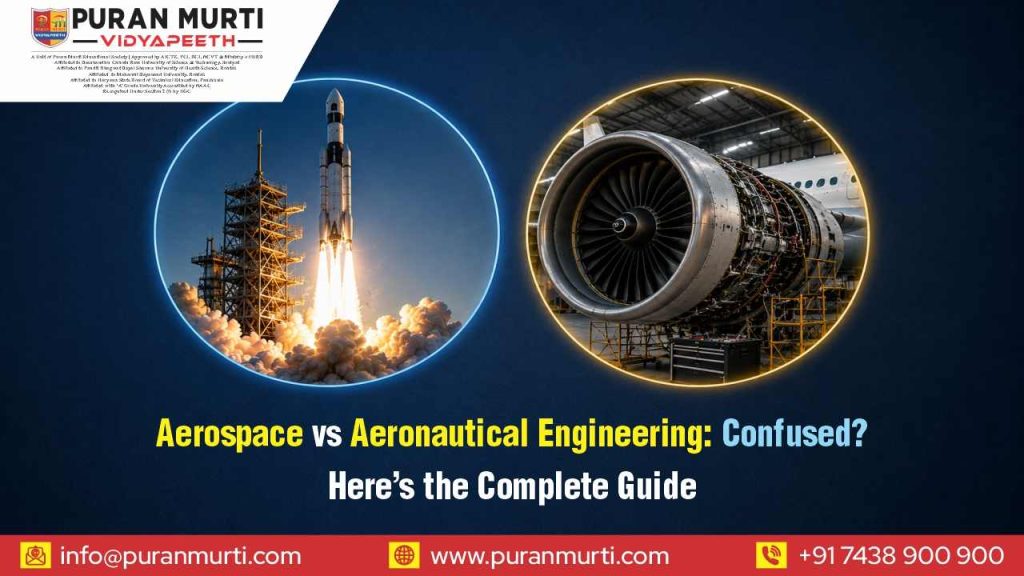
Aerospace vs Aeronautical Engineering: Confused? Here’s the Complete Guide
Posted on : 23 June, 2026 11:21 am
Aerospace vs Aeronautical Engineering is one of the most searched comparisons among students who want to build a career in aviation and space technology. Understanding Aerospace vs Aeronautical Engineering is important because both fields share similar concepts such as aerodynamics, aircraft systems, and advanced engineering principles, yet they differ significantly in scope and career opportunities. When comparing Aerospace vs Aeronautical Engineering, Aerospace Engineering covers aircraft, spacecraft, satellites, missiles, and space exploration systems, whereas Aeronautical Engineering focuses mainly on aircraft operating within Earth’s atmosphere. Before choosing between Aerospace vs Aeronautical Engineering, students should carefully assess their interests, skills, and long-term career aspirations to make an informed decision and build a successful engineering career.
What is Aerospace Engineering?
Aerospace Engineering is a broad engineering discipline that focuses on the design, development, testing, and maintenance of aerospace systems such as aircraft, spacecraft, satellites, missiles, and defense technologies. It combines two major branches:
- Aeronautical Engineering
- Astronautical Engineering
Because Aerospace Engineering covers both aviation and space technologies, it offers wider industry exposure and a broader range of career opportunities.
Core Subjects in Aerospace Engineering
Students generally study:
- Aerodynamics
- Aircraft Structures
- Spacecraft Engineering
- Flight Control Systems
- Rocket Propulsion
- Satellite Technology
- Avionics
- Computational Fluid Dynamics (CFD)
- Aerospace Materials
- Control Systems
These subjects prepare graduates for careers in aviation, defense, research, and space exploration.

What is Aeronautical Engineering?
Aeronautical Engineering is a specialized branch of engineering that focuses exclusively on aircraft and flight systems operating within Earth’s atmosphere. The field involves the design, manufacturing, testing, maintenance, and performance improvement of airplanes, helicopters, drones, and other aircraft.
As a result, Aeronautical Engineering is an ideal choice for students who are passionate about aviation and aircraft technologies.
Core Subjects in Aeronautical Engineering
Students typically study:
- Aerodynamics
- Aircraft Design
- Aircraft Structures
- Flight Mechanics
- Aviation Safety
- Aircraft Maintenance
- Propulsion Systems
- Air Navigation
- Avionics
- Flight Testing
Unlike Aerospace Engineering, Aeronautical Engineering does not extensively cover spacecraft and satellite systems.
Aerospace vs Aeronautical Engineering: Key Differences
| Factor | Aerospace Engineering | Aeronautical Engineering |
|---|---|---|
| Scope | Aircraft and Spacecraft | Aircraft Only |
| Focus Area | Aviation and Space Technology | Aviation Technology |
| Industry Coverage | Aviation, Space, and Defense | Aviation and Defense |
| Curriculum | Broad and Diverse | Specialized |
| Space Technology | Included | Limited |
| Satellite Systems | Included | Usually Not Included |
| Rocket Technology | Included | Minimal Exposure |
| Research Opportunities | Extensive | Moderate |
| Global Opportunities | Very High | High |
| Career Flexibility | Greater | Moderate |
| Future Scope | Excellent | Strong |
| Salary Potential | Higher | Competitive |
Eligibility Criteria
To pursue either Aerospace Engineering or Aeronautical Engineering, students generally need:
- Completion of 10+2 education
- Physics, Chemistry, and Mathematics as compulsory subjects
- Minimum qualifying marks required by institutions
- Valid entrance examination scores where applicable
Most engineering colleges admit students through national or state-level entrance examinations.

Skills Required
Skills for Aerospace Engineering
Students should develop:
- Strong analytical thinking
- Mathematical proficiency
- Problem-solving abilities
- Interest in aviation and space technology
- Research aptitude
- CAD and simulation software knowledge
Skills for Aeronautical Engineering
Students should possess:
- Aircraft design aptitude
- Technical problem-solving skills
- Attention to detail
- Understanding of aviation systems
- Communication and teamwork skills
- Strong engineering fundamentals
Career Opportunities in Aerospace Engineering
Aerospace Engineering graduates can work as:
- Aerospace Engineer
- Spacecraft Design Engineer
- Satellite Systems Engineer
- Rocket Propulsion Engineer
- Flight Test Engineer
- Defense Technology Specialist
- Research Scientist
- Avionics Engineer
Since Aerospace Engineering includes both aviation and space sectors, graduates often enjoy broader career opportunities.
Career Opportunities in Aeronautical Engineering
Aeronautical Engineering graduates can pursue careers as:
- Aircraft Design Engineer
- Aircraft Maintenance Engineer
- Flight Operations Engineer
- Aviation Safety Officer
- Aerodynamics Engineer
- Aviation Consultant
- Aviation Technology Specialist
- Quality Assurance Engineer
These careers primarily focus on aircraft performance, safety, operations, and maintenance.
Salary Comparison
When comparing Aerospace vs Aeronautical Engineering, salary is often a major consideration. Aerospace Engineering generally offers higher earning potential because graduates can work across both aviation and space-related industries. Professionals involved in spacecraft development, satellite systems, defense projects, and advanced aerospace research often receive attractive compensation packages.
Aeronautical Engineering also offers competitive salaries, especially in aircraft manufacturing, aviation operations, maintenance organizations, and defense aviation sectors. However, actual salary growth depends on experience, specialization, certifications, and employer reputation.
https://blog.puranmurti.com/pharmacy-admission-2027-eligibility-fees-and-admission-process/
Government Job Opportunities
Aerospace Engineering Government Jobs
Graduates can find opportunities in:
- Space Research Organizations
- Aerospace Development Agencies
- Defense Research Institutions
- Aviation Authorities
- Government Research Centers
Aeronautical Engineering Government Jobs
Graduates can work in:
- Civil Aviation Departments
- Defense Aviation Units
- Aircraft Maintenance Divisions
- Aviation Regulatory Authorities
- Government Research Institutions
Both branches offer strong opportunities in government aviation and defense sectors.
Higher Education Options
After Aerospace Engineering
Students can pursue:
- M.Tech in Aerospace Engineering
- Master’s in Space Systems
- Space Technology Programs
- PhD and Research Programs
- MBA
After Aeronautical Engineering
Students can pursue:
- M.Tech in Aeronautical Engineering
- Aviation Management Programs
- Aircraft Design Specializations
- Research Programs
- MBA
Higher education can significantly improve career prospects and earning potential.
Future Scope
The future of both Aerospace Engineering and Aeronautical Engineering is highly promising. Rising investments in commercial aviation, satellite technology, defense modernization, unmanned aerial vehicles (UAVs), and private space exploration continue to create demand for skilled professionals.
Furthermore, emerging technologies such as electric aircraft, reusable rockets, autonomous flight systems, sustainable aviation fuels, and advanced defense technologies are expected to generate exciting career opportunities in the coming decades. Students who continuously upgrade their skills and stay informed about industry developments can build rewarding long-term careers in both fields.
Which One Should You Choose?
Choose Aerospace Engineering if:
- You are interested in both aircraft and spacecraft.
- You want broader career opportunities.
- Space exploration fascinates you.
- You enjoy innovation and research.
Choose Aeronautical Engineering if:
- You are passionate about aviation.
- You want to specialize in aircraft systems.
- You prefer a focused aviation career path.
- You are interested in aircraft design and maintenance.
Ultimately, the best choice depends on your interests, strengths, and long-term career aspirations.
Conclusion
The debate around Aerospace vs Aeronautical Engineering often comes down to personal interests and career goals. Aerospace Engineering provides broader opportunities by covering both aviation and space technologies, while Aeronautical Engineering offers specialized expertise in aircraft systems and aviation operations.
Both disciplines offer excellent career prospects, competitive salaries, and opportunities to contribute to technological innovation. By understanding the differences in curriculum, career scope, salary potential, and future opportunities, students can confidently choose the engineering field that best aligns with their ambitions and professional objectives.
About Puran Murti Vidyapeeth Apply Now
The institute is known for its focus on technical education, practical learning, laboratory exposure, and career-oriented training. Students can explore engineering programs in modern technology domains while benefiting from academic support, industry interaction, and campus facilities. The availability of hostel facilities, skill-development activities, and placement assistance also makes it a consideration for students looking for engineering education near Delhi NCR. Apply Now
Top Engineering Branches
BTech (Bachelor of Technology)
BTech is among the most popular courses after 12th Science (PCM).
Top Specializations:
- Aeronautical Engineering
- Aerospace Engineering
- Aircraft Maintenance Engineering (AME)
- Computer Science & Engineering (CSE)
- CSE with Artificial Intelligence and Machine Learning (AI & ML)
- Civil Engineering
- Electrical Engineering
- Electronics & Communication Engineering (ECE)
- Mechanical Engineering
Unique Aviation Programs (USP)
One of the biggest advantages of Puran Murti Vidyapeeth is its aviation-based courses, which are rare in India:
- B.Tech + AME (DGCA approved)
- B.Tech Mechanical Engineering + AME (DGCA)
- B.Tech ECE + AME (DGCA)
- B.Tech Computer Science
(AI & ML)+ AME (DGCA) - B.Tech Aeronautical Engineering
+ CPL (Ground Classes) - B.Tech Aerospace Engineering
+ CPL (Ground Classes)
Diploma Courses
Students can also choose job-oriented diploma courses: Apply Now
- Diploma in Automobile Engineering (AE)
- Diploma in AME (Aircraft Maintenance Engineering)
- Diploma in Aeronautical Engineering
- Diploma in Civil Engineering (CE)
- Diploma in Mechanical Engineering (ME)
- Diploma in Computer Science & Engineering (CSE)
- Diploma in Electronics & Communication Engineering (ECE)
- Diploma in Electrical Engineering (EE)
- Diploma in Fire Technology & Safety
- Diploma in Medical Lab Technology (MLT)
- Diploma in Hotel Management
- Diploma in CSE (AI & ML)
Frequently Asked Questions (FAQs)
1. What is the difference between Aerospace and Aeronautical Engineering?
Aerospace Engineering is a broader field that includes the design and development of aircraft, spacecraft, satellites, missiles, and space exploration technologies. Aeronautical Engineering is a specialized branch that focuses only on aircraft and systems operating within Earth’s atmosphere.
2. Which is better: Aerospace Engineering or Aeronautical Engineering?
Neither branch is universally better. If you are interested in space technology, satellites, and spacecraft, Aerospace Engineering is the right choice. If your passion lies in aircraft design, aviation systems, and commercial aviation, Aeronautical Engineering may be a better fit.
3. Can an Aerospace Engineer work in the aviation industry?
Yes. Aerospace Engineers can work in both aviation and space sectors. They are qualified for roles related to aircraft design, manufacturing, research, and maintenance, as well as space exploration projects.
4. Is Aeronautical Engineering a part of Aerospace Engineering?
Yes. Aeronautical Engineering is generally considered a specialized branch within the broader field of Aerospace Engineering. Aerospace Engineering covers both aeronautics and astronautics.
5. What are the eligibility criteria for Aerospace and Aeronautical Engineering courses?
Students generally need to complete Class 12 with Physics, Chemistry, and Mathematics (PCM) from a recognized board. Admission is usually based on entrance examinations or merit, depending on the institution.
