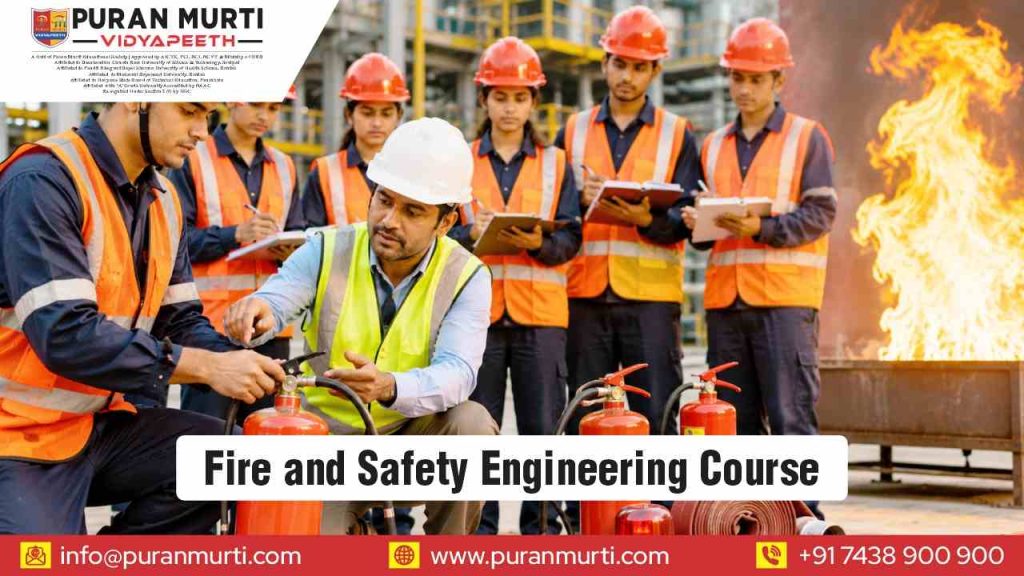
Fire and Safety Engineering Course
Posted on : 9 July, 2026 3:33 pm
Choosing the right technical course is one of the most important decisions for students who want a stable and rewarding career. Today, the Fire and Safety Engineering Course has become one of the most sought-after programs because industries across the world require trained professionals to ensure workplace safety and prevent accidents.
Understanding the Fire and Safety Engineering Course helps students explore career opportunities in industrial safety, fire prevention, disaster management, occupational health, and risk assessment. Whether you have completed Class 10, Class 12, or graduation, the Fire and Safety Engineering Course offers multiple study options that lead to excellent career growth
Apply Now
What is a Fire and Safety Engineering Course?
A Fire and Safety Engineering Course is a professional program that teaches students how to prevent fires, manage workplace hazards, conduct safety inspections, perform risk assessments, and respond effectively during emergencies.
The course combines classroom learning with practical training through:
- Fire drills
- Industrial visits
- Safety audits
- Rescue operations
- Equipment handling
- Emergency response training
- Internship programs
Why Choose a Fire and Safety Engineering Course?
The demand for Fire and Safety professionals continues to grow because every industry must comply with workplace safety regulations.
Some major advantages include:
- High industry demand
- Practical learning
- Job-oriented curriculum
- Attractive salary packages
- Government and private sector jobs
- International career opportunities
- Strong career growth
- Internship opportunities
- Skill development
- Excellent placement prospects
Apply Now
Course Highlights
| Particular | Details |
|---|---|
| Course Name | Fire and Safety Engineering Course |
| Course Level | Diploma / B.Tech / Certificate |
| Duration | 1–4 Years |
| Eligibility | Class 10, Class 12, or Graduation (depending on course) |
| Admission | Merit / Entrance |
| Mode | Full-Time |
Types of Fire and Safety Engineering Courses
| Course | Duration | Eligibility |
|---|---|---|
| Certificate Course | 6–12 Months | Class 10/12 |
| Diploma in Fire and Safety | 1–3 Years | Class 10/12 |
| Polytechnic Diploma | 3 Years | Class 10 |
| B.Tech Fire Engineering | 4 Years | Class 12 (PCM) |
| PG Diploma | 1 Year | Graduation |
Eligibility Criteria
| Requirement | Details |
|---|---|
| Certificate Course | Class 10 or 12 Pass |
| Diploma | Class 10 or 12 Pass |
| Polytechnic | Class 10 Pass |
| B.Tech | Class 12 with PCM |
| PG Diploma | Graduation |
Admission Process
| Step | Process |
|---|---|
| Step 1 | Complete the required qualification |
| Step 2 | Select a recognized college |
| Step 3 | Fill out the application form |
| Step 4 | Appear for the entrance exam (if applicable) |
| Step 5 | Merit list or counseling |
| Step 6 | Document verification |
| Step 7 | Fee payment and admission confirmation |
Apply Now
Subjects Covered
Students study:
- Fire Engineering
- Industrial Safety
- Fire Prevention
- Fire Protection Systems
- Occupational Health
- Disaster Management
- Environmental Safety
- Risk Assessment
- Safety Management
- Safety Laws
- Rescue Operations
- First Aid
Apply Now
Practical Training
| Training Activity | Benefit |
|---|---|
| Fire Drills | Emergency preparedness |
| Safety Audits | Hazard identification |
| Industrial Visits | Industry exposure |
| Rescue Training | Practical experience |
| Equipment Handling | Technical skills |
| Mock Disaster Drills | Emergency response |
Top Fire and Safety Engineering Colleges in India
| Rank | College | Location |
|---|---|---|
| 1 | National Fire Service College | Nagpur |
| 2 | College of Fire Technology | Ahmedabad |
| 3 | Institute of Fire Engineering | Nagpur |
| 4 | Delhi Institute of Fire Engineering | New Delhi |
| 5 | Gujarat Forensic Sciences University (Fire Programs) | Gandhinagar |
| 6 | SRM Institute of Science and Technology | Chennai |
| 7 | Puran Murti Vidyapeeth, Delhi NCR | Sonipat, Haryana |
| 8 | International Institute of Fire Engineering | Pune |
| 9 | Coimbatore Marine College | Coimbatore |
| 10 | National Institute of Fire and Safety Engineering | Various Locations |
Why Choose Puran Murti Vidyapeeth Delhi NCR?
Apply Now
Students choose Puran Murti Vidyapeeth because it offers:
| Feature | Benefit |
|---|---|
| Industry-Oriented Curriculum | Practical learning |
| Experienced Faculty | Expert guidance |
| Modern Laboratories | Hands-on training |
| Industrial Visits | Real-world exposure |
| Internship Opportunities | Better employability |
| Placement Assistance | Career support |
| Smart Classrooms | Interactive education |
| Hostel Facility | Comfortable campus life |

About Puran Murti Vidyapeeth Apply Now
The institute is known for its focus on technical education, practical learning, laboratory exposure, and career-oriented training. Students can explore engineering programs in modern technology domains while benefiting from academic support, industry interaction, and campus facilities. The availability of hostel facilities, skill-development activities, and placement assistance also makes it a consideration for students looking for engineering education near Delhi NCR. Apply Now
Top Engineering Branches
BTech (Bachelor of Technology)
BTech is among the most popular courses after 12th Science (PCM).
Top Specializations:
- Aeronautical Engineering
- Aerospace Engineering
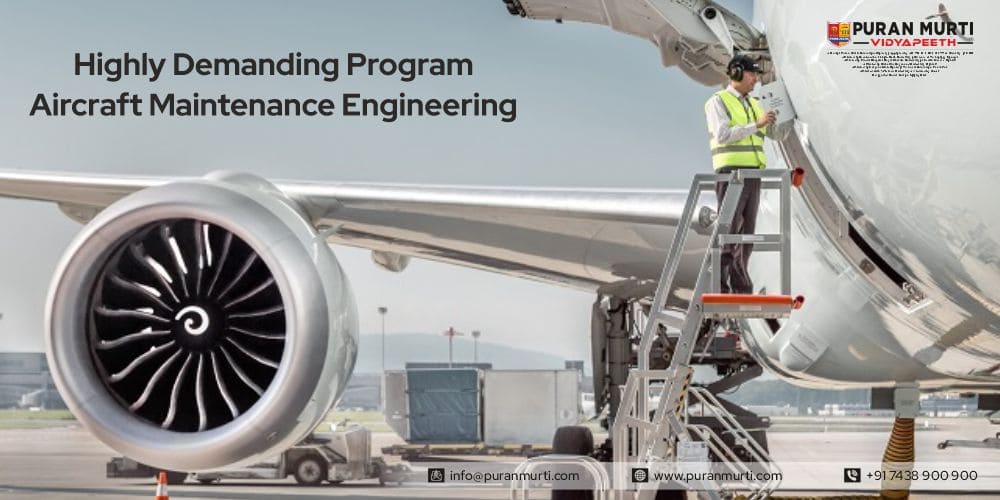
- Aircraft Maintenance Engineering (AME)
- Computer Science & Engineering (CSE)
- CSE with Artificial Intelligence and Machine Learning (AI & ML)
- Civil Engineering
- Electrical Engineering
- Electronics & Communication Engineering (ECE)
- Mechanical Engineering
Unique Aviation Programs (USP)
One of the biggest advantages of Puran Murti Vidyapeeth is its aviation-based courses, which are rare in India:
- B.Tech + AME (DGCA approved)
- B.Tech Mechanical Engineering + AME (DGCA)
- B.Tech ECE + AME (DGCA)
- B.Tech Computer Science
(AI & ML)+ AME (DGCA) - B.Tech Aeronautical Engineering
+ CPL (Ground Classes) - B.Tech Aerospace Engineering
+ CPL (Ground Classes)
Diploma Courses
Students can also choose job-oriented diploma courses: Apply Now
- Diploma in Automobile Engineering (AE)
- Diploma in AME (Aircraft Maintenance Engineering)
- Diploma in Aeronautical Engineering
- Diploma in Civil Engineering (CE)
- Diploma in Mechanical Engineering (ME)
- Diploma in Computer Science & Engineering (CSE)
- Diploma in Electronics & Communication Engineering (ECE)
- Diploma in Electrical Engineering (EE)
- Diploma in Fire Technology & Safety
- Diploma in Medical Lab Technology (MLT)
- Diploma in Hotel Management
- Diploma in CSE (AI & ML)
Fee Structure
| Institution Type | Annual Fees |
|---|---|
| Government Institute | ₹10,000 – ₹50,000 |
| Private Institute | ₹40,000 – ₹2,00,000 |
Skills Developed
Students gain:
- Leadership Skills
- Fire Risk Assessment
- Safety Auditing
- Hazard Identification
- Emergency Planning
- Communication Skills
- Technical Reporting
- Team Management
- Problem-Solving
- Decision-Making
Career Opportunities
Graduates can work in:
| Industry | Demand |
|---|---|
| Oil & Gas | Excellent |
| Construction | Excellent |
| Manufacturing | Excellent |
| Aviation | High |
| Petrochemical | Excellent |
| Railways | High |
| Healthcare | High |
| Infrastructure | Excellent |
| Chemical Industry | High |
| Power Plants | Excellent |
Popular Job Roles
| Job Role | Average Starting Salary | Experienced Salary |
|---|---|---|
| Fire Safety Officer | ₹3–6 LPA | ₹8–15 LPA |
| Safety Officer | ₹3.5–7 LPA | ₹8–18 LPA |
| HSE Officer | ₹4–8 LPA | ₹10–20 LPA |
| Industrial Safety Officer | ₹3–6 LPA | ₹8–16 LPA |
| Fire Protection Engineer | ₹4–7 LPA | ₹10–18 LPA |
| Safety Auditor | ₹4–8 LPA | ₹10–18 LPA |
| Safety Supervisor | ₹3–6 LPA | ₹7–12 LPA |
| Disaster Management Officer | ₹4–7 LPA | ₹9–16 LPA |
Top Recruiters
| Company | Industry |
|---|---|
| ONGC | Oil & Gas |
| Indian Oil Corporation | Petroleum |
| Bharat Petroleum | Energy |
| Hindustan Petroleum | Petroleum |
| Reliance Industries | Manufacturing |
| Larsen & Toubro | Construction |
| Tata Projects | Infrastructure |
| Adani Group | Infrastructure |
| GAIL | Energy |
| NTPC | Power |
| Airports Authority of India | Aviation |
| Apollo Hospitals | Healthcare |
Higher Education Options
| Course | Career Benefit |
|---|---|
| B.Tech Fire Engineering | Advanced engineering career |
| M.Tech Safety Engineering | Higher specialization |
| MBA Safety Management | Leadership roles |
| NEBOSH | International jobs |
| IOSH | Safety management |
| OSHA | Global certification |
Future Scope
The future of the Fire and Safety Engineering Course is highly promising because workplace safety has become a priority across industries. Moreover, rapid industrialization, infrastructure development, renewable energy projects, aviation expansion, and stricter safety regulations continue to increase the demand for qualified Fire and Safety professionals. Students who gain practical experience and internationally recognized certifications such as NEBOSH, IOSH, or OSHA can access excellent career opportunities in India and overseas.
Tips for Choosing the Right Fire and Safety Engineering College
Before taking admission, consider:
- AICTE approval (where applicable)
- Institution recognition
- Experienced faculty
- Placement record
- Internship opportunities
- Modern laboratories
- Industry collaborations
- Infrastructure
- Hostel facilities
- Alumni success
Apply Now
Conclusion
The Fire and Safety Engineering Course is an excellent choice for students seeking a technical, practical, and high-demand career. It equips students with industry-relevant skills, hands-on training, and strong placement opportunities across sectors such as oil & gas, construction, manufacturing, aviation, healthcare, and infrastructure. Choosing a recognized institution with quality training can significantly enhance your career prospects and long-term growth.
FAQs
1. What is a Fire and Safety Engineering Course?
It is a professional course that teaches fire prevention, industrial safety, emergency response, and workplace risk management.
2. Who is eligible for a Fire and Safety Engineering Course?
Eligibility depends on the course. Certificate and diploma courses generally require Class 10 or 12, while B.Tech programs usually require Class 12 with PCM.
3. What is the duration of the course?
The duration ranges from 6 months to 4 years, depending on the program.
4. What is the average salary after completing the course?
Freshers generally earn ₹3–6 LPA, while experienced professionals can earn ₹8–20 LPA or more.
5. Which industries hire Fire and Safety professionals?
Oil & Gas, Construction, Manufacturing, Aviation, Healthcare, Infrastructure, Power, Petrochemical, Railways, and Chemical industries.