Top ame college in India
Posted on : 17 August, 2026 3:15 pm
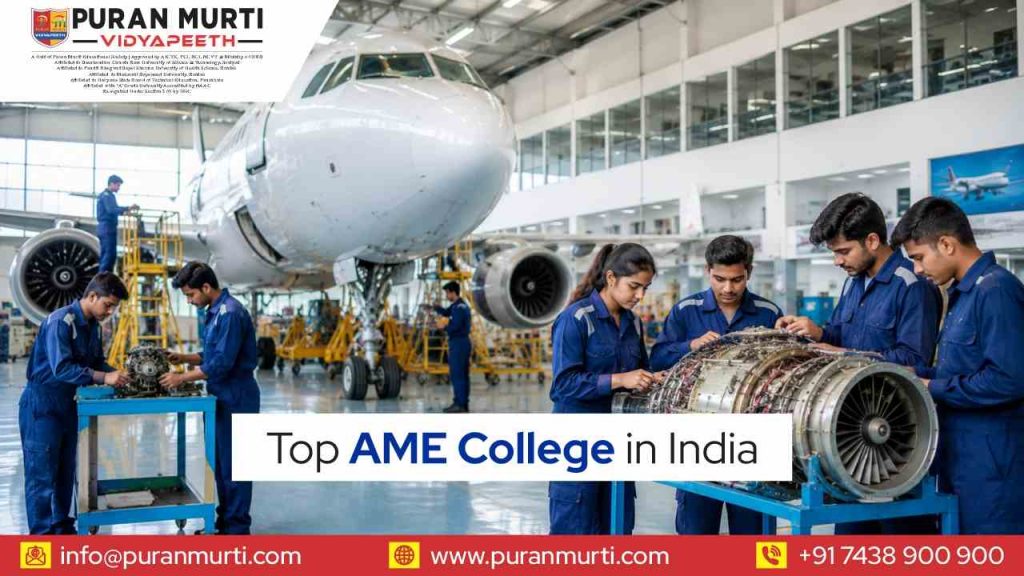
Choosing the right Top AME College in India is an important decision for students who want to build a career in aircraft maintenance and aviation. Aircraft Maintenance Engineering (AME) is a specialized field focused on aircraft inspection, maintenance, servicing, and airworthiness. Moreover, selecting a Top AME College in India can help students access structured technical training and practical learning opportunities.
Unlike pilot training, AME is mainly concerned with the technical side of aviation. Students learn about aircraft systems, maintenance procedures, safety standards, aviation regulations, and aircraft components. Therefore, students searching for a Top AME College in India should pay attention to practical training, faculty experience, aircraft exposure, and available facilities.
If you are comparing a Top AME College in India, do not focus only on fees or location. Instead, check DGCA approval, approved training scope, practical facilities, aircraft and equipment exposure, faculty, infrastructure, examination support, and career opportunities before making a final decision.
“In aviation, precision matters. The right AME education can help students develop the technical knowledge, practical skills, and discipline needed to support aircraft safety.”
Apply Now
Apply Now
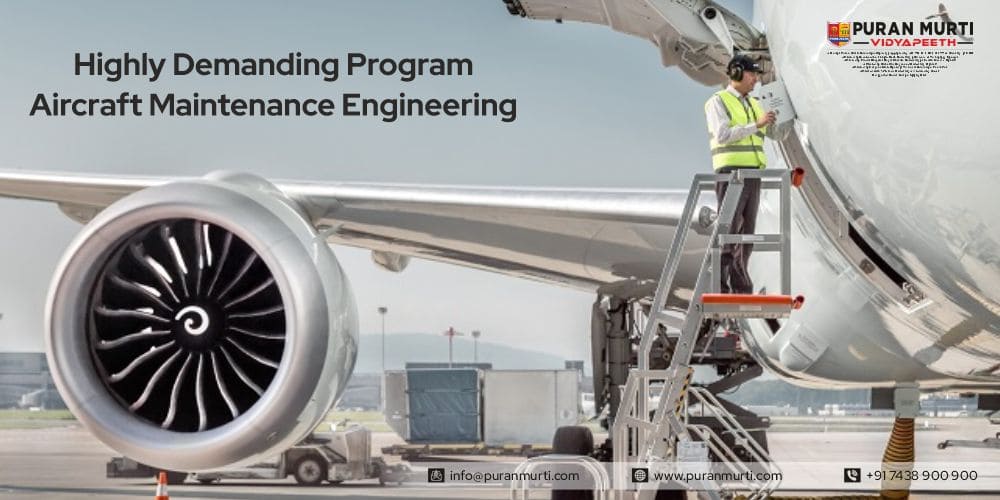
What Is Aircraft Maintenance Engineering?
Aircraft Maintenance Engineering is a professional aviation training pathway related to the maintenance and airworthiness of aircraft.
AME professionals are involved in activities such as:
- Aircraft inspection
- Maintenance procedures
- Component checking
- Troubleshooting
- Aircraft servicing
- Maintenance documentation
- Safety checks
- Airworthiness-related responsibilities
Therefore, students interested in aircraft technology, engineering, mechanics, electronics, and aviation safety may find AME an interesting career option.
How to Choose a Top AME College in India?
There are several factors students should consider before selecting an institute.
1. Check DGCA Approval
This should be one of the first things students verify.
The Directorate General of Civil Aviation (DGCA) maintains information on CAR-147 (Basic) Training Organizations. DGCA’s CAR-147 framework establishes requirements for organizations providing basic aircraft maintenance training under the relevant aviation regulations.
As a result, students should always verify the institute’s current approval status and approved scope directly through official DGCA information before admission.
2. Look at the Approved Scope
Not every institute necessarily offers the same training scope.
For example, AME training can include areas related to mechanical and avionics streams. The approved scope may also specify particular aircraft or power-plant categories.
Therefore, students should check exactly what the institute is approved to teach rather than relying only on general advertisements.
3. Consider Practical Training
AME is a technical field, so practical exposure matters.
Students should look for institutes that provide access to appropriate aircraft, engines, components, tools, laboratories, and maintenance-related equipment.
Furthermore, practical sessions can help students understand how theoretical concepts are applied in real maintenance environments.
4. Check Faculty and Trainers
Experienced instructors can make technical subjects easier to understand.
Students should consider faculty qualifications, aviation experience, teaching methods, and practical knowledge before selecting an institute.
5. Compare Training Facilities
A good AME institute should provide facilities that support both theoretical and practical learning.
Students can check for:
- Aircraft maintenance equipment
- Avionics laboratories
- Mechanical laboratories
- Engine-related equipment
- Workshop facilities
- Safety equipment
- Computer laboratories
- Technical libraries
In addition, students should ask whether practical facilities are actually used regularly as part of training.
Apply Now
Some AME Institutes in India Students Can Explore
India has several DGCA-approved AME training organizations. A government release stated that 57 AME training institutes had been approved under CAR-147 (Basic) at the time of the 2024 publication.
The following are examples of institutes that appear in published DGCA-related lists:
| AME Institute | Location |
|---|---|
| Bharat Institute of Aeronautics | Patna |
| College of Aeronautical Engineering | Assam |
| Falcon Institute of Aircraft Maintenance Engineers | Sonipat, Haryana |
| Alpine Institute of Aeronautics | Dehradun |
| Indian Institute of Aircraft Engineering | Sonipat, Haryana |
| School of Aeronautics | Neemrana, Rajasthan |
| Aeronautical Training Institute | Lucknow |
| Hindustan Aviation Academy | Bengaluru |
| Jawaharlal Aviation Institute | Kerala |
| VSM Aerospace AME Training School | Bengaluru |
Published lists identify these organizations among DGCA-approved or DGCA-related CAR-147 training organizations; however, approval status and scope can change. Therefore, students should verify the current status directly with DGCA before admission.
Falcon Institute of Aircraft Maintenance Engineers, Sonipat
Students looking for AME education in the Delhi-NCR region can also explore Falcon Institute of Aircraft Maintenance Engineers in Sonipat, Haryana.
Published DGCA-related lists identify Falcon Institute as a CAR-147 (Basic) organization at Puran Murti Campus, Kami Road, Sonipat.
However, students should confirm the latest approval validity, approved training scope, course availability, and admission requirements directly before applying.
Apply Now
AME Training at Indian Institute of Aircraft Engineering
The Indian Institute of Aircraft Engineering in Sonipat is another institute that appears in published AME approval material. A published approval document lists the institute at PMCE Campus, Sonepat, Haryana, with avionics and mechanical training scopes.
Similarly, students should compare its current approval, training scope, facilities, fees, practical exposure, and admission conditions with other institutes before making a final decision.
AME Eligibility After 12th
Students interested in AME generally need to meet specific educational and age requirements prescribed by the applicable regulations and institute.
Depending on the training program, students may need subjects such as:
- Physics
- Chemistry
- Mathematics
However, eligibility can differ according to the specific course and admission rules.
Therefore, students should check the latest requirements of the institute and applicable DGCA regulations before applying.
AME Course Duration
The duration of AME training depends on the specific training structure and category.
Students should not assume that every institute follows exactly the same schedule. Instead, check the institute’s current course structure, practical training requirements, examination schedule, and licensing pathway.
The objective of approved basic training is to prepare students for the knowledge and practical requirements associated with aircraft maintenance licensing. The Government of India has stated that students completing training at a CAR-147 (Basic) approved institute and passing the required DGCA examinations can become eligible for issue of an AME licence.
Apply Now
AME Streams: Mechanical and Avionics
AME training can broadly involve different technical areas.
Mechanical Stream
The mechanical side focuses on areas such as:
- Aircraft structures
- Engines
- Aerodynamics
- Mechanical systems
- Power plants
- Aircraft maintenance
Students who enjoy mechanical systems and aircraft engines may find this stream suitable.
Avionics Stream
Avionics focuses more on the electronic and electrical systems used in aircraft.
It can include areas such as:
- Communication systems
- Navigation systems
- Aircraft instruments
- Electrical systems
- Electronic systems
- Avionics maintenance
In contrast, students interested in electronics and aircraft technology may prefer the avionics side.
Career Opportunities After AME Training
After completing the relevant training, examinations, and licensing requirements, candidates can explore opportunities in the aviation maintenance sector.
Possible work areas include:
- Airlines
- Aircraft maintenance organizations
- Aviation companies
- MRO organizations
- Airport maintenance services
- Aircraft component organizations
- Aviation engineering companies
- Aerospace organizations
Moreover, opportunities can depend on licensing status, aircraft type training, experience, technical skills, and employer requirements.
Apply Now
AME Salary in India
AME salary can vary significantly.
The actual salary depends on factors such as:
- Employer
- Location
- License status
- Aircraft type
- Experience
- Technical specialization
- Organization
- Job responsibilities
Fresh trainees may start with entry-level opportunities, while licensed and experienced professionals can progress to more specialized roles.
Therefore, students should avoid choosing an institute only because it advertises a particular salary figure.
AME vs Pilot: What Is the Difference?
AME and pilot careers are both part of aviation, but their responsibilities are different.
| AME | Pilot |
|---|---|
| Focuses on aircraft maintenance | Focuses on aircraft operation |
| Technical aviation career | Flight operations career |
| Works with aircraft systems | Operates aircraft |
| Requires maintenance-related training | Requires flight training |
| Supports aircraft safety and airworthiness | Responsible for safe flight operations |
In simple terms, students who enjoy aircraft technology and maintenance may prefer AME, while students interested in flying may consider pilot training.
Why Practical Training Matters in AME
Aircraft maintenance is a hands-on profession.
A student may understand an aircraft system theoretically, but practical exposure can provide a clearer understanding of how components, tools, procedures, and safety practices work together.
For this reason, students should ask institutes about actual practical training rather than simply looking at photographs of laboratories or aircraft.
Apply Now
Why Consider Puran Murti for AME Education?
Students searching for AME education in the Delhi-NCR region can also explore aviation education options associated with Puran Murti in Sonipat.
Published DGCA-related material lists Falcon Institute of Aircraft Maintenance Engineers at Puran Murti Campus, Sonipat, under CAR-147 (Basic).
Students can compare the available AME training options based on approval status, training scope, practical facilities, faculty, fees, location, and career support.
However, always verify the latest approval status and course details before taking admission.
What Should Students Check Before Admission?
Before selecting a Top AME College in India, create a simple checklist.
Approval
Verify the institute’s current DGCA approval and scope.
Practical Exposure
Ask about aircraft, engines, components, laboratories, workshops, and practical hours.
Course Structure
Check the subjects, training schedule, examination process, and licensing pathway.
Fees
Compare tuition fees along with examination, hostel, transportation, equipment, and other charges.
Location
Consider accessibility and proximity to airports or aviation maintenance facilities where relevant.
Career Support
Ask about internships, industry exposure, placement assistance, and alumni career paths.
Finally, speak with the institute directly and request the latest official information before submitting your admission documents or fees.
Apply Now
Future Scope of AME in India
India’s aviation sector continues to require skilled technical professionals for aircraft maintenance and related services.
Furthermore, the growth of airlines, airports, aircraft fleets, MRO services, and aviation infrastructure can create opportunities for trained technical professionals.
However, AME is a regulated and responsibility-driven career. Therefore, students should focus on proper training, examinations, licensing requirements, technical knowledge, and continuous learning.
Conclusion
Choosing a Top AME College in India requires more than checking rankings or advertisements. Students should carefully compare DGCA approval, training scope, practical exposure, faculty, infrastructure, fees, location, and career support.
Moreover, DGCA’s CAR-147 framework plays an important role in basic aircraft maintenance training. Students completing training through an approved organization and meeting the required examination and licensing conditions can progress toward an AME licence.
Ultimately, the best AME institute is one that matches your career goals while providing the appropriate approved training, practical exposure, and technical learning environment.
Apply Now
About Puran Murti Vidyapeeth Apply Now
The institute is known for its focus on technical education, practical learning, laboratory exposure, and career-oriented training. Students can explore engineering programs in modern technology domains while benefiting from academic support, industry interaction, and campus facilities. The availability of hostel facilities, skill-development activities, and placement assistance also makes it a consideration for students looking for engineering education near Delhi NCR. Apply Now
Top Engineering Branches
BTech (Bachelor of Technology)
BTech is among the most popular courses after 12th Science (PCM).
Top Specializations:
- Aeronautical Engineering
- Aerospace Engineering
- Aircraft Maintenance Engineering (AME)
- Computer Science & Engineering (CSE)
- CSE with Artificial Intelligence and Machine Learning (AI & ML)
- Civil Engineering
- Electrical Engineering
- Electronics & Communication Engineering (ECE)
- Mechanical Engineering
Unique Aviation Programs (USP)
One of the biggest advantages of Puran Murti Vidyapeeth is its aviation-based courses, which are rare in India:
- B.Tech + AME (DGCA approved)
- B.Tech Mechanical Engineering + AME (DGCA)
- B.Tech ECE + AME (DGCA)
- B.Tech Computer Science
(AI & ML)+ AME (DGCA) - B.Tech Aeronautical Engineering
+ CPL (Ground Classes) - B.Tech Aerospace Engineering
+ CPL (Ground Classes)
Diploma Courses
Students can also choose job-oriented diploma courses: Apply Now
- Diploma in Automobile Engineering (AE)
- Diploma in AME (Aircraft Maintenance Engineering)
- Diploma in Aeronautical Engineering
- Diploma in Civil Engineering (CE)
- Diploma in Mechanical Engineering (ME)
- Diploma in Computer Science & Engineering (CSE)
- Diploma in Electronics & Communication Engineering (ECE)
- Diploma in Electrical Engineering (EE)
- Diploma in Fire Technology & Safety
- Diploma in Medical Lab Technology (MLT)
- Diploma in Hotel Management
- Diploma in CSE (AI & ML)
Apply Now
FAQs
1. Which is the best AME college in India?
There is no single AME college that is best for every student. Instead, compare current DGCA approval, training scope, practical facilities, faculty, fees, and career support.
2. Is DGCA approval important for AME training?
Yes. Students should verify that the institute has the appropriate current DGCA approval and scope for the training they plan to pursue.
3. Can I become an AME after 12th?
Eligible students can pursue approved AME training after meeting the applicable educational and admission requirements.
4. Is AME a good career in India?
AME can be a suitable career for students interested in aircraft technology, maintenance, engineering, and aviation safety. However, it requires technical knowledge, practical training, examinations, and licensing requirements.
5. What is the difference between AME and aeronautical engineering?
AME focuses primarily on aircraft maintenance and airworthiness-related responsibilities, while aeronautical engineering is a broader engineering field covering aircraft design, development, systems, and related technologies.
Apply Now
Career options after Bachelor of Medical Laboratory Technology