Aerospace Engineering Scope in India
Posted on : 6 June, 2026 4:22 pm
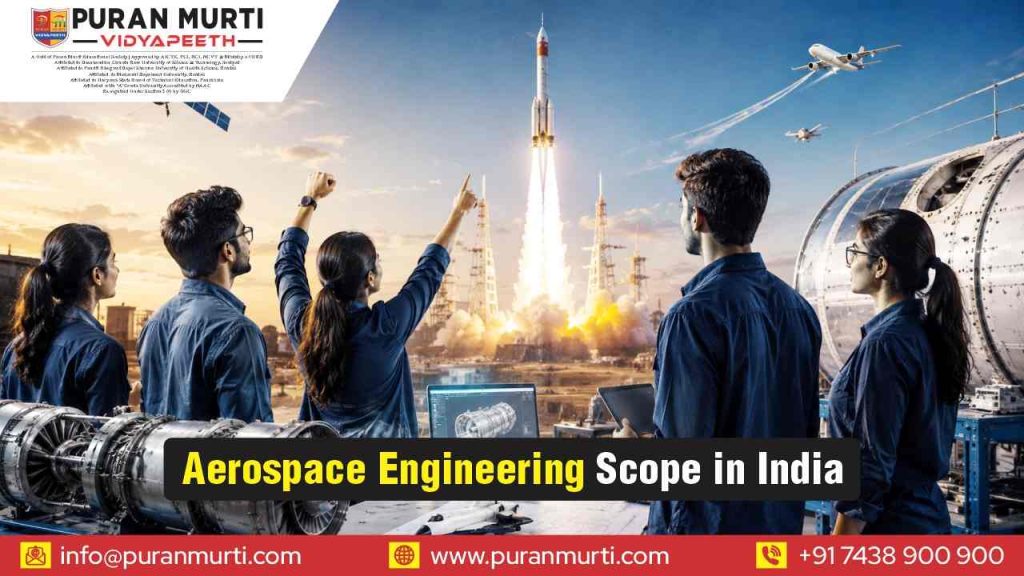
Aerospace Engineering Scope in India has become a major topic among science students looking for exciting and future-oriented careers. With India’s growing space missions, expanding aviation sector, and increasing investments in defense technology, Aerospace Engineering Scope in India is attracting significant attention. Many students now compare Aerospace Engineering Scope in India with traditional branches like Computer Science and Mechanical Engineering. Moreover, the long-term growth potential of Aerospace Engineering Scope in India continues to improve as the country strengthens its aerospace and aviation capabilities.
Understanding Aerospace Engineering
The field is broadly divided into:
| Specialization | Focus Area |
|---|---|
| Aeronautical Engineering | Aircraft and aviation systems |
| Astronautical Engineering | Spacecraft and space technology |
| Propulsion Engineering | Engines and propulsion systems |
| Avionics | Electronic systems used in aircraft |
| Structural Design | Aircraft and spacecraft structures |

Why Aerospace Engineering Is Growing in India
India is rapidly becoming a global aerospace hub. Government initiatives, private investments, and increasing space missions are creating new opportunities for aerospace professionals.
Key Growth Factors
| Factor | Impact |
|---|---|
| Expansion of ISRO missions | More technical jobs |
| Growing aviation industry | Increased demand for engineers |
| Defense modernization | Advanced aerospace projects |
| Private space startups | New career opportunities |
| Aircraft manufacturing growth | Industry expansion |
Evolution of Aerospace Engineering in India
A few decades ago, aerospace opportunities were mainly limited to government organizations. Today, private companies, startups, research organizations, and multinational corporations actively hire aerospace graduates.
Why Students Choose Aerospace Engineering
Many students select Aerospace Engineering because it combines innovation, technology, and scientific exploration.
Major Attractions
| Reason | Benefit |
|---|---|
| Space exploration | Exciting career opportunities |
| Aviation sector growth | Stable employment prospects |
| Research opportunities | Advanced technological work |
| Global demand | International career options |
| High-tech industry | Continuous learning |
Aerospace Engineering Scope in India After 12th
Students from the Science stream with Physics, Chemistry, and Mathematics can pursue Aerospace Engineering through undergraduate programs.
Popular entrance examinations include:
| Exam | Purpose |
|---|---|
| JEE Main | Engineering admissions |
| JEE Advanced | IIT admissions |
| State Engineering Exams | State colleges |
| University Entrance Tests | Private institutions |
Aerospace Engineering Course Structure
The curriculum focuses on theoretical and practical aspects of aerospace systems.
Important Subjects
| Subject | Importance |
|---|---|
| Aerodynamics | Flight principles |
| Aircraft Structures | Design and safety |
| Propulsion Systems | Engine technology |
| Flight Mechanics | Aircraft performance |
| Avionics | Aircraft electronics |
| Space Technology | Spacecraft systems |
Aerospace Industry in India
India’s aerospace sector is growing rapidly due to government support and increasing private participation.
Major Aerospace Organizations in India
| Organization | Type |
|---|---|
| ISRO | Space Research |
| HAL | Aircraft Manufacturing |
| DRDO | Defense Research |
| NAL | Aeronautics Research |
| BHEL | Engineering Solutions |
| BEL | Defense Electronics |
Growth of India’s Aviation Sector
India is one of the fastest-growing aviation markets globally. Consequently, airlines, airports, and aviation service providers continue expanding operations.
Aerospace Engineering Scope in Government Sector
Government organizations remain among the most attractive employers for aerospace graduates.
Popular Government Recruiters
| Organization | Job Roles |
|---|---|
| ISRO | Scientist, Engineer |
| DRDO | Research Engineer |
| HAL | Design Engineer |
| NAL | Aerospace Researcher |
| Indian Air Force | Technical Officer |
Aerospace Engineering Scope in Private Sector
Private companies are increasingly investing in aerospace projects.
Top Private Employers
| Company Type | Examples |
|---|---|
| Aviation Companies | Airlines, airports |
| Aerospace Manufacturers | Aircraft production firms |
| Defense Contractors | Defense technology companies |
| Space Startups | Satellite and launch companies |
| MNCs | International aerospace firms |
Aerospace Engineering Scope in Space Technology
India’s space sector is opening new doors for graduates. The increasing number of satellite launches and private space ventures creates exciting opportunities.
Rise of Private Space Startups
Several Indian startups are contributing to rocket development, satellite manufacturing, and space technologies.
Startup Opportunities
| Area | Job Roles |
|---|---|
| Satellite Technology | Systems Engineer |
| Launch Vehicles | Design Engineer |
| Space Research | Research Associate |
| Space Analytics | Technical Specialist |
Aerospace Engineering Scope in Defense Sector
Defense remains one of the strongest employment sectors for aerospace engineers.
Defense Applications
| Application | Importance |
|---|---|
| Missiles | National security |
| Fighter Aircraft | Air defense |
| Surveillance Systems | Strategic operations |
| UAVs | Modern warfare |
Aerospace Engineering Scope in Research and Development
Research careers offer opportunities to work on advanced technologies and future aerospace innovations.
Higher Studies Opportunities
Students can pursue advanced education after graduation.
| Degree | Benefits |
|---|---|
| M.Tech Aerospace Engineering | Technical specialization |
| MBA | Management roles |
| MS Abroad | International exposure |
| PhD | Research career |
Aerospace Engineering Scope Abroad
Aerospace engineers are highly valued worldwide. Countries with strong aerospace industries often offer excellent opportunities.
Popular Countries
| Country | Industry Strength |
|---|---|
| USA | Space and aviation |
| Canada | Aerospace manufacturing |
| Germany | Aircraft engineering |
| France | Aviation technology |
| UK | Research and development |
Skills Required for Aerospace Engineers
Technical skills alone are not enough. Employers also look for problem-solving and analytical abilities.
Essential Skills
| Skill | Importance |
|---|---|
| Mathematics | High |
| Analytical Thinking | High |
| CAD Software | Essential |
| Communication | Important |
| Teamwork | Important |
Aerospace Engineering Salary in India
Salary depends on skills, organization, experience, and specialization.

Average Salary Range
| Experience | Approximate Salary |
|---|---|
| Freshers | ₹4 – ₹8 LPA |
| 2–5 Years | ₹6 – ₹12 LPA |
| 5–10 Years | ₹10 – ₹20 LPA |
| Senior Professionals | ₹20 LPA+ |
Factors Affecting Salary
Several factors influence earning potential.
| Factor | Impact |
|---|---|
| College Reputation | High |
| Skills | High |
| Internships | Moderate |
| Higher Education | Significant |
| Industry Experience | Very High |
Aerospace Engineering vs Mechanical Engineering
Many students compare these branches before making a decision.
| Parameter | Aerospace | Mechanical |
|---|---|---|
| Specialization | High | Broad |
| Industry Focus | Aviation & Space | Multiple Industries |
| Job Diversity | Moderate | High |
| Research Opportunities | High | High |
Aerospace Engineering vs Computer Science Engineering
| Parameter | Aerospace | CSE |
|---|---|---|
| Core Engineering | Yes | Yes |
| Software Focus | Limited | Extensive |
| Space Industry Access | High | Moderate |
| IT Opportunities | Moderate | Very High |
Internship Importance in Aerospace Engineering
Internships help students gain practical exposure and improve employability.
Role of Projects in Career Growth
Industry-focused projects strengthen technical understanding and improve placement opportunities.
Emerging Technologies in Aerospace Engineering
Future Technologies
| Technology | Growth Potential |
|---|---|
| Artificial Intelligence | High |
| Autonomous Aircraft | High |
| Advanced Materials | High |
| Space Tourism | Growing |
| Electric Aviation | Rapidly Growing |
Challenges in Aerospace Engineering
Every engineering field has challenges that students should understand beforehand.
Common Challenges
| Challenge | Description |
|---|---|
| Competitive Industry | High standards |
| Technical Complexity | Advanced concepts |
| Continuous Learning | Required |
| Research Intensity | Significant |
Why Industry Exposure Matters
Practical training often helps students understand real-world aerospace applications better than classroom learning alone.
Importance of Laboratory Training
Aerospace engineering involves extensive testing, simulations, and experimentation. Therefore, strong laboratory exposure becomes valuable.
Future of Aerospace Engineering in India
The future looks highly promising because India continues investing heavily in aviation, defense, and space exploration.
Expected Industry Growth Areas
| Sector | Future Demand |
|---|---|
| Space Technology | Very High |
| Aviation | High |
| Defense Systems | High |
| Aircraft Manufacturing | Growing |
| Drone Technology | Rapid Growth |
How Government Initiatives Support Growth
Programs related to indigenous manufacturing, defense modernization, and private participation in space missions are creating additional opportunities.
Why Aerospace Engineering Remains a Unique Career Choice
Unlike many engineering branches, Aerospace Engineering allows students to work on aircraft, satellites, rockets, defense systems, and advanced technologies that directly contribute to national development.
About Puran Murti Vidyapeeth
The institute is known for its focus on technical education, practical learning, laboratory exposure, and career-oriented training. Students can explore engineering programs in modern technology domains while benefiting from academic support, industry interaction, and campus facilities. The availability of hostel facilities, skill-development activities, and placement assistance also makes it a consideration for students looking for engineering education near Delhi NCR. Apply Now
Top Engineering Branches
BTech (Bachelor of Technology)
BTech is among the most popular courses after 12th Science (PCM).
Top Specializations:
- Aeronautical Engineering
- Aerospace Engineering
- Aircraft Maintenance Engineering (AME)
- Computer Science & Engineering (CSE)
- CSE with Artificial Intelligence and Machine Learning (AI & ML)
- Civil Engineering
- Electrical Engineering
- Electronics & Communication Engineering (ECE)
- Mechanical Engineering
Unique Aviation Programs (USP)
One of the biggest advantages of Puran Murti Vidyapeeth is its aviation-based courses, which are rare in India:
- B.Tech + AME (DGCA approved)
- B.Tech Mechanical Engineering + AME (DGCA)
- B.Tech ECE + AME (DGCA)
- B.Tech Computer Science
(AI & ML)+ AME (DGCA) - B.Tech Aeronautical Engineering
+ CPL (Ground Classes) - B.Tech Aerospace Engineering
+ CPL (Ground Classes)
Diploma Courses
Students can also choose job-oriented diploma courses: Apply Now
- Diploma in Automobile Engineering (AE)
- Diploma in AME (Aircraft Maintenance Engineering)
- Diploma in Aeronautical Engineering
- Diploma in Civil Engineering (CE)
- Diploma in Mechanical Engineering (ME)
- Diploma in Computer Science & Engineering (CSE)
- Diploma in Electronics & Communication Engineering (ECE)
- Diploma in Electrical Engineering (EE)
- Diploma in Fire Technology & Safety
- Diploma in Medical Lab Technology (MLT)
- Diploma in Hotel Management
- Diploma in CSE (AI & ML)
| Feature | Details |
|---|---|
| Institution | Puran Murti Vidyapeeth |
| Location | Sonipat, Haryana |
| Region | Delhi NCR |
| Programs | Engineering and Professional Courses |
| Practical Training | Industry-Oriented Learning |
| Hostel Facility | Available |
| Skill Development | Focus on Employability |
| Industry Exposure | Workshops and Training Programs |
Why Choosing the Right College Matters
A good college can significantly improve learning outcomes through experienced faculty, laboratories, internships, industry collaborations, and placement support.
Final Thoughts
The Aerospace Engineering Scope in India is stronger today than ever before. Growing investments in aviation, defense, space exploration, and advanced technologies are creating exciting opportunities for skilled professionals. While the field demands technical expertise and continuous learning, it also offers the chance to work on some of the most innovative projects in the country.
Students interested in aircraft, satellites, space missions, research, and cutting-edge technology may find Aerospace Engineering to be a rewarding long-term career choice. With India’s aerospace ecosystem expanding steadily, future career prospects are expected to remain highly promising.
FAQs
1. Is Aerospace Engineering a good career in India?
Yes, Aerospace Engineering offers opportunities in aviation, defense, space research, manufacturing, and emerging technology sectors.
2. What is the average salary of an Aerospace Engineer in India?
Fresh graduates generally earn between ₹4–8 LPA, while experienced professionals can earn significantly higher packages.
3. Can Aerospace Engineers work in ISRO?
Yes, qualified aerospace graduates can apply for technical and research positions in ISRO through relevant recruitment processes.
4. Is Aerospace Engineering better than Mechanical Engineering?
Both fields have advantages. Aerospace is more specialized, while Mechanical Engineering offers broader industry options.
5. What are the future prospects of Aerospace Engineering in India?
Future prospects are highly positive due to increasing investments in space technology, aviation, defense systems, drones, and aircraft manufacturing.