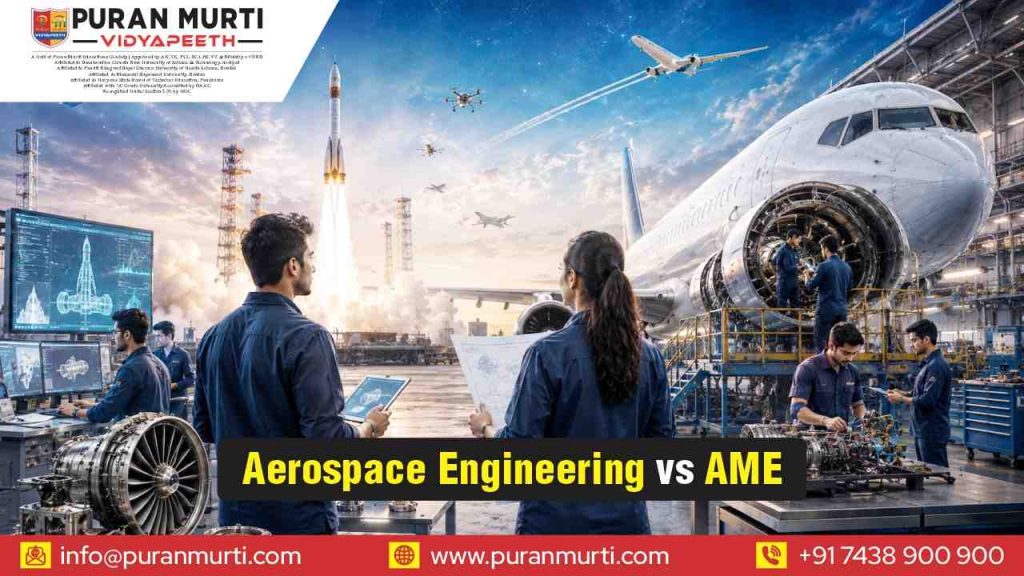
Aerospace Engineering vs AME
Posted on : 6 June, 2026 4:22 pm
Students interested in aviation careers often find themselves comparing Aerospace Engineering vs AME before choosing a course. Since both fields are connected to aircraft and aviation, many students assume they are similar. However, the reality is quite different. Understanding Aerospace Engineering vs AME properly helps students identify which course matches their interests, career goals, and skills. Moreover, the debate around Aerospace Engineering vs AME continues because both offer exciting opportunities in the growing aviation sector. Therefore, before making a decision, students should carefully evaluate every aspect of Aerospace Engineering vs AME.
Understanding Aerospace Engineering
Main Areas of Study
| Area | Focus |
|---|---|
| Aerodynamics | Aircraft movement |
| Propulsion | Aircraft engines |
| Space Technology | Spacecraft systems |
| Aircraft Structures | Design and materials |
| Avionics | Aircraft electronics |

Understanding AME
AME professionals ensure that aircraft meet safety regulations before flying.
Main Areas of Study
| Area | Focus |
|---|---|
| Aircraft Maintenance | Inspection and repair |
| Safety Procedures | Airworthiness standards |
| Aircraft Systems | Technical maintenance |
| Troubleshooting | Fault diagnosis |
| Aviation Regulations | DGCA compliance |
What Is the Fundamental Difference?
The biggest difference is that Aerospace Engineers design aircraft, while AMEs maintain and certify aircraft.
| Parameter | Aerospace Engineering | AME |
|---|---|---|
| Main Role | Design & Development | Maintenance & Certification |
| Industry Focus | Aerospace Technology | Aircraft Operations |
| Nature of Work | Engineering Design | Technical Maintenance |
| Certification Authority | Engineering Degree | DGCA Licensing |
Why Both Courses Are Important
The aviation industry needs both Aerospace Engineers and AMEs. One builds aircraft, while the other ensures they remain safe and operational.
Course Duration Comparison
| Course | Duration |
|---|---|
| Aerospace Engineering | 4 Years |
| AME | 2–4 Years (depending on structure and training) |
Eligibility Criteria
Both courses generally require Physics, Chemistry, and Mathematics after Class 12.
| Requirement | Aerospace Engineering | AME |
|---|---|---|
| PCM Required | Yes | Yes |
| Minimum Qualification | 12th Science | 12th Science |
| Medical Fitness | Preferred | Highly Important |
Course Curriculum Comparison
Aerospace Engineering Subjects
| Subject | Importance |
|---|---|
| Aerodynamics | High |
| Flight Mechanics | High |
| Space Technology | High |
| Propulsion Systems | High |
| Structural Analysis | High |
AME Subjects
| Subject | Importance |
|---|---|
| Aircraft Systems | High |
| Maintenance Practices | High |
| Aviation Safety | High |
| Aircraft Inspection | High |
| Aviation Regulations | High |
Aerospace Engineering Career Scope
Aerospace graduates can work in research, manufacturing, design, defense, and space technology sectors.
AME Career Scope
Aerospace Engineering Scope in India
India’s growing aerospace sector creates numerous opportunities.
Major Employment Areas
| Sector | Opportunities |
|---|---|
| Space Research | High |
| Defense | High |
| Aviation Manufacturing | Growing |
| Aircraft Design | Growing |
| Research & Development | High |
AME Scope in India
The aviation industry requires licensed maintenance professionals continuously.
Major Employment Areas
| Sector | Opportunities |
|---|---|
| Airlines | High |
| MRO Companies | High |
| Airports | Moderate |
| Aviation Safety | Growing |
| Aircraft Maintenance | High |
Government Sector Opportunities
Aerospace Engineering
| Organization | Roles |
|---|---|
| ISRO | Scientist |
| DRDO | Research Engineer |
| HAL | Design Engineer |
| NAL | Aerospace Engineer |
AME
| Organization | Roles |
|---|---|
| Air India | Maintenance Engineer |
| DGCA-Approved MROs | Licensed AME |
| Defense Aviation Units | Technical Roles |
Private Sector Opportunities
Private aviation companies continue expanding rapidly.
Aerospace Engineering in Space Research
One major advantage of Aerospace Engineering is direct involvement in spacecraft and satellite development.
AME in Aviation Operations
AME plays a critical role in airline safety and aircraft readiness.
Salary Comparison
Freshers often compare earning potential before selecting a course.
| Experience Level | Aerospace Engineering | AME |
|---|---|---|
| Freshers | ₹4–8 LPA | ₹4–7 LPA |
| Mid-Level | ₹8–15 LPA | ₹7–12 LPA |
| Experienced | ₹15–25+ LPA | ₹12–20+ LPA |
Factors Affecting Salary
| Factor | Impact |
|---|---|
| Skills | High |
| Experience | High |
| Certifications | High |
| Employer | High |
| Location | Moderate |
Which Course Offers Better Placements?
Placement opportunities depend heavily on practical training, industry exposure, and individual skills.
Aerospace Engineering Placement Areas
| Area | Job Role |
|---|---|
| Aircraft Manufacturing | Design Engineer |
| Defense | Aerospace Engineer |
| Space Research | Scientist |
| Research Labs | Research Associate |
AME Placement Areas
| Area | Job Role |
|---|---|
| Airlines | Maintenance Engineer |
| MRO Companies | Aircraft Technician |
| Airports | Technical Specialist |
| Aviation Services | Maintenance Executive |
Importance of Licensing in AME
Unlike Aerospace Engineering, AME careers often depend on licensing and regulatory approvals for higher responsibilities.

Higher Studies After Aerospace Engineering
Students can pursue:
| Program | Benefit |
|---|---|
| M.Tech | Technical specialization |
| MBA | Management careers |
| MS Abroad | Global opportunities |
| PhD | Research careers |
Higher Studies After AME
AME graduates may pursue:
| Program | Benefit |
|---|---|
| B.Tech Programs | Additional qualifications |
| MBA Aviation | Management roles |
| Specialized Certifications | Technical advancement |
Aerospace Engineering Abroad Opportunities
Many aerospace engineers find opportunities in countries with advanced aviation and space industries.
AME Abroad Opportunities
Licensed maintenance engineers are also in demand globally, particularly in countries with large airline fleets.
Aerospace Engineering
| Skill | Level |
|---|---|
| Design | High |
| Simulation | High |
| Research | High |
| Analysis | High |
AME
| Skill | Level |
|---|---|
| Inspection | High |
| Troubleshooting | High |
| Maintenance | High |
| Certification Procedures | High |
Which Course Is More Practical?
Students interested in hands-on aircraft maintenance often prefer AME, while those interested in design and innovation usually prefer Aerospace Engineering.
Future Growth of Aerospace Engineering
The future appears promising due to:
| Growth Area | Demand |
|---|---|
| Space Missions | High |
| Defense Technology | High |
| Aircraft Manufacturing | Growing |
| AI in Aerospace | Growing |
Future Growth of AME
Aviation expansion continues creating demand for maintenance professionals.
| Growth Area | Demand |
|---|---|
| Airlines | High |
| Aircraft Fleet Expansion | High |
| MRO Services | Growing |
| Aviation Safety | High |
Which Course Is Better for Government Jobs?
Aerospace Engineering generally offers broader access to research and government engineering positions.
Which Course Is Better for Airline Careers?
AME generally provides more direct entry into airline maintenance operations.
Student Interest Matters Most
A student interested in aircraft design, research, and innovation may prefer Aerospace Engineering. On the other hand, students interested in aircraft systems, inspections, and maintenance may find AME more suitable.
Common Misconceptions About Aerospace Engineering
Many students think Aerospace Engineering guarantees a job in space research. However, career outcomes depend on skills, specialization, and industry demand.
Common Misconceptions About AME
Some students believe AME is only about repairing aircraft. In reality, AMEs are responsible for safety inspections and aircraft certification.
Why Industry Training Is Important
Industry exposure significantly improves employability in both fields.
About Puran Murti Vidyapeeth
The institute is known for its focus on technical education, practical learning, laboratory exposure, and career-oriented training. Students can explore engineering programs in modern technology domains while benefiting from academic support, industry interaction, and campus facilities. The availability of hostel facilities, skill-development activities, and placement assistance also makes it a consideration for students looking for engineering education near Delhi NCR. Apply Now
Top Engineering Branches
BTech (Bachelor of Technology)
BTech is among the most popular courses after 12th Science (PCM).
Top Specializations:
- Aeronautical Engineering
- Aerospace Engineering
- Aircraft Maintenance Engineering (AME)
- Computer Science & Engineering (CSE)
- CSE with Artificial Intelligence and Machine Learning (AI & ML)
- Civil Engineering
- Electrical Engineering
- Electronics & Communication Engineering (ECE)
- Mechanical Engineering
Unique Aviation Programs (USP)
One of the biggest advantages of Puran Murti Vidyapeeth is its aviation-based courses, which are rare in India:
- B.Tech + AME (DGCA approved)
- B.Tech Mechanical Engineering + AME (DGCA)
- B.Tech ECE + AME (DGCA)
- B.Tech Computer Science
(AI & ML)+ AME (DGCA) - B.Tech Aeronautical Engineering
+ CPL (Ground Classes) - B.Tech Aerospace Engineering
+ CPL (Ground Classes)
Diploma Courses
Students can also choose job-oriented diploma courses: Apply Now
- Diploma in Automobile Engineering (AE)
- Diploma in AME (Aircraft Maintenance Engineering)
- Diploma in Aeronautical Engineering
- Diploma in Civil Engineering (CE)
- Diploma in Mechanical Engineering (ME)
- Diploma in Computer Science & Engineering (CSE)
- Diploma in Electronics & Communication Engineering (ECE)
- Diploma in Electrical Engineering (EE)
- Diploma in Fire Technology & Safety
- Diploma in Medical Lab Technology (MLT)
- Diploma in Hotel Management
- Diploma in CSE (AI & ML)
| Feature | Details |
|---|---|
| Institution | Puran Murti Vidyapeeth |
| Location | Sonipat, Haryana |
| Region | Delhi NCR |
| Practical Training | Industry-Oriented Learning |
| Hostel Facility | Available |
| Skill Development | Focus on Employability |
| Industry Exposure | Workshops and Technical Training |
Why Choosing the Right College Matters
The quality of laboratories, faculty, internships, and industry collaborations can strongly influence career growth after graduation.
Final Thoughts
The comparison of Aerospace Engineering vs AME ultimately depends on career goals and personal interests. Aerospace Engineering focuses on designing and developing advanced aircraft and space technologies, making it suitable for students interested in innovation, research, and engineering design. AME, meanwhile, focuses on maintaining and certifying aircraft, making it ideal for students who enjoy practical technical work and aviation operations.
Both fields offer promising careers in India’s rapidly growing aviation industry. Therefore, students should evaluate their interests, strengths, and long-term goals before choosing between Aerospace Engineering and AME.
FAQs
1. Which is better, Aerospace Engineering or AME?
Neither is universally better. Aerospace Engineering focuses on design and development, while AME focuses on aircraft maintenance and certification.
2. Does AME have good career opportunities in India?
Yes. The growing aviation industry continues to create demand for qualified maintenance professionals.
3. Can Aerospace Engineers work in ISRO?
Yes. Aerospace Engineering graduates can pursue opportunities in ISRO, DRDO, HAL, and other research organizations.
4. Which course offers better airline jobs?
AME generally provides more direct opportunities in airline maintenance operations.
5. Which course has higher salary potential?
Both fields offer competitive salaries. Long-term earnings depend on skills, certifications, experience, and employer.