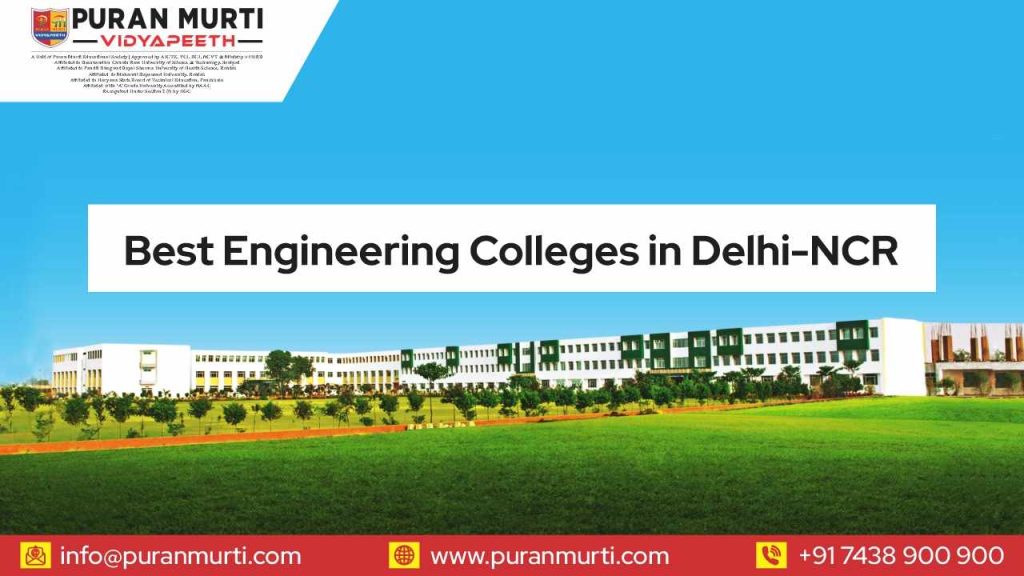
Best Engineering Colleges in Delhi NCR 2026
Posted on : 4 October, 2026 1:53 am
Choosing an engineering college is more than checking a college name or looking at a placement advertisement. For many students, it is a decision that can shape their skills, professional network, confidence, career direction, and opportunities for the next four years and beyond.
Delhi NCR is one of India’s major education and employment regions. Students can choose from government institutions, universities, private engineering colleges, research-focused institutes and specialised technology campuses across Delhi, Noida, Greater Noida, Ghaziabad, Gurugram, Faridabad and Sonipat.
But which college should you choose?
The answer depends on much more than a ranking. Branch availability, curriculum, faculty, laboratories, internships, industry exposure, placement support, fees, location, entrance requirements and career goals all deserve attention.
This guide explains how students and parents can evaluate the best engineering colleges in Delhi NCR and why Sonipat has also become an important location to consider.
What Makes an Engineering College a Good Choice?
A good engineering college should help students move from classroom learning to practical problem-solving.
In simple terms, students should graduate with three things:
- Strong engineering fundamentals
- Practical and industry-relevant skills
- A clear pathway towards employment, higher studies or entrepreneurship
The National Institutional Ranking Framework (NIRF) provides a useful example of why college selection should not be based on placements alone. Its 2025 Engineering framework considers Teaching, Learning & Resources; Research and Professional Practice; Graduation Outcomes; Outreach and Inclusivity; and Perception. Graduation Outcomes themselves include placement/higher studies, university examinations, median salary and Ph.D. graduates.
Therefore, students should evaluate the complete academic ecosystem rather than relying on a single headline number.
Top Engineering Colleges in Delhi NCR Students Can Research
There is no single college that is the right fit for every engineering aspirant. Instead, students should create a shortlist according to their entrance score, preferred branch, budget, location and career goals.
Some well-known institutions that students may research include:
| Institution | Location | Areas students may consider |
|---|---|---|
| IIT Delhi | New Delhi | Engineering, technology, research |
| Delhi Technological University (DTU) | Delhi | Engineering, technology and innovation |
| NSUT | New Delhi | CSE, AI, ECE, EE, Mechanical and other engineering areas |
| IIIT-Delhi | New Delhi | CSE, AI, ECE, VLSI and interdisciplinary technology |
| Puran Murti Vidyapeeth | Sonipat | CSE, AI, Data Science, Mechanical, Civil, ECE and specialised areas |
| Jaypee Institute of Information Technology | Noida | Engineering and technology |
| Galgotias University | Greater Noida | Engineering and technology |
| Other NCR institutes | Gurugram, Ghaziabad, Faridabad, Sonipat | Multiple B.Tech disciplines |
Why Consider Engineering Colleges in Sonipat?
Sonipat is increasingly relevant for students searching for engineering colleges near Delhi without necessarily studying inside central Delhi.
Its Delhi NCR location can provide students with access to a broader regional ecosystem while allowing them to consider campuses outside the most crowded parts of the capital.
For students from Haryana, Delhi and nearby NCR districts, location can also affect:
- Daily commuting
- Hostel requirements
- Overall education costs
- Internship access
- Family connectivity
- Campus lifestyle
- Time available for self-study and projects
Consequently, students should compare the total four-year experience, rather than judging a college only by its city name.
Puran Murti Vidyapeeth: An Engineering Option in Sonipat
Puran Murti Vidyapeeth is located on Kami Road, Sonepat, in the Delhi-NCR region.
According to the institution’s current programme information, its engineering offerings include B.Tech in Computer Science and Engineering, CSE with AI & ML, Electronics and Communication, Mechanical, Civil and Electrical Engineering, along with specialised aviation and aerospace-related pathways. The institution also lists M.Tech programmes in areas including Aerospace, CSE, ECE, Civil and Mechanical Engineering.
For students who want to study engineering in Sonipat, this makes the campus worth including in a personalised Delhi NCR college shortlist.
Engineering Branches at Puran Murti Vidyapeeth
Popular Engineering Courses
- Aeronautical Engineering
- Aerospace Engineering
- Aircraft Maintenance Engineering (AME)
- Computer Science & Engineering (CSE)
- CSE with Artificial Intelligence and Machine Learning (AI & ML)
- Civil Engineering
- Electrical Engineering
- Electronics & Communication Engineering (ECE)
- Mechanical Engineering
Unique Aviation Programs (USP)
One of the biggest advantages of Puran Murti Vidyapeeth is its aviation-based courses, which are rare in India:
- B.Tech + AME (DGCA approved)
- B.Tech Mechanical Engineering + AME (DGCA)
- B.Tech ECE + AME (DGCA)
- B.Tech Computer Science
(AI & ML)+ AME (DGCA) - B.Tech Aeronautical Engineering
+ CPL (Ground Classes) - B.Tech Aerospace Engineering
+ CPL (Ground Classes)
Which Engineering Branch Should You Choose?
Branch selection is one of the most important decisions after Class 12.
Popular Engineering Courses
- Aeronautical Engineering
- Aerospace Engineering
- Aircraft Maintenance Engineering (AME)
- Computer Science & Engineering (CSE)
- CSE with Artificial Intelligence and Machine Learning (AI & ML)
- Civil Engineering
- Electrical Engineering
- Electronics & Communication Engineering (ECE)
- Mechanical Engineering
Unique Aviation Programs (USP)
One of the biggest advantages of Puran Murti Vidyapeeth is its aviation-based courses, which are rare in India:
- B.Tech + AME (DGCA approved)
- B.Tech Mechanical Engineering + AME (DGCA)
- B.Tech ECE + AME (DGCA)
- B.Tech Computer Science
(AI & ML)+ AME (DGCA) - B.Tech Aeronautical Engineering
+ CPL (Ground Classes) - B.Tech Aerospace Engineering
+ CPL (Ground Classes)
Diploma Courses
Students can also choose job-oriented diploma courses: Apply Now
- Diploma in Automobile Engineering (AE)
- Diploma in AME (Aircraft Maintenance Engineering)
- Diploma in Aeronautical Engineering
- Diploma in Civil Engineering (CE)
- Diploma in Mechanical Engineering (ME)
- Diploma in Computer Science & Engineering (CSE)
- Diploma in Electronics & Communication Engineering (ECE)
- Diploma in Electrical Engineering (EE)
- Diploma in Medical Lab Technology (MLT)
- Diploma in Hotel Management
- Diploma in CSE (AI & ML)
Computer Science Engineering
CSE can suit students interested in programming, software development, artificial intelligence, data, cloud computing, cybersecurity and technology products.
Possible career areas include:
- Software development
- Data engineering
- AI and machine learning
- Cloud computing
- Cybersecurity
- Web and application development
- Product engineering
Artificial Intelligence and Data Science
AI and data-oriented programmes are becoming increasingly relevant as companies adopt automation, analytics and AI-enabled products.
However, students should not choose an AI-labelled course simply because it is fashionable. Check whether the curriculum includes programming, mathematics, algorithms, databases, statistics, machine learning and practical projects.
Electronics and Communication Engineering
ECE provides a foundation for electronics, communication systems, embedded systems, semiconductor-related work, IoT and hardware-software integration.
It can be particularly useful for students who enjoy both hardware and computing.
Mechanical Engineering
Mechanical engineering remains relevant across manufacturing, automotive, robotics, industrial automation, energy and product development.
Modern mechanical engineering is increasingly connected with CAD, simulation, robotics, automation, EVs, manufacturing technology and Industry 4.0.
Civil Engineering
Civil engineering covers infrastructure, construction, structural engineering, transportation, environmental engineering and project management.
It can be suitable for students interested in infrastructure development and large-scale physical projects.

How to Choose the Best Engineering College in Delhi NCR
Use this simple checklist before making a final decision.
1. Check the Engineering Branch
Do not select a college first and think about the branch later.
Compare the curriculum and decide whether the course matches your interests and long-term goals.
2. Verify Recognition and Approvals
Check the current official information relating to:
- University affiliation
- Regulatory approvals
- Programme approval
- Accreditation, where applicable
- Admission rules
- Degree-awarding authority
This is particularly important when comparing private universities, affiliated colleges and specialised institutions.
3. Compare Faculty and Laboratories
Engineering cannot be learned effectively through textbooks alone.
Look for:
- Qualified faculty
- Engineering laboratories
- Computing facilities
- Workshops
- Project facilities
- Research opportunities
- Technical clubs
- Innovation activities
4. Examine Placement Information Carefully
A placement page should not be judged only by its highest package.
Ask:
- How many students were eligible?
- How many received offers?
- What is the median salary?
- What is the average salary?
- Which branches were recruited?
- Which recruiters hired students?
- How many students pursued higher studies?
- What roles were offered?
This approach provides a more realistic understanding of career outcomes.
5. Look for Internships and Industry Exposure
An engineering student should ideally graduate with more than examination marks.
Useful experiences include:
- Internships
- Industrial visits
- Live projects
- Hackathons
- Technical competitions
- Workshops
- Guest lectures
- Research projects
- Industry certifications
For example, a CSE student could build a working application, while a mechanical student could complete a CAD or automation project.
Engineering Careers Are Becoming More Skill-Oriented
The engineering job market is changing rapidly.
Recent industry reporting has highlighted demand around AI, cloud infrastructure, cybersecurity, data engineering and platform engineering, while manufacturing, automotive and energy are also seeing technology-led demand linked to smart factories, industrial IoT and electric-vehicle platforms.
This means a degree remains important, but the degree alone may not be enough.
Students should build a combination of:
Degree + technical skills + projects + internships + communication + problem-solving ability
That combination can make a graduate more prepared for changing recruitment requirements.
What Skills Should Engineering Students Build in 2026?
Regardless of branch, students can work on the following skills:
| Skill | Why it matters |
|---|---|
| Programming | Useful across software, automation, AI and data roles |
| Data analysis | Supports technology and business decision-making |
| AI literacy | Increasingly relevant across engineering sectors |
| Communication | Important for interviews and professional collaboration |
| Problem-solving | Core engineering competency |
| Project management | Helps students handle real-world projects |
| CAD/Simulation | Valuable for mechanical and civil disciplines |
| Embedded systems | Useful for electronics, IoT and automation |
| Cybersecurity awareness | Relevant across connected systems |
| Teamwork | Important in engineering and product environments |
Placement vs Skills: What Should Students Prioritise?
A common mistake is to choose a college solely because its website displays impressive placement numbers.
A better approach is to examine placement support and skill development together.
For instance, a student who spends four years building projects, completing internships, improving communication and participating in technical activities may enter the placement process better prepared than a student who focuses only on semester examinations.
At Puran Murti Vidyapeeth, the institution describes placement preparation through activities such as training, mock interviews, resume development, workshops, industrial exposure and industry interaction.
Students should still verify the latest branch-wise placement data and official placement reports before making an admission decision.
What Is the Admission Process for B.Tech in Delhi NCR?
The admission process varies by institution and programme.
A typical pathway may include:
- Complete Class 12 with the required subjects.
- Appear for the relevant entrance examination, where applicable.
- Check eligibility and counselling requirements.
- Compare colleges and branches.
- Submit the admission application.
- Complete document verification.
- Pay the required admission and academic fees.
- Begin the academic session.
For JEE-based institutions, students should carefully follow the official examination and counselling authorities. Other institutions may have their own merit-based or institution-specific admission routes.
Government vs Private Engineering Colleges
| Factor | Government Institution | Private Institution |
|---|---|---|
| Fees | Often comparatively lower, depending on institution | Varies significantly |
| Competition | Often highly competitive | Varies by institution |
| Admission | Frequently entrance-exam driven | Entrance/merit/institution-specific |
| Infrastructure | Varies | Varies |
| Industry exposure | Varies | Varies |
| Placements | Varies by institution and branch | Varies by institution and branch |
| Flexibility | Depends on institution | Can vary considerably |
There is no universal rule that one category is automatically better for every student.
Instead, compare the specific college, specific branch and specific career outcome.
Top Benefits of Studying Engineering in Delhi NCR
Delhi NCR offers several practical advantages for engineering students.
1. Large Education Ecosystem
Students can choose from institutions with different academic models, fee levels and specialisations.
2. Industry Access
The region’s technology, manufacturing, automotive, consulting, infrastructure and services ecosystem can create opportunities for internships and industry interaction.
3. Career Networking
Students can participate in conferences, competitions, hackathons, seminars and professional events.
4. Multiple Career Pathways
Engineering graduates can move towards:
- Private-sector employment
- Government examinations
- Higher studies
- Research
- Entrepreneurship
- Startups
- Freelancing and technology services
A Simple College-Selection Formula for Students
Before paying an admission fee, create a comparison sheet.
Score each shortlisted college on:
Academics + Branch + Fees + Faculty + Labs + Placements + Internships + Industry Exposure + Location + Student Support
Then discuss the result with parents, teachers and career counsellors.
Most importantly, do not select a college only because someone called it the “best.”
Your preferred branch, learning style, financial situation and career objective should influence the final decision.
Frequently Asked Questions
What are the best engineering colleges in Delhi NCR?
The Delhi NCR region includes institutions such as IIT Delhi, DTU, NSUT, IIIT-Delhi, universities and private engineering colleges across Noida, Greater Noida, Ghaziabad, Gurugram, Faridabad and Sonipat. The right choice depends on branch, admission route, fees, academic environment, placements and career goals.
Which are the best B.Tech colleges near Delhi?
Students can explore B.Tech colleges across Delhi, Noida, Greater Noida, Ghaziabad, Gurugram and Sonipat. Shortlisting should be based on the desired engineering branch, eligibility, entrance requirements, curriculum, faculty, infrastructure, internship opportunities and verified placement information.
Is Sonipat a good location for engineering colleges near Delhi?
Sonipat is part of the Delhi-NCR region and can be considered by students looking for engineering colleges near Delhi. Its location may be convenient for students from Delhi and Haryana, while campus selection should still depend on academics, branch availability, fees, facilities and career opportunities.
Which engineering branch has the best career opportunities?
There is no single engineering branch that guarantees the best career outcome for every student. CSE, AI, ECE, mechanical, electrical and civil engineering can lead to different career pathways. Students should select a branch based on aptitude, interests, curriculum and the skills they are prepared to develop.
What should I check before choosing an engineering college?
Check recognition and approvals, curriculum, faculty, laboratories, infrastructure, fees, scholarships, internships, industry exposure, placement data, student support, location and alumni outcomes. Also verify the latest information directly from the institution and relevant authorities before admission.
Conclusion: Choose a College That Matches Your Career Goal
Finding the best engineering college in Delhi NCR is not simply about finding a famous name. It is about finding the right combination of academic quality, preferred engineering branch, practical learning, industry exposure, affordability, student support and career opportunities.
For students searching for engineering colleges in and around Delhi, Sonipat deserves consideration because it offers another Delhi-NCR location for higher education.
If you are considering Puran Murti Vidyapeeth in Sonipat, explore the available engineering programmes, understand the admission requirements, review the latest placement information and visit the campus before making your final decision.
Your engineering journey should begin with the right questions—not just the right college name.
For admission guidance, course information or to understand which engineering programme may suit your career goals, contact Puran Murti Vidyapeeth and enquire about the current 2026–27 admission process or schedule a campus visit.